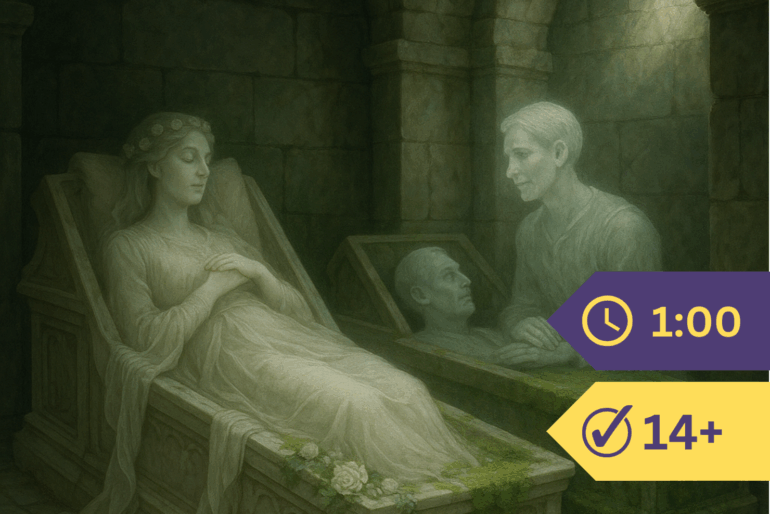
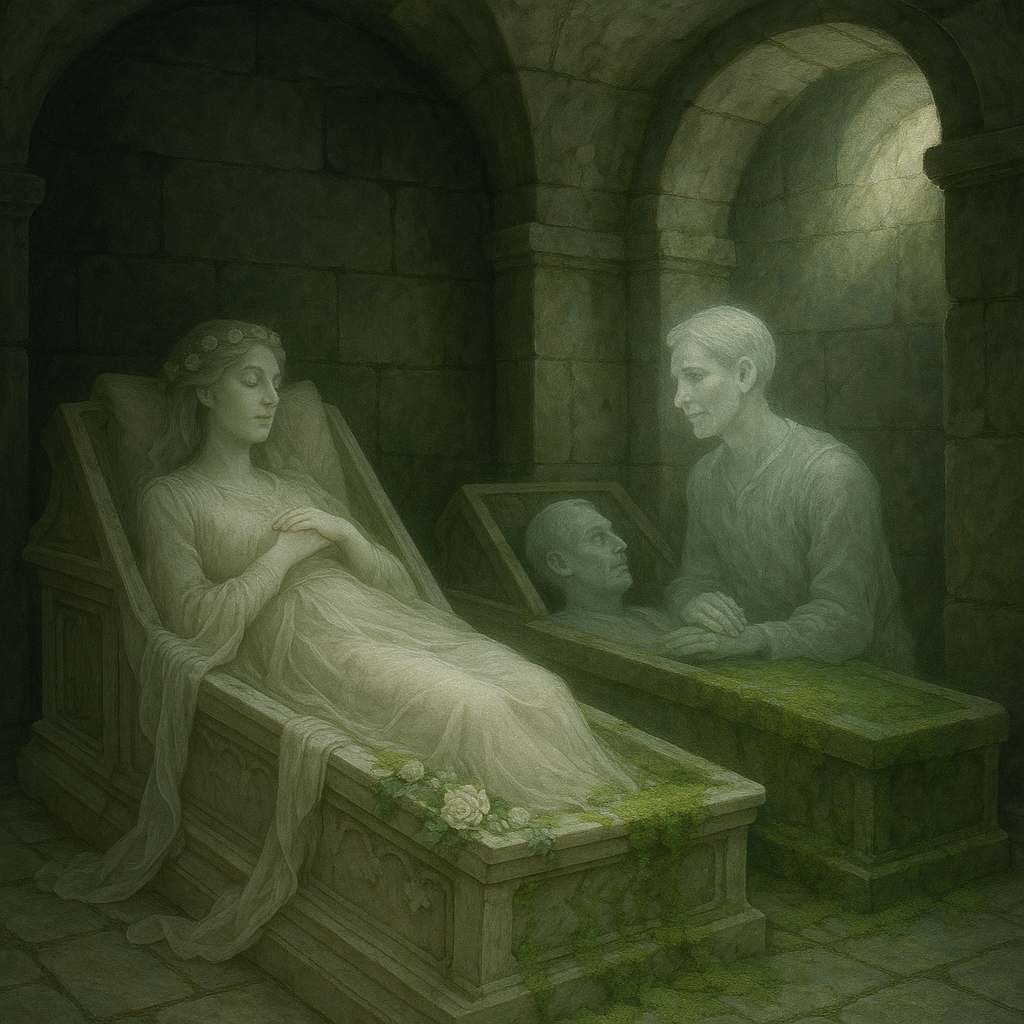
I died for beauty, but was scarce
Adjusted in the tomb,
When one who died for truth was lain
In an adjoining room.
He questioned softly why I failed?
“For beauty,” I replied.
“And I for truth,—the two are one;
We brethren are,” he said.
And so, as kinsmen met a night,
We talked between the rooms,
Until the moss had reached our lips,
And covered up our names.

Credits
Emily Dickinson was a 19th-century American poet whose work remained largely unpublished during her lifetime, yet she is now considered one of the most original voices in American literature. Known for her slant rhyme, dashes, and compressed intensity, she wrote with a singular preoccupation with death, immortality, and inner life. This poem is widely thought to echo the ideas of John Keats, whose famous line "Beauty is truth, truth beauty" resonates unmistakably through its central dialogue.