Fall Leaves Fall

Summary


"Fall Leaves Fall" by Emily Brontë is a short lyric poem that finds fierce joy in autumn's decline and winter's approach. Where others might mourn falling leaves and fading flowers, the speaker welcomes the lengthening dark with a defiant smile and song. Brontë captures a striking emotional paradox: the bleaker and drearier the season grows, the more alive the speaker feels — finding bliss in fluttering leaves and strange beauty in snow where roses once bloomed.

Listen to audio


Read Online

Fall, leaves, fall; die, flowers, away;
Lengthen night and shorten day;
Every leaf speaks bliss to me,
Fluttering from the autumn tree.
I shall smile when wreaths of snow
Blossom where the rose should grow;
I shall sing when night’s decay
Ushers in a drearier day.
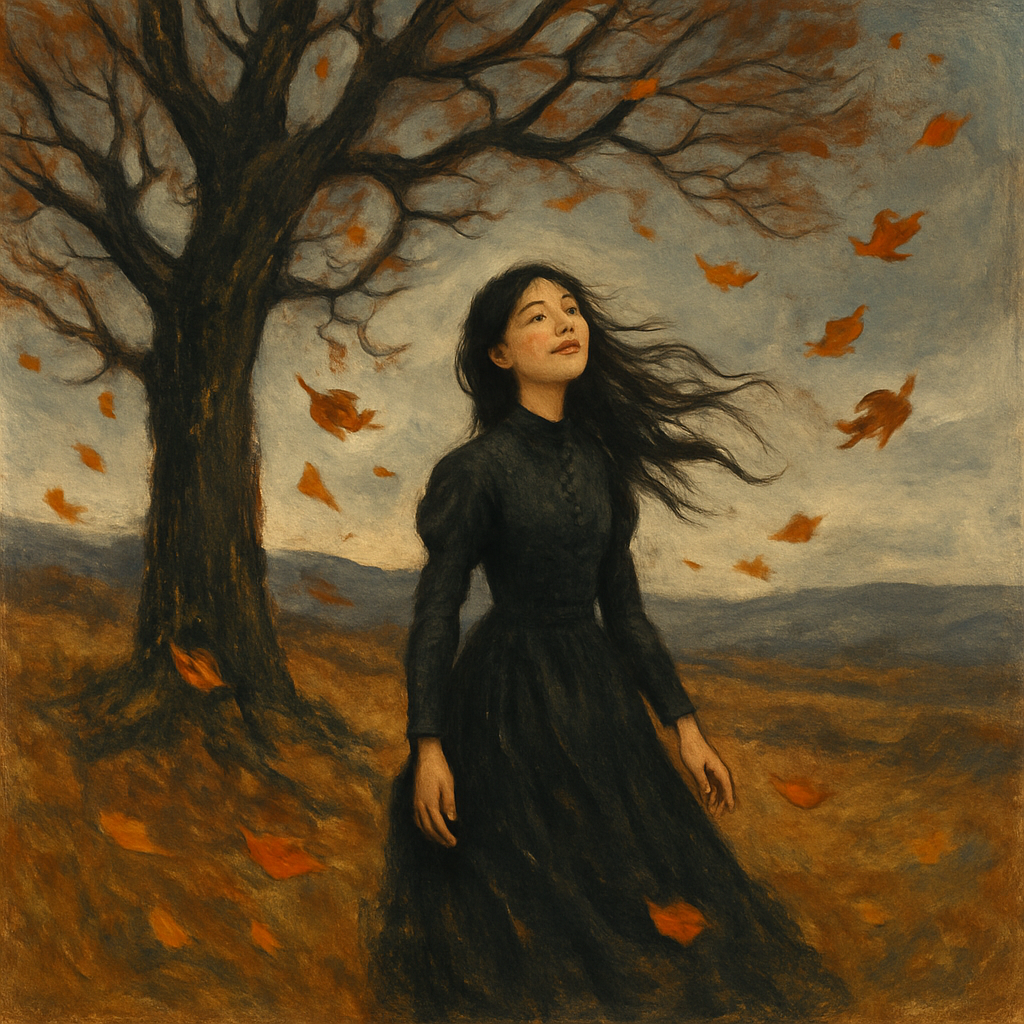

A young Victorian woman smiling beneath swirling autumn leaves in Fall Leaves Fall by Emily Brontë.

Add Ririro as a Preferred Source on Google


Credits

Emily Brontë was a 19th-century English poet and novelist, best known for her gothic novel Wuthering Heights. Though she published only a small body of poetry during her lifetime, her verse is celebrated for its raw emotional intensity and deep communion with the natural world. "Fall Leaves Fall" is a vivid example of her unconventional Romanticism, finding exhilaration rather than sorrow in darkness and decay.