Carol — Christmas Cheer

Summary


"Carol: Christmas Cheer" is a Christmas poem that captures the spirit of the season through the image of roaring fires, laden tables, and flowing drink shared with those in need. The poem urges readers to mark Christ's birth not with selfish excess, but with open-hearted generosity — filling their boards with mutton, plum-pudding, and furmity for hungry neighbours. The central tension sits between abundance and responsibility: true celebration, the carol insists, means feeding the poor, not indulging like Bacchus.

Listen to audio


Read Online

Again the time is come wherein
Our Saviour Christ was born,
The larders full of beef and pork,
The garners filled with corn.
As God hath plenty to thee sent,
Take comfort of thy labours,
And let it never thee repent
To feast thy needy neighbours.
Let fires in every chimney be,
That people they may warm them;
Tables with dishes covered,
Good victuals will not harm them.
With mutton, veal, beef, pig, and pork,
Well furnish every board;
Plum-pudding, furmity, and what
Thy stock will then afford.
No niggard of thy liquor be;
Let it go round the table;
People may freely drink, but not
So long as they are able.
Good customs — they may be abused,
Which makes rich men to slack us;
This feast is to relieve the poor,
And not to drunken Bacchus.
Thus if thou doest, ’twill credit raise thee;
God will thee bless, and neighbours praise thee.
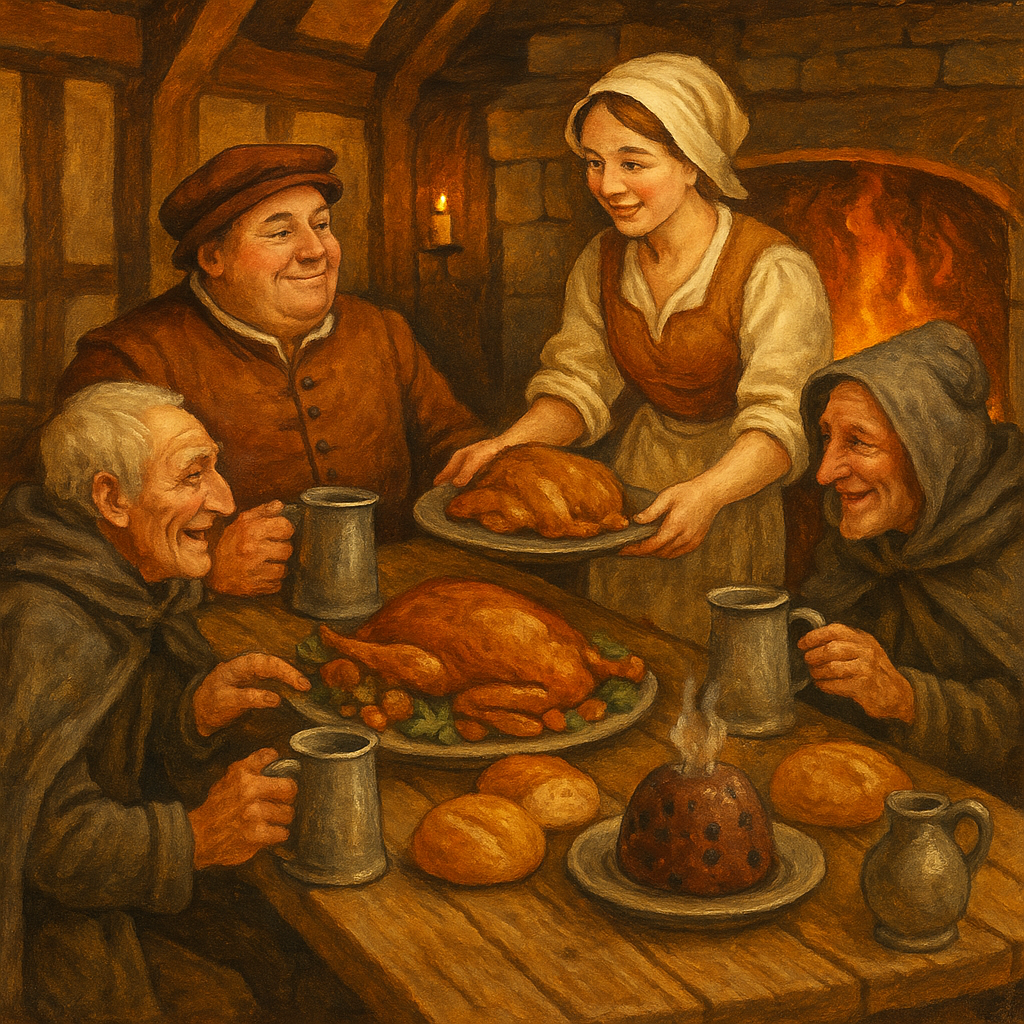

A festive Tudor feast scene illustrating "Carol: Christmas Cheer," with neighbours sharing food by firelight.

Credits

Unknown writer composed this carol in the tradition of English Christmas verse, likely dating from the early modern period. It belongs to a body of anonymous seasonal poetry that blended Christian devotion with the practical custom of hospitality toward the poor. The specific mention of furmity — a spiced wheat porridge — grounds the poem in the food culture of Tudor or Stuart England.