Autumn

Summary


"Autumn" by John Clare paints a blazing, almost paradoxical season — not of cool decay but of scorching heat and shimmering gold. Thistledown drifts on windless air, springs boil, cracked earth resembles overbaked bread, and rivers run like liquid fire. Clare builds toward a breathtaking final image: hilltops glittering like hot iron and an air so charged with burning light that whoever looks around sees Eternity itself. It is a poem about a landscape so intensely alive it transcends the physical world.

Listen to audio


Read Online

The thistledown’s flying, though the winds are all still,
On the green grass now lying, now mounting the hill,
The spring from the fountain now boils like a pot;
Through stones past the counting it bubbles red-hot.

The ground parched and cracked is like overbaked bread,
The greensward all wracked is, bents dried up and dead.
The fallow fields glitter like water indeed,
And gossamers twitter, flung from weed unto weed.
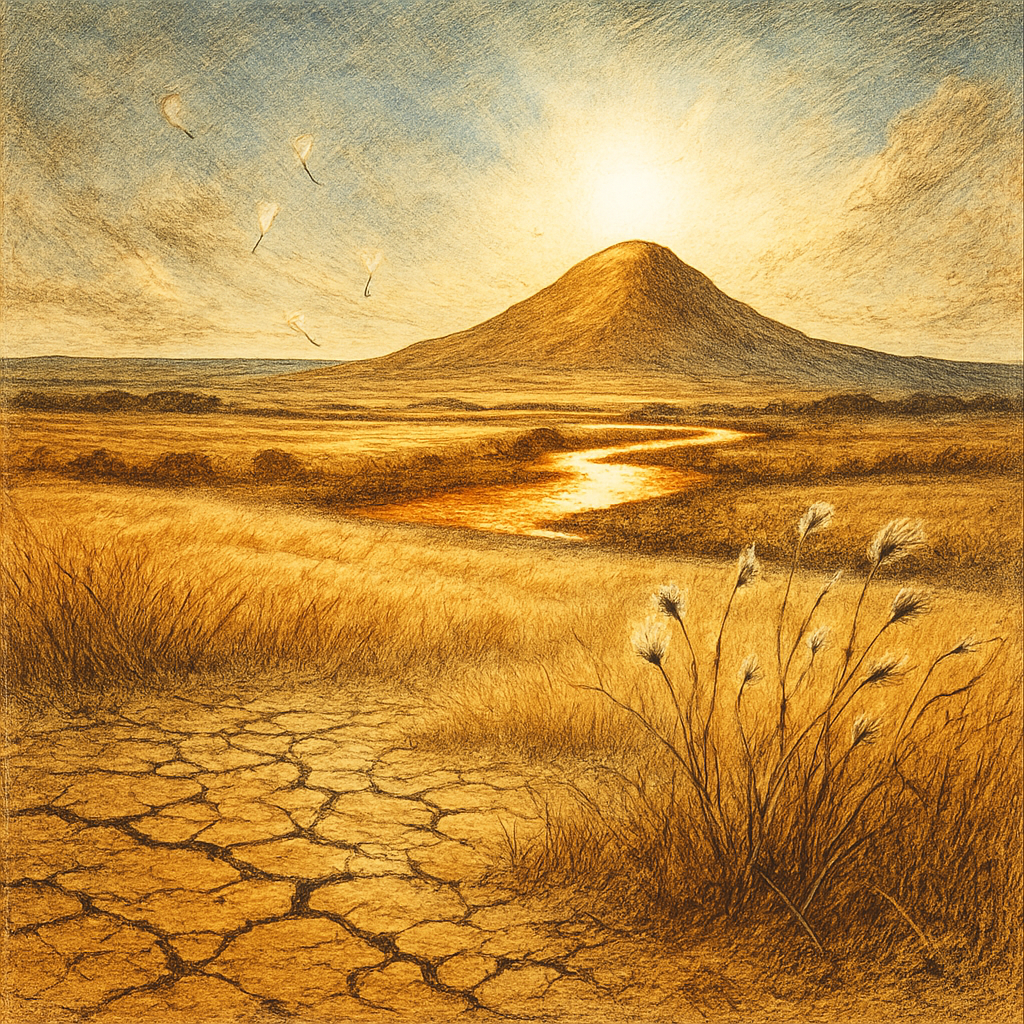
Blazing golden countryside with glowing river and thistledown floating on still air, illustrating John Clare's poem "Autumn"

Hill-tops like hot iron glitter bright in the sun,
And the rivers we’re eying burn to gold as they run;
Burning hot is the ground, liquid gold is the air;
Whoever looks round sees Eternity there.



Add Ririro as a Preferred Source on Google


Credits

John Clare was a 19th-century English Romantic poet, celebrated for his extraordinarily precise and sensory observations of rural English landscapes. Born into poverty in Northamptonshire, he was largely self-taught and is now considered one of the greatest nature poets in the English language. "Autumn" is a striking example of his ability to render the natural world with almost hallucinatory vividness, transforming a familiar season into something sublime.