
John Clare
Dive into John Clare’s complete poems and writings, read them online for free, filter to discover your favorites, and explore our article to learn more.
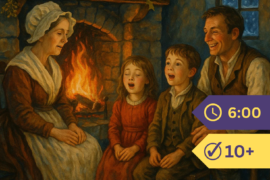
John Clare (1793–1864) was an English poet born in Helpston, Northamptonshire, the son of a farm labourer. Often described as one of the most important rural poets in the English literary tradition, Clare wrote with extraordinary directness about the natural world, the English countryside, and the social upheavals of his era. He is sometimes grouped with the Romantic poets, though his voice remained distinctly his own — rooted in the specific fields, hedgerows, and skies of his native Midlands rather than in abstract philosophy or grand mythology.
Clare’s work is marked by an intense, almost scientific attention to the natural world. He wrote about birds, insects, wildflowers, and the changing seasons with a precision that set him apart from his contemporaries. His poems document the rhythms of rural labour and the quiet textures of everyday life in early nineteenth-century England. He was also deeply affected by the enclosure of common land in his region, and this loss of shared landscape threads through much of his writing as a source of grief and displacement.
His earlier collections, including Poems Descriptive of Rural Life and Scenery (1820), brought him brief literary fame in London, where he was celebrated as a “peasant poet.” However, Clare never felt fully at ease in metropolitan literary circles, and his later life was marked by mental illness and long periods of confinement in asylums. Some of his most celebrated and emotionally complex poetry was written during these years, including the much-discussed poem now known as I Am, a meditation on identity, isolation, and the desire for rest.
Clare’s reputation declined sharply after his death but was substantially revived in the twentieth century, as scholars and readers came to appreciate both the ecological sensitivity and the psychological depth of his verse. He is now recognised as a significant figure not only in Romantic-era literature but also in the history of nature writing more broadly. His work anticipates many concerns that would later become central to environmental thought, and his unflinching honesty about poverty, mental suffering, and social marginalisation gives his poetry a weight that extends well beyond its pastoral surfaces.