
After a hundred years

Summary


"After a hundred years" is a short poem about a place where agony once played out and is now forgotten. Emily Dickinson pictures a still, overgrown spot where weeds have taken over and strangers wander past, spelling out the worn names on old gravestones. Then the summer wind arrives, and instinct reaches for a key that memory has dropped. The poem is quiet and haunting, and it asks how long pain outlives the people who felt it.

Listen to audio


Read Online

After a hundred years
Nobody knows the Place
Agony that enacted there
Motionless as Peace

Weeds triumphant ranged
Strangers strolled and spelled
At the lone Orthography
Of the Elder Dead
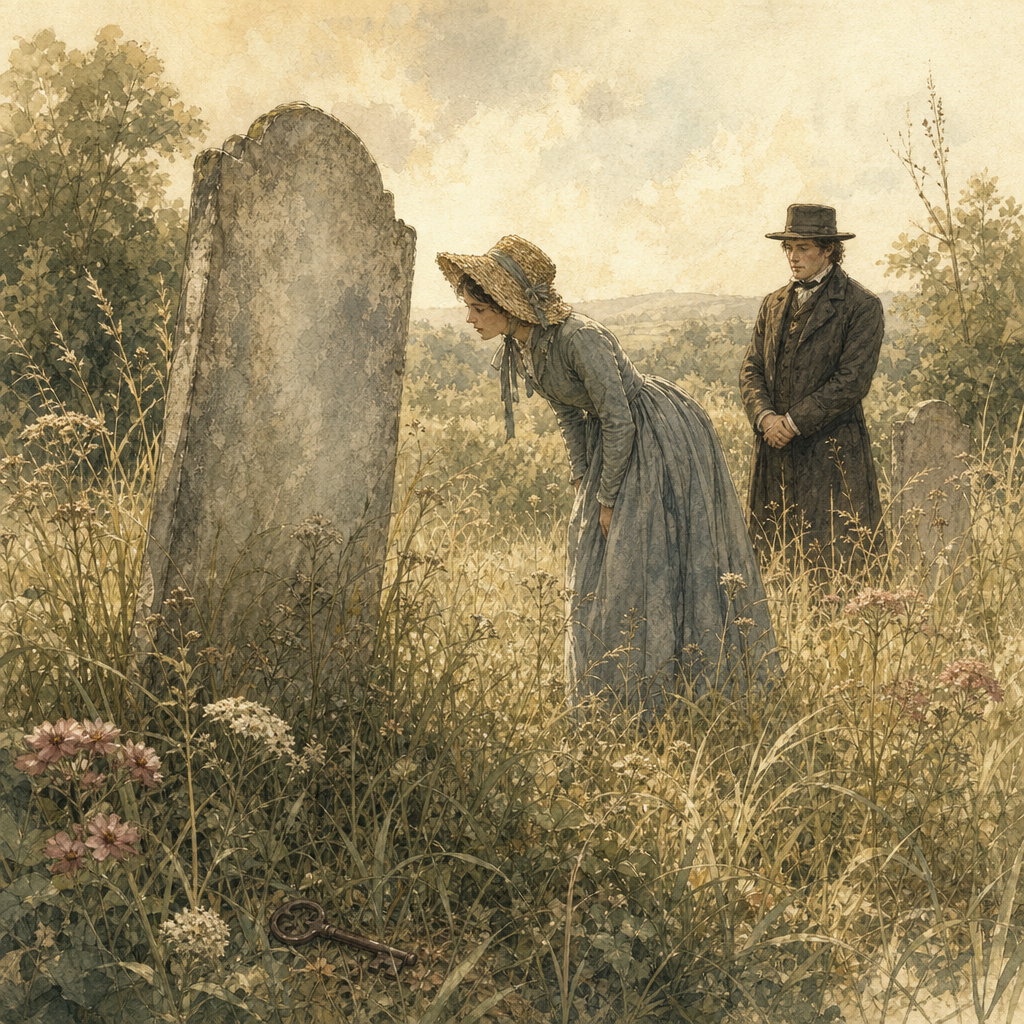
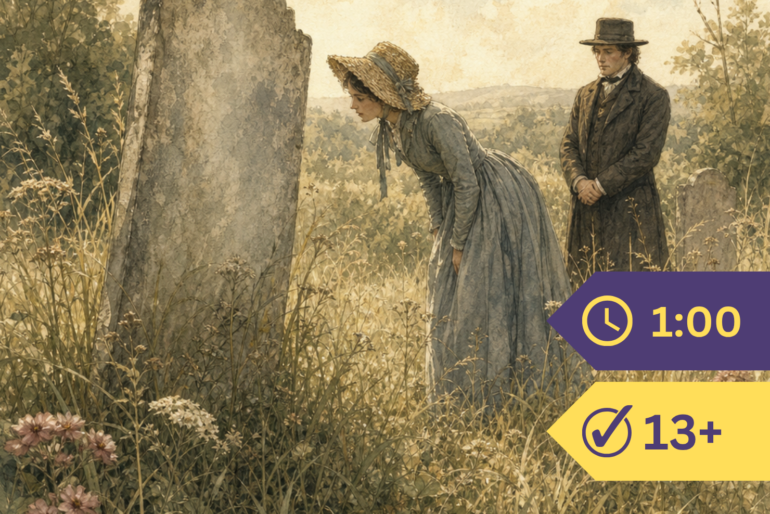
Two strangers read a weathered gravestone in an overgrown summer graveyard, illustrating Emily Dickinson's After a hundred years.

Winds of Summer Fields
Recollect the way—
Instinct picking up the Key
Dropped by memory—


Add Ririro as a Preferred Source on Google


Credits

Emily Dickinson was a 19th-century American poet from Amherst, Massachusetts, known for her compact, dashing verse and unconventional punctuation. Most of her nearly 1,800 poems were published only after her death, and this one shows her lifelong fascination with mortality and remembrance.