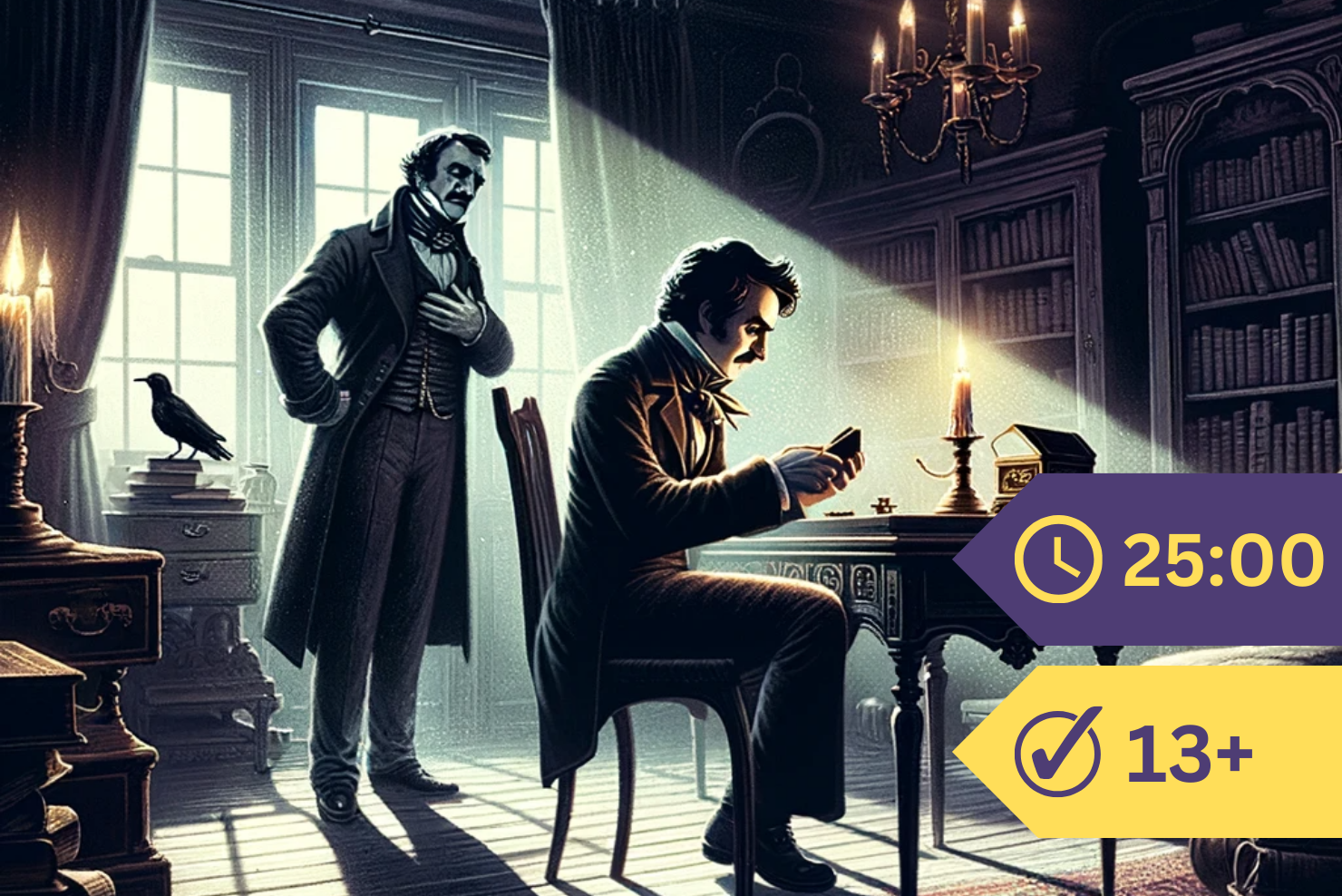
A wounded deer leaps highest

Summary


"A Wounded Deer Leaps Highest" is a short poem by Emily Dickinson that explores the paradox of concealed suffering. Through images of a leaping deer, a gushing rock, and a flushed cheek, Dickinson argues that the most vivid displays of life often mask the deepest wounds. The poem's central tension lies in the way mirth becomes armour — a deliberate shield worn to stop the world from noticing how badly one is hurt inside.

Read Online

A wounded deer leaps highest,
I’ve heard the hunter tell;
‘T is but the ecstasy of death,
And then the brake is still.

The smitten rock that gushes,
The trampled steel that springs:
A cheek is always redder
Just where the hectic stings!

Mirth is the mail of anguish,
In which it cautions arm,
Lest anybody spy the blood
And “You’re hurt” exclaim!



Credits

Emily Dickinson was a 19th-century American poet now regarded as one of the most original voices in literary history. Writing in near-total seclusion in Amherst, Massachusetts, she produced almost 1,800 poems, the vast majority published only after her death. This poem is thought to have been written around 1860 and reflects her recurring fascination with pain, resilience, and the performance of emotion.