
A Dew sufficed itself—

Summary


"A Dew sufficed itself—" is a short poem by Emily Dickinson that follows a single dewdrop on a leaf at dawn. Content and quietly proud, the Dew feels the vastness of its destiny and the triviality of life all at once. Then the Sun goes to work and the Day goes out to play, and the drop vanishes without a trace. Dickinson treats this tiny disappearance with mock-solemn gravity, leaving readers to wonder where it went.

Listen to audio


Read Online

A Dew sufficed itself—
And satisfied a Leaf
And felt “how vast a destiny”—
“How trivial is Life!”
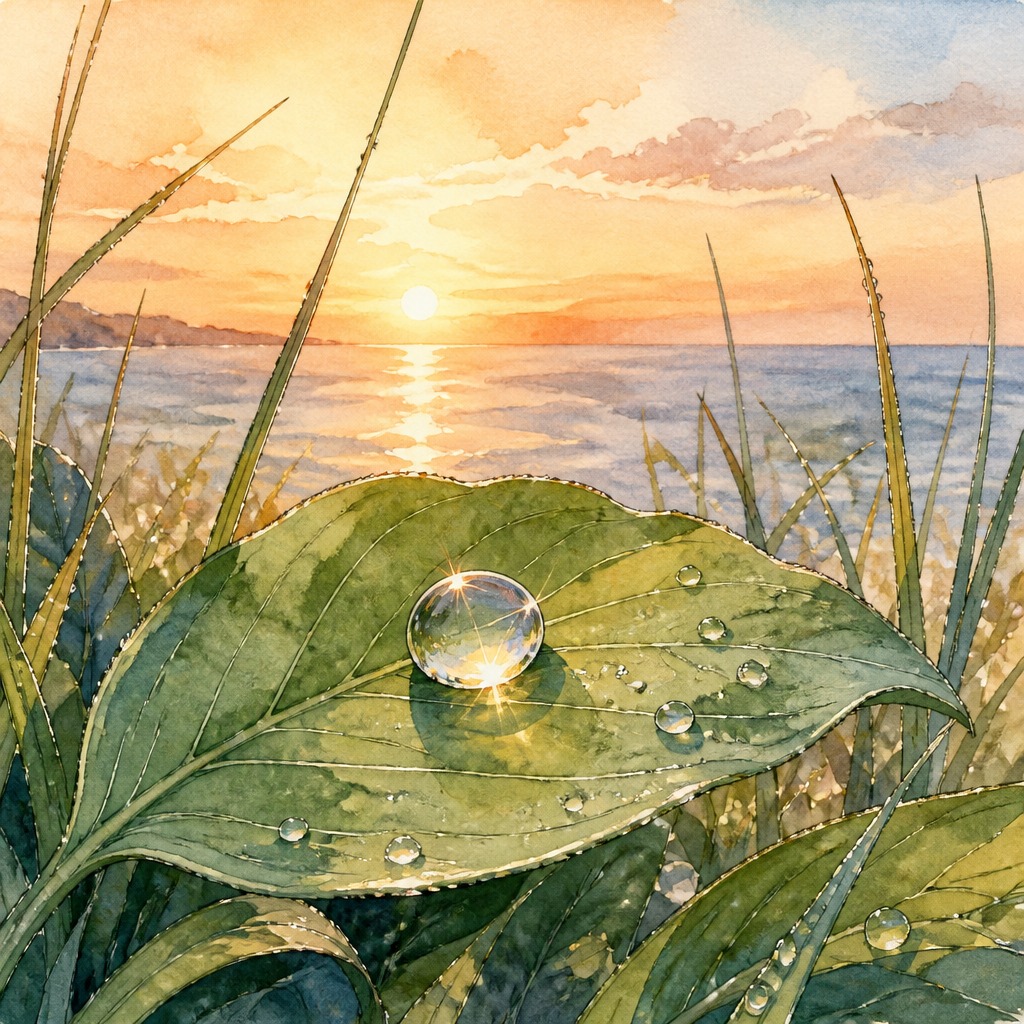
A glistening dewdrop on a green leaf at sunrise, illustrating Emily Dickinson's poem "A Dew sufficed itself—".

The Sun went out to work—
The Day went out to play
And not again that Dew be seen
By Physiognomy

Whether by Day Abducted
Or emptied by the Sun
Into the Sea in passing
Eternally unknown

Attested to this Day
That awful Tragedy
By Transport’s instability
And Doom’s celerity.


Add Ririro as a Preferred Source on Google


Credits

Emily Dickinson was a reclusive 19th-century American poet from Amherst, Massachusetts, famed for her compact, dash-filled verse. Here she borrows the language of a newspaper report on a disaster, setting a vanished dewdrop beside "awful Tragedy" for wry, tender effect.