What sweeter music can we bring,
Than a carol for to sing
The birth of this our Heavenly King?
Awake the voice, awake the string!
Heart, ear, and eye, and everything
Awake! while the active finger
Runs division with the singer.
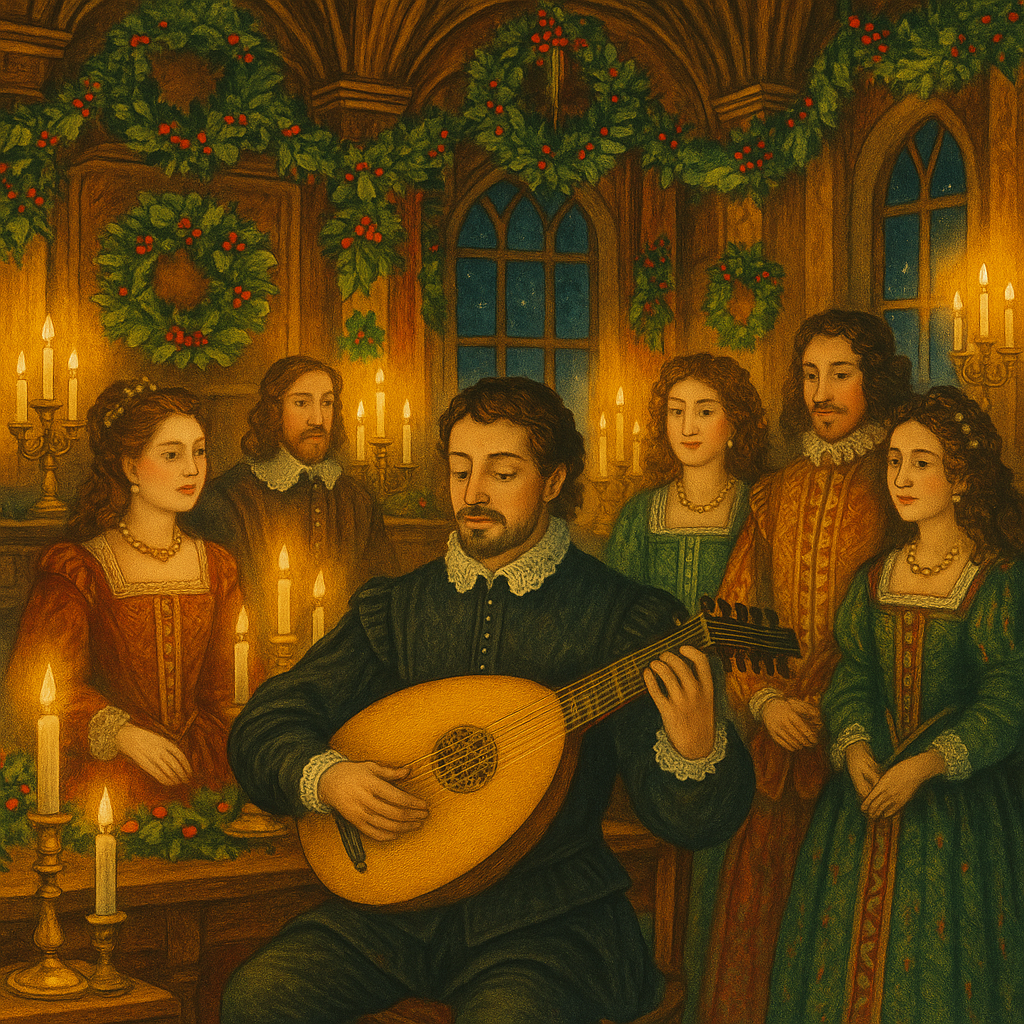
From the flourish they came to the song.
- Dark and dull night, fly hence away,
And give the honour to this day
That sees December turned to May. - If we may ask the reason, say,
The why and wherefore all things here
Seem like the spring-time of the year? - Why does the chilling winter’s morn
Smile like a field beset with corn?
Or smell like to a mead unshorne,
Thus on a sudden? Come and see
The cause why things thus fragrant be:
‘Tis He is borne, whose quickening birth
Gives life and lustre, public mirth
To heaven and the under earth.
Chor. We see Him come, and know Him ours,
Who with His sunshine and His showers
Turns all the patient ground to flowers.
- The Darling of the World is come,
And fit it is we find a room
To welcome Him. The nobler part
Of all the house here is the heart.
Chor. Which we will give Him, and bequeath
The holly and this ivy wreath,
To do Him honour, who’s our King
And Lord of all this revelling.