A Bird, came down the Walk

Summary


"A Bird, came down the Walk" is a short poem by Emily Dickinson that turns a quiet garden moment into something suspenseful. A bird, unaware he is watched, tears apart an angle worm, sips dew from a blade of grass and steps aside for a passing beetle. Then the speaker offers a crumb, and the wary creature's frightened, bead-bright eyes meet hers. What follows is a flight described with startling, dreamlike grace.

Read Online

A Bird, came down the Walk –
He did not know I saw –
He bit an Angle Worm in halves
And ate the fellow, raw,

And then, he drank a Dew
From a convenient Grass –
And then hopped sidewise to the Wall
To let a Beetle pass –
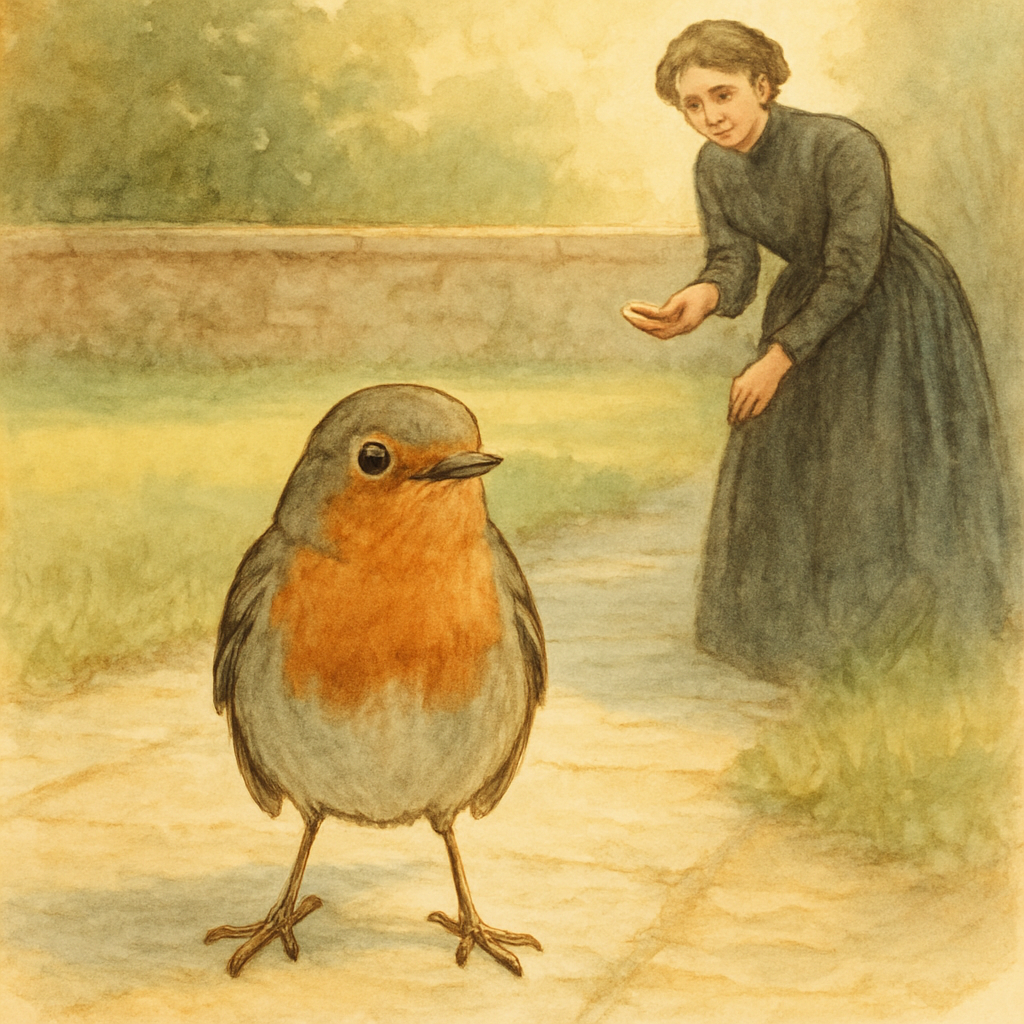
A Victorian woman offers a crumb to a small bird on a garden path, illustrating "A Bird, came down the Walk" by Emily Dickinson.

He glanced with rapid eyes,
That hurried all abroad –
They looked like frightened Beads, I thought,
He stirred his Velvet Head. –

Like one in danger, Cautious,
I offered him a Crumb,
And he unrolled his feathers,
And rowed him softer Home –

Than Oars divide the Ocean,
Too silver for a seam,
Or Butterflies, off Banks of Noon,
Leap, plashless as they swim.

Add Ririro as a Preferred Source on Google


Credits

Emily Dickinson was a 19th-century American poet from Amherst, Massachusetts, famed for her compressed, dash-filled verse. This poem is a good example of her habit of observing small creatures in her own garden and turning them into sharp, surprising metaphors.