A boy had just moved to town, and the neighborhood children, hearing he might be lonely, invited him to a party.
He went.
They were playing games — follow the leader, blind man’s buff, hide-and-seek — and they asked him if he wanted to join. He put his hands in his pockets and whistled the same three notes.
They sat down to supper: creamed chicken, ice cream, cocoa. They asked if he liked chicken. He whistled. They passed him food anyway, because what else do you do, and he took it and ate it. When he was finished, he stood up without a word, put his hands back in his pockets, and whistled again.
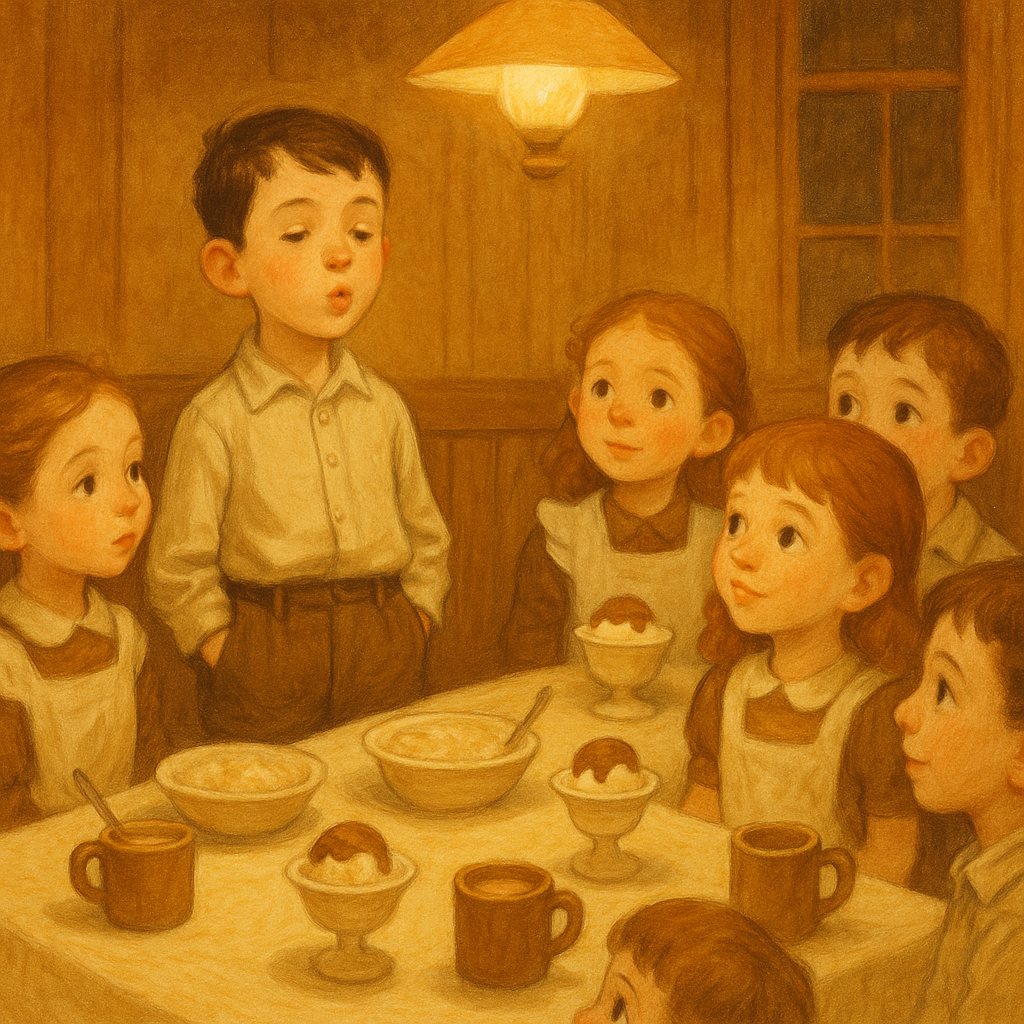
The other children giggled. He was such a funny boy.
He had been rather spoiled, and he hadn’t learned how to be with other children. The children at the party could see that, and they felt a little sorry for him, even as they laughed.
On the way home, the boy felt terrible. He had known, the whole time, that he was doing it wrong. He’d felt it with every whistle, every silence where words should have been. By the time he got into bed he was crying — and he was ashamed of crying, because he thought crying was something to be ashamed of, which shows how much he still had to learn.
He fell asleep eventually.
And the Dream King found him.
“I’m going to help you,” said the Dream King. “But I have to be honest with you. If you whistle instead of talking the next time someone tries to be your friend — I’m going to take your tongue for a full month, and you won’t be able to make any sound at all.”
The dream felt completely, entirely real.
When the boy woke up the next morning and went out into the world, he tried very hard. And he found that, on the whole, he could manage it.