Edward was not the pleasant kind of tease. He was the other kind — the sort who finds someone’s tender spot and presses it, not for a laugh, but for the pleasure of pressing.
At school he found boys in patched suits and asked loudly where they’d got their clothes. At home he tormented his sister Grace through the thing she loved most: her rag doll, Gracie. He’d snatch the doll and toss her in the air like a ball, saying, “What’s the difference? She’s only rags. She doesn’t feel anything.” One evening he left Gracie high up in a tree, and Grace spent the rest of the night afraid that a late frost would ruin her doll before morning.
That same evening, a friend of Edward’s — a decent boy who’d seen what Edward did and thought little of it — quietly climbed the tree and brought Gracie down safe. Grace found her and said nothing.
Edward didn’t know. He went to bed thinking the doll was still in the tree, and he fell asleep.
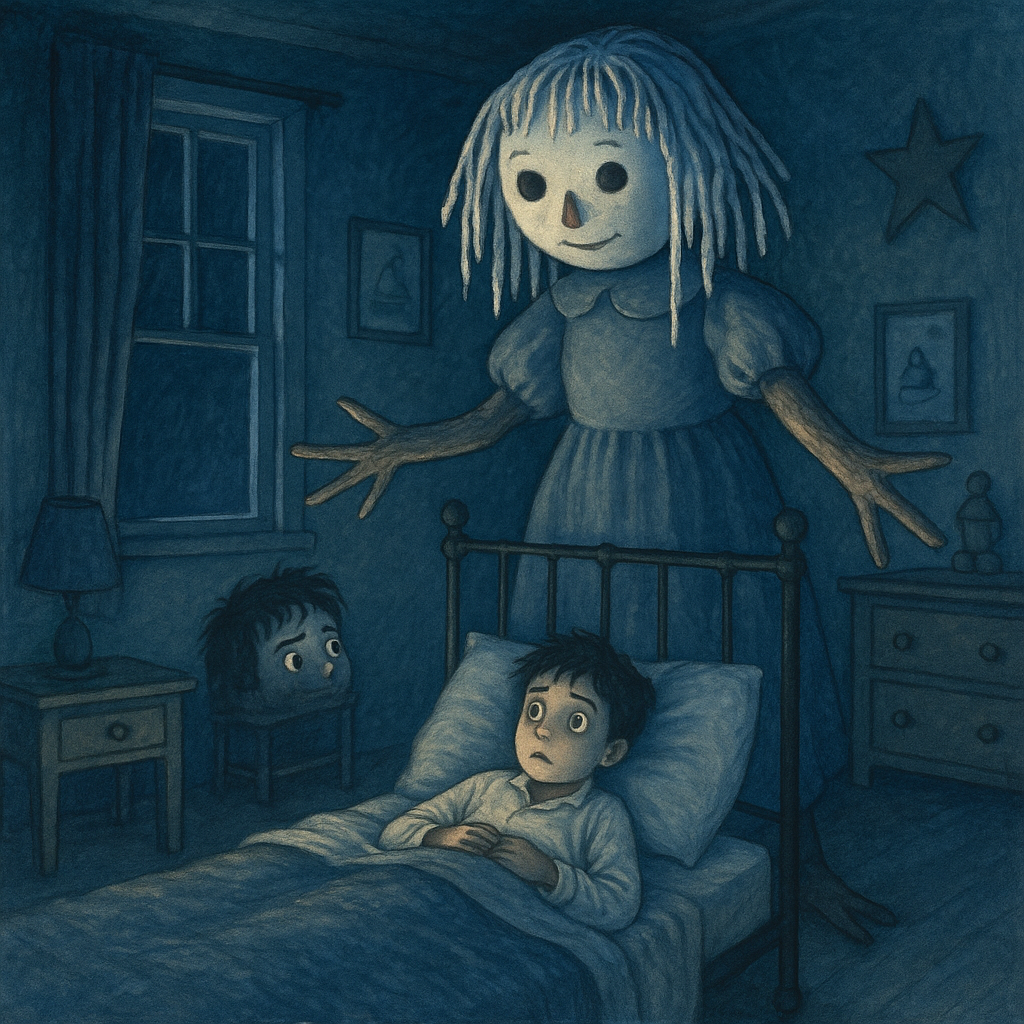
In the dream that came, Gracie stood at the end of his bed.
Not little Gracie. This was something else. She had grown enormous, rigid as iron, her painted wig replaced with great heavy icicles. Her arms were the size of tree branches, and cold.
“Edward,” she said, and her voice was not the voice of a rag doll. “You left me in the snow tonight, to tease your sister. Now I will show you what it feels like to be tossed about by someone larger than you.”
“Oh, don’t,” Edward whispered. “I’ll be good. I promise.”
“I’ll have to show you first,” said Gracie.
And she lifted him — he was nothing in her arms, nothing at all — and tossed him up and around in the darkness until he was certain any moment he would fall.
When he woke, he lay very still for a long time.
He never teased Grace again. He never put Gracie in a tree again. And people who knew Edward in later years said he was the kind of person who noticed, quietly and without being asked, when someone needed a hand.