It was the hottest day of the summer. The whole village seemed to have given up and gone limp. Not a breath of air stirred.
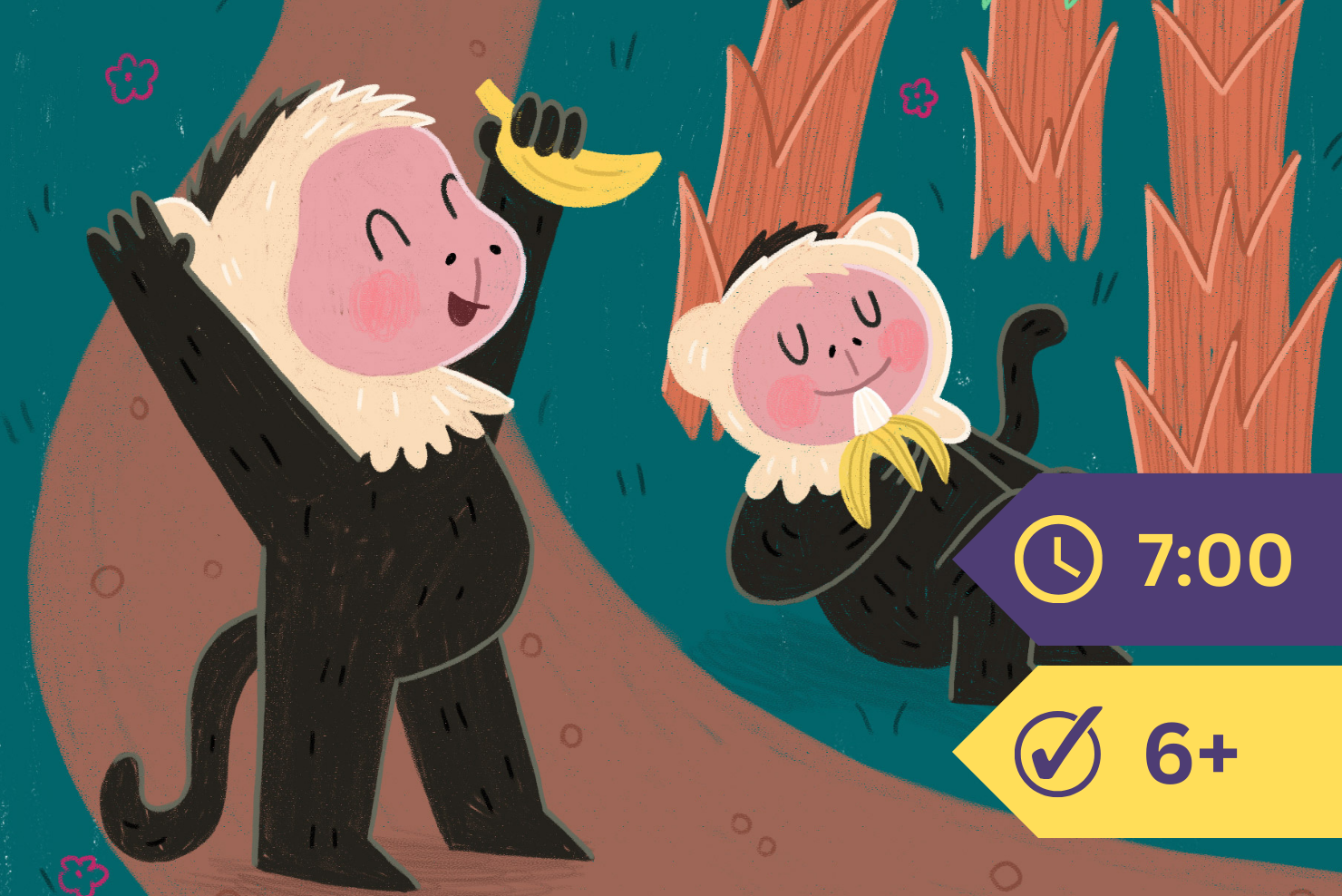
Down the village street came an old man with a hand organ, playing tune after tune. Beside him, on a chain, was a small monkey dressed in a red jacket and a red cap. The monkey tipped his hat to passers-by and held it out for coins, then tucked the pennies into a little pocket on his jacket — though later, of course, the man would take the money. What could a monkey do with pennies?
People smiled and came out to watch. No one seemed to wonder whether the man was kind to his monkey, or whether it was right to make a small creature perform tricks in such suffocating heat. They simply watched, cheerfully, while the monkey worked — some of them people who hadn’t managed to do much of anything themselves all day, the weather being what it was.
At last the organ-grinder stopped outside a small gray house.
“We won’t stay here long,” the man said to himself. “Not much to be had here.”
But a boy appeared at the upstairs window. His name was Bobbie, and he loved animals. He saw the monkey in his red outfit and heard the bright, rolling music, and his face lit up. On a horrible hot day, a hurdy-gurdy and a monkey! What a treat. He grabbed three pennies and ran downstairs.
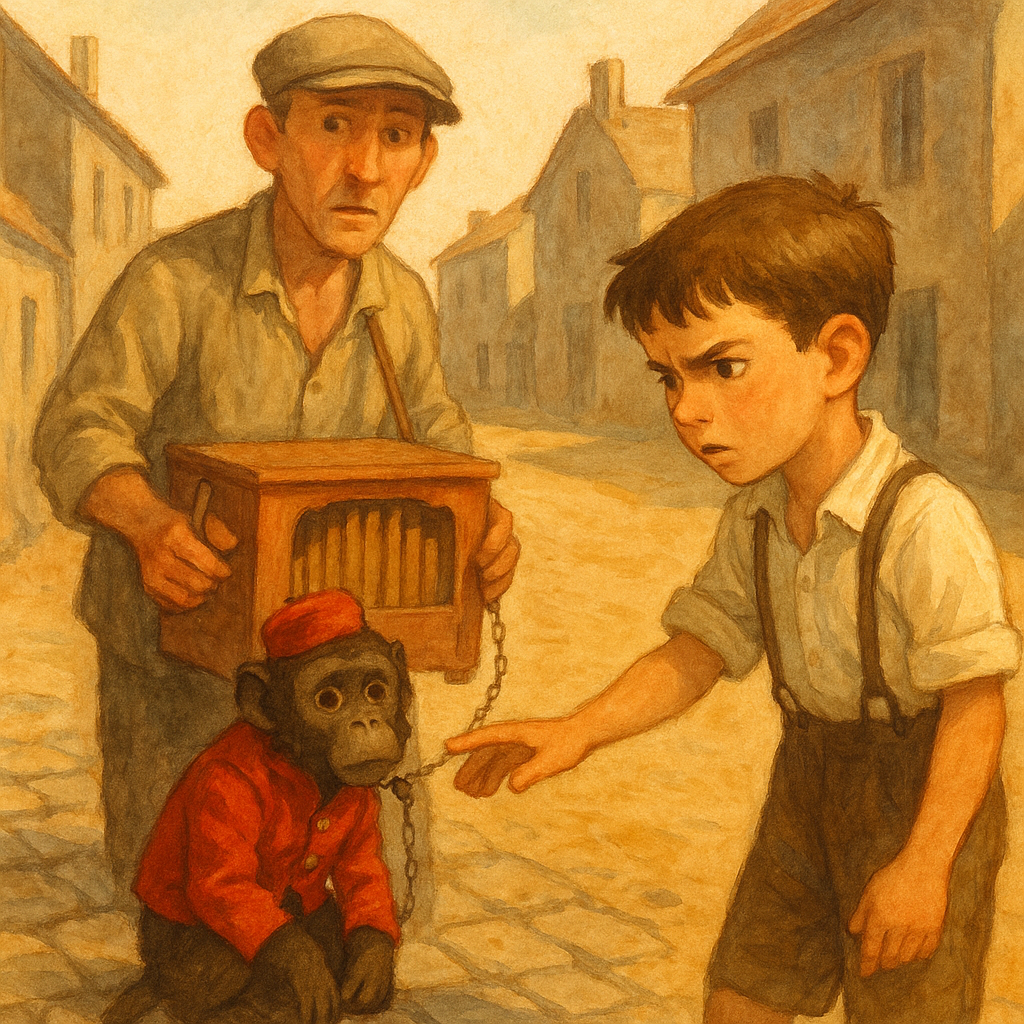
The man saw the coins in Bobbie’s hand and urged the monkey through his tricks. “Show the young gentleman your best,” he said.
Bobbie was smiling — and then he stopped.
He was looking at the monkey’s face. Those eyes. He reached out and slipped his hand under the red jacket, feeling the monkey’s back.
The animal was burning.
“Aren’t you ashamed?” Bobbie said, turning to the man. His voice was shaking. “Making him wear that heavy suit on a day like this, just because you think it looks fine?”
The man pulled the monkey’s chain. “Come along. We won’t perform for this young gentleman.”
“I don’t want to see any tricks,” Bobbie said. “When grown men can hardly stand the heat, you’re making this little creature do tricks for your money. Aren’t you ashamed of yourself?”
The man didn’t move. He seemed genuinely startled — he wasn’t sure what to make of this boy at all.
Bobbie was half-crying now, from anger more than sadness. “I’ll tell you what I’ll do. I’ll give you every penny from my bank — sixty-three cents. But you have to promise me: take off his jacket and cap, and give him a rest on days like this. Look at him. His back is burning. His eyes are begging you to stop.”
The man looked at the monkey. Then he reached over and took off the red jacket and the little cap.
“I’ll promise you,” he said quietly. “But I won’t take your sixty-three cents. You and this monkey have already made me ashamed enough. I don’t want your money.”
He did accept the cool drink Bobbie brought out — one for himself, and one for the monkey.