There was once a girl who owned a gun-metal wristwatch that refused to keep good time. She had it mended so many times that the watchmaker finally told her the only solution was entirely new works — not really worth it, he said, for a watch of that quality.
She was so annoyed that she dropped it into the nearest ash can as she walked away.
A few minutes later, a girl from a poorer part of the street came by. She spotted a newspaper on top of the ash can — there were pictures on it she wanted — and when she reached in, her hand closed around the watch.
She ran all the way home.
Her father was a fruit dealer, but he loved watches and had spent years fixing them as favours for friends and neighbours. He turned the gun-metal watch over in his hands, opened the case, looked carefully inside.
“This watch has been worked on by too many people who didn’t really understand it,” he said. “No wonder it gave up. Leave it with me.”
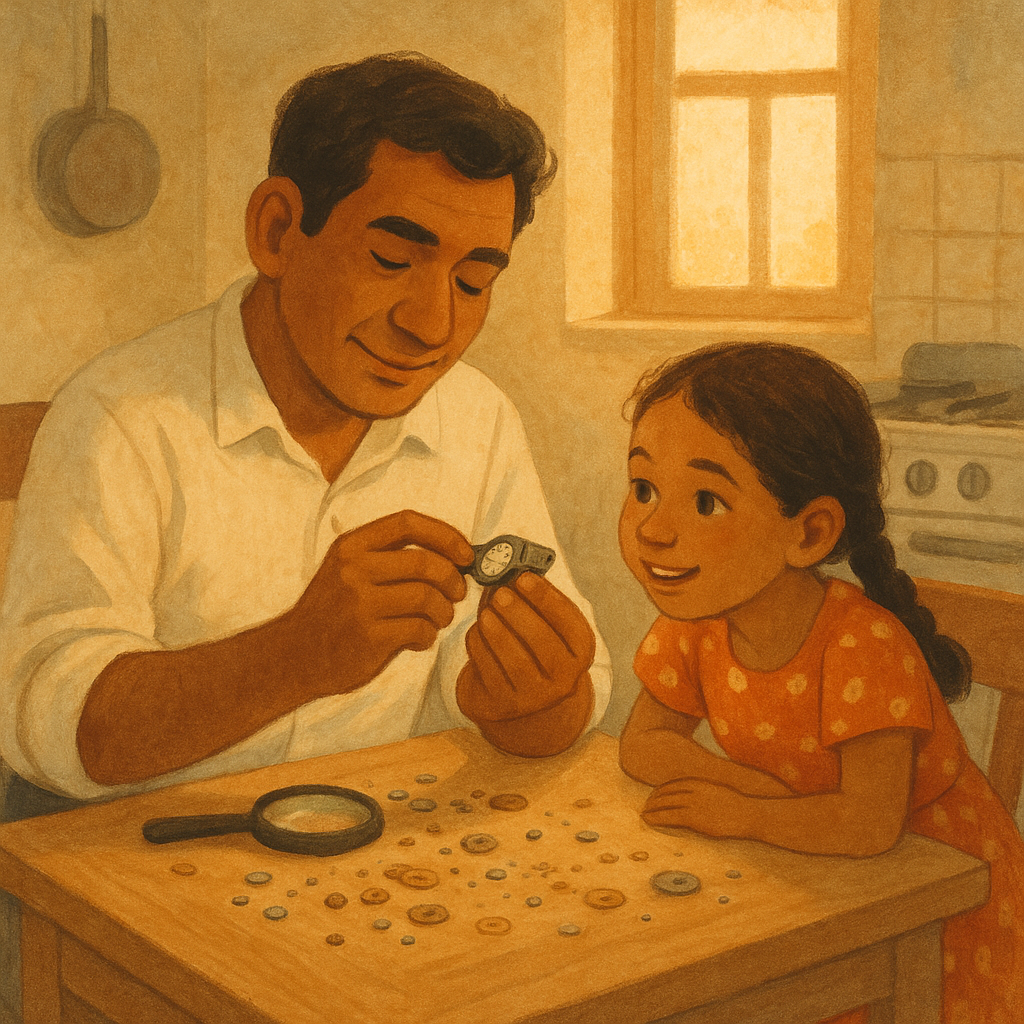
A few days later, the watch ran perfectly.
The girl wore it everywhere. She thought it was the most beautiful thing she had ever owned. Everyone she met had to be shown the time — and if they didn’t ask, she told them anyway.
Meanwhile, the first girl was given a gold wristwatch by her father as a replacement. It was expensive and accurate and kept perfect time.
But if you had asked either of the girls which watch mattered more — there would have been no contest. A watch your own father fixed for you, just because he could, is worth more than any gold one in the world.