Gerald was having a terrible time with his homework. He was supposed to draw a map from memory — impossible. He tried arithmetic instead — too hard. He tried everything, and nothing worked.
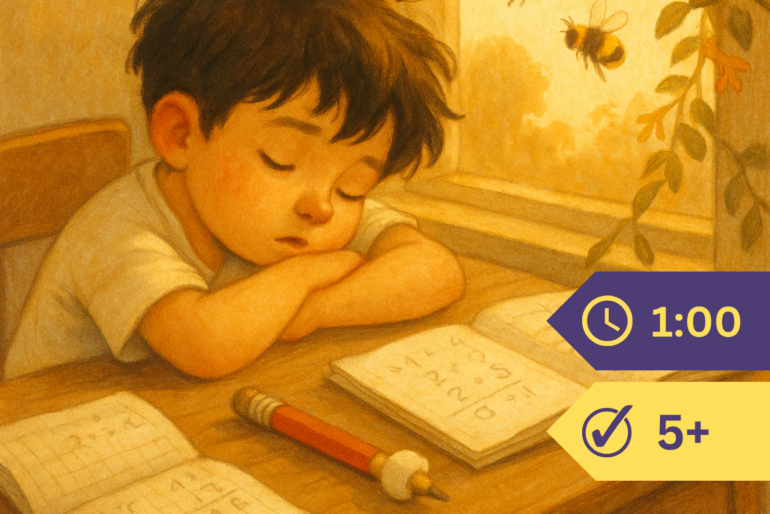
So he did what he always did when stuck: he chewed the end of his pencil.
He was dreadfully afraid of being held back a year. The shame of it! But the lessons were too difficult, weren’t they? Or maybe he was just too tired? The warm autumn breeze drifted through the window, and two bumblebees buzzed nearby, discussing the honeysuckle. Gerald put his head down on his arms.
When he looked up, the bitten end of his pencil had been wrapped in cotton wool and gauze — like a tiny bandage.
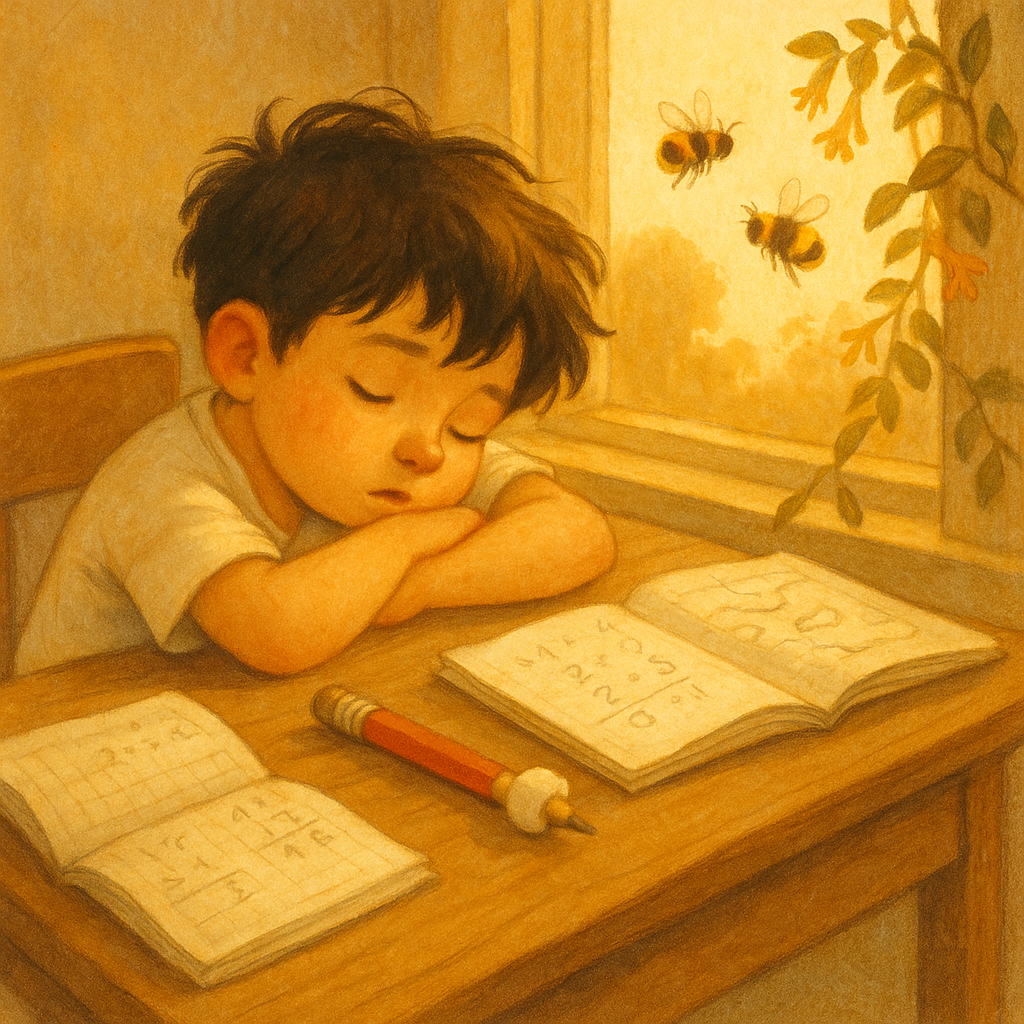
“Gracious, pencil! What happened to you?”
“I shouldn’t think you’d need to ask,” the pencil said, in a small injured voice.
“You know perfectly well that my job is to write down what you think,” it continued. “I cannot think. I am not supposed to think. A boy is supposed to think. I merely record your answers — and goodness knows I feel dreadful when I have to record wrong ones.
“And when I refuse to think for you, this is how you treat me. You bite me to pieces! I was a lovely red pencil with fine black lead, and now look at me. Oh, the indignity.” The pencil sighed a very mournful sigh.
Just then the cotton wool fell away — and Gerald realised he’d been asleep. The pencil was indeed badly bitten. But Gerald, now fully awake, turned back to his homework with fresh eyes — and found, to his surprise, that the lessons weren’t nearly so hard after all.