Julius was the kind of boy who was unkind to smaller, weaker children — which is, as his mother told him more than once, one of the meanest things a person can be.
When a new family moved in across the street, Julius was excited at first. But the family turned out to be just a mother, a father, and a boy named Hugh who was pale and quiet and often sat at the window looking out. Julius started mocking him — making faces, shouting things — until he could see the tears on Hugh’s face, at which point he would turn away satisfied.
His mother finally sat him down and told him the truth. Hugh had lost his foot to frostbite the previous winter. Today was the first day he was going outside on his new crutches.
Julius went quiet. Then he waited.
When Hugh appeared on the front step — moving carefully, head up, trying his best to look like a boy out for an ordinary afternoon — Julius leaned out his window and shouted the cruelest thing he could think of.
Hugh’s jaw tightened. He would not cry. He came down the path on his crutches.
Julius came thundering out the front door, laughing, not looking where he was going — right into the street, right in the path of a motor car coming fast around the corner.
Hugh saw it. His voice was too quiet to carry over the noise. He moved on his crutches as quickly as he could and pulled Julius back, hard, one moment before the car passed.
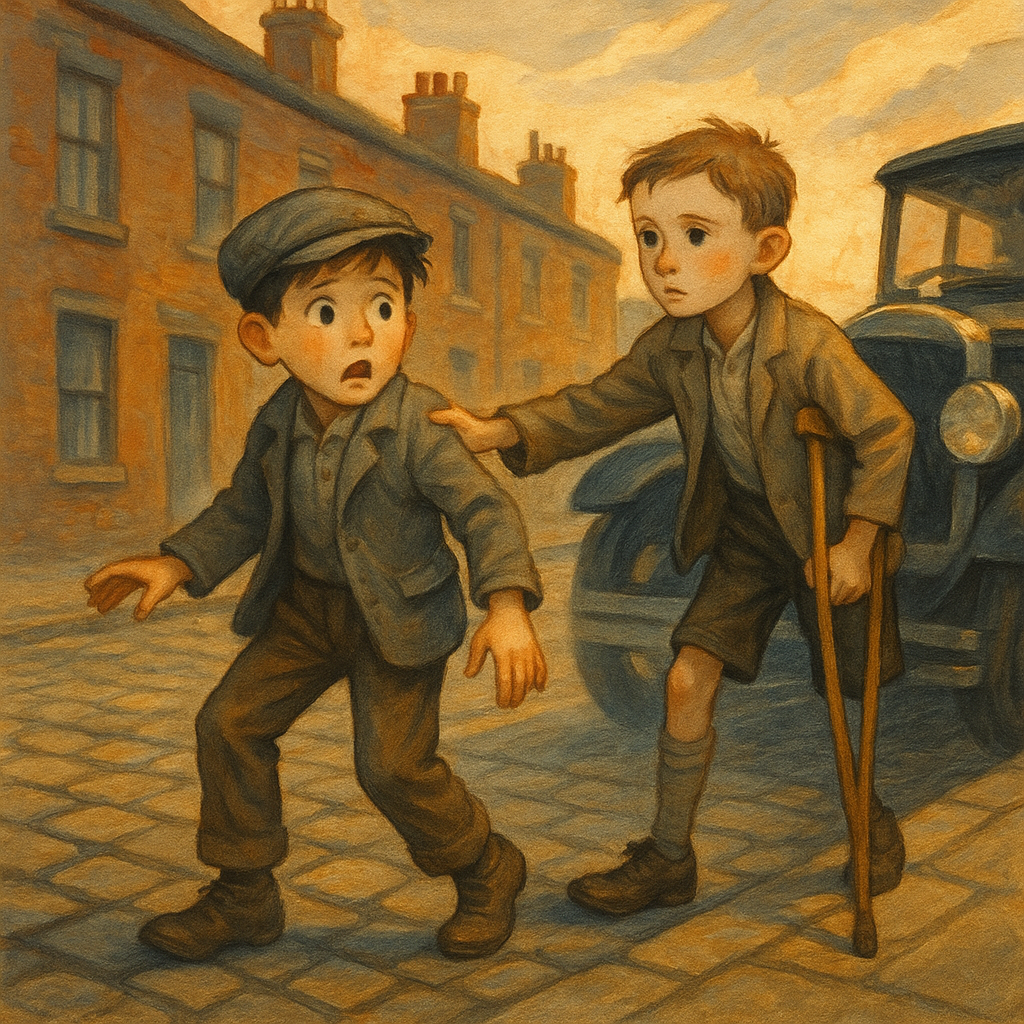
Julius stood in the gutter, shaking.
He understood, suddenly and completely, what it would mean to lose the use of his legs. What it would mean never to skate, or run, or kick a football again. He understood it with his whole body.
Hugh had been living that every day. And Hugh had just saved him.
They became friends from that afternoon — real friends. And Julius never forgot what he owed, or who had given it to him.