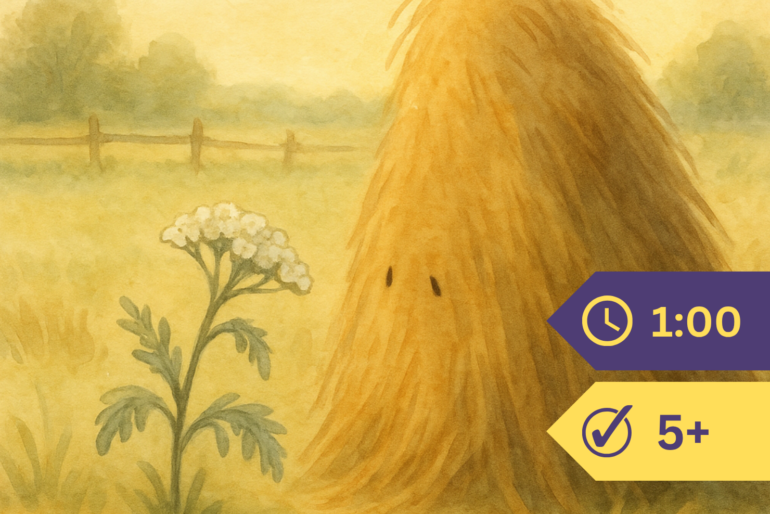
The yarrow weed was feeling very sorry for itself.
“All the hay has been cut and carried away,” it said to Old Hay, who lingered nearby. “The animals don’t like me — they say I’m too bitter. The farmer doesn’t want me because I take up space that proper grass could use. I am like an unwelcome guest.”
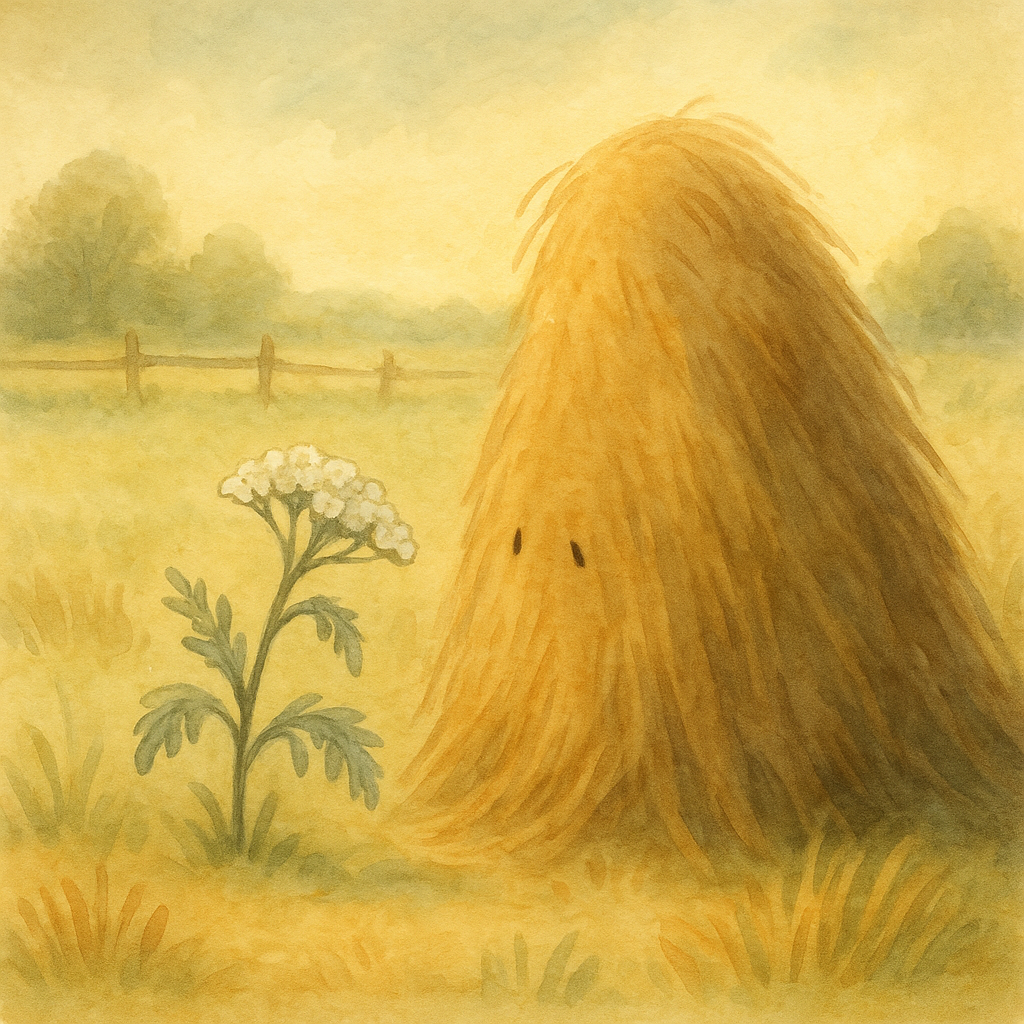
“My dear Yarrow,” said Old Hay, “you mustn’t mind if some creatures don’t like you. There will always be someone who doesn’t like something. It’s a waste of time to worry about it.”
“I shall try not to,” said the yarrow. “But I do wish I didn’t look so ragged all the time. Such a dull grey-green colour. My leaves look old and poor.”
Old Hay sighed. “No sooner do I settle one worry for you than you think of another. There is nothing wrong with old things. I have heard of people who wear last year’s clothes so they can do fine things with their money.”
“But I have no money.”
“Of course you haven’t. You’re a weed. A poor, unpopular weed, as you say. But here is something you may not know: yarrow is kept as a charm. People save a sprig of you for luck — you are said to bring a long, happy, and prosperous life.”
The yarrow was quiet for a moment.
“So even I,” it said at last, “even a poor weed like me, has something to make it proud.”
“There,” said Old Hay. “There you are.”