St. Patrick was born around 372. When he was only sixteen, he was stolen by pirates and sold into slavery in Ireland, where his master set him to keeping pigs in the mountains.
He was there seven years — long enough to learn the language, the customs, the way the country worked. Then a dream came: the Lord told him to flee to a far country. He did.
Later he was ordained a deacon, then a priest, then a bishop. And the pope sent him back to Ireland to preach. That is when he became St. Patrick.
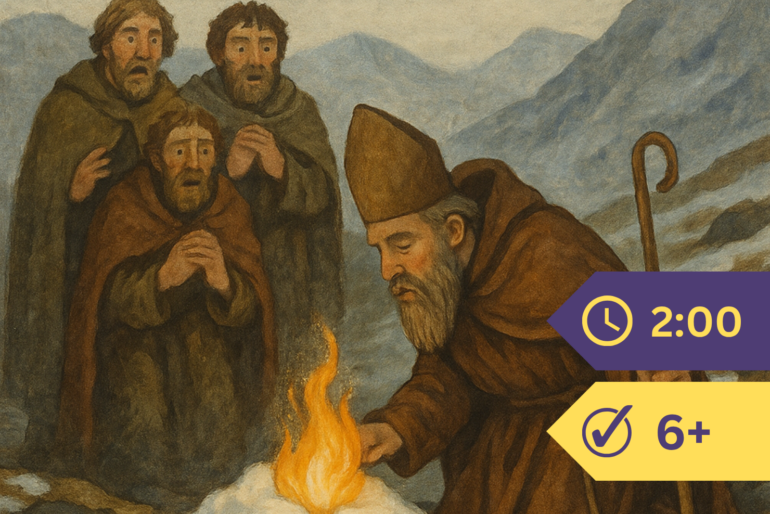
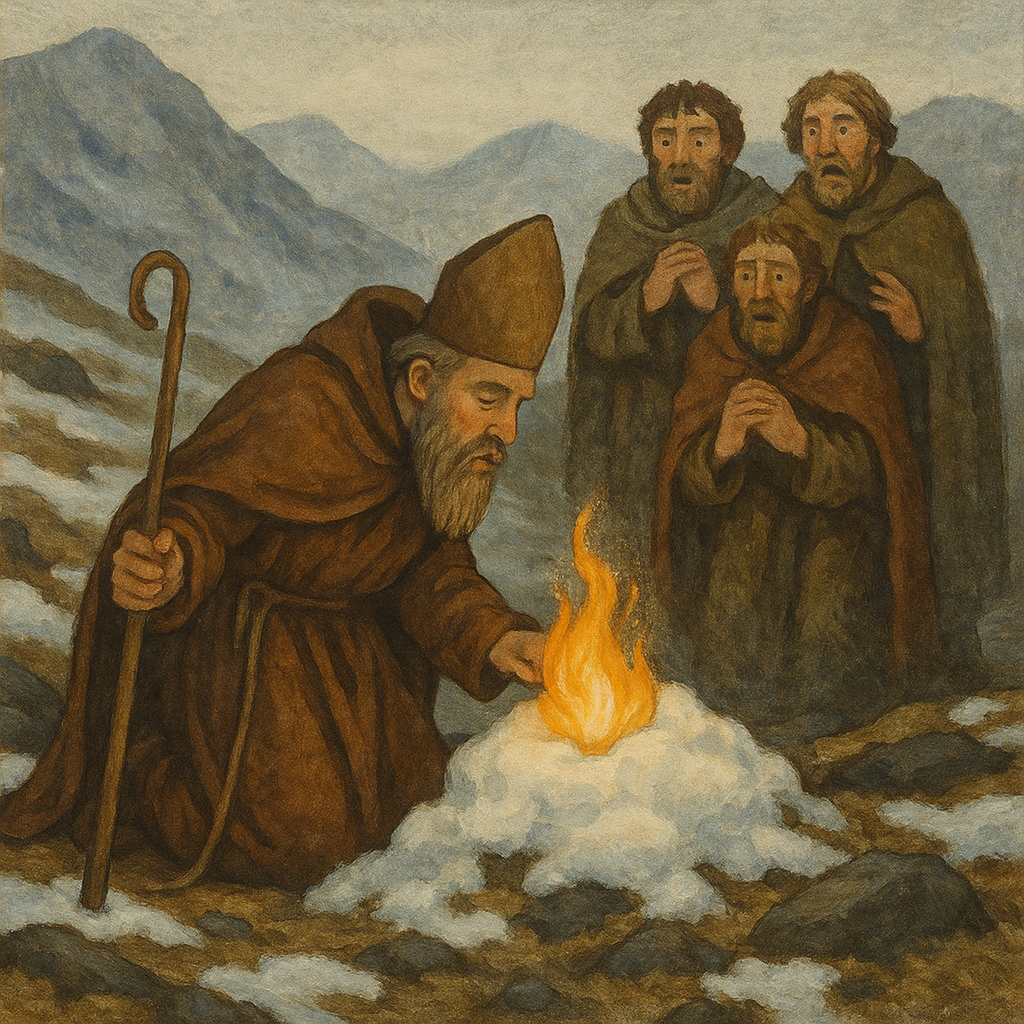
The legends gathered around him. One tells of a bitter cold morning when he and his followers could not build a fire — nothing to eat, half frozen. Patrick listened to their complaints for a while, then told them to pile up snow. They gathered it in a heap. He breathed on it, and it became a fire.
Another tale says St. Patrick beat the drum so loudly while driving the snakes out of Ireland that he knocked a hole right through it. An angel appeared and mended it, and the drum was kept ever after as a relic.
But the strangest legend belongs to a lake called Lough Dilveen. Patrick chained one great serpent there when he drove out the others, and told it to wait until Monday. The people around that lake claim to this day that every Monday, without fail, they hear the serpent calling out across the water in a mournful voice:
“It’s a long Monday, St. Patrick!”
He is said to have died on the seventeenth of March, 493, aged one hundred and twenty-one. His grave is at Downpatrick, where a tombstone bears his name cut in old Irish characters.