Zuzeppa had come from Africa, and he was going to give a special performance.
The keeper spread the word quietly among the children who visited the zoo most often, and they told their friends, and by the day of the show the monkey house was packed. The keeper stepped forward and shook hands formally with Zuzeppa. They bowed to each other.
“Now Zuzeppa will show you his circus tricks,” the keeper announced.
Zuzeppa hung by his tail and turned somersaults. He swung and twisted and leaped, trick after trick, and all the children clapped. The other monkeys screamed their appreciation from their corners—not the least bit jealous. Zuzeppa had worked hard enough to deserve the afternoon.
“And now,” said the keeper, “Zuzeppa’s special trick.”
He brought out a small wooden table and spread a cloth on it. Zuzeppa smoothed the cloth carefully, then reached into a box and laid out a knife, a fork, and a spoon. He tied a napkin around his own neck. He dragged over his little broken chair and sat down.
The keeper acted as waiter.
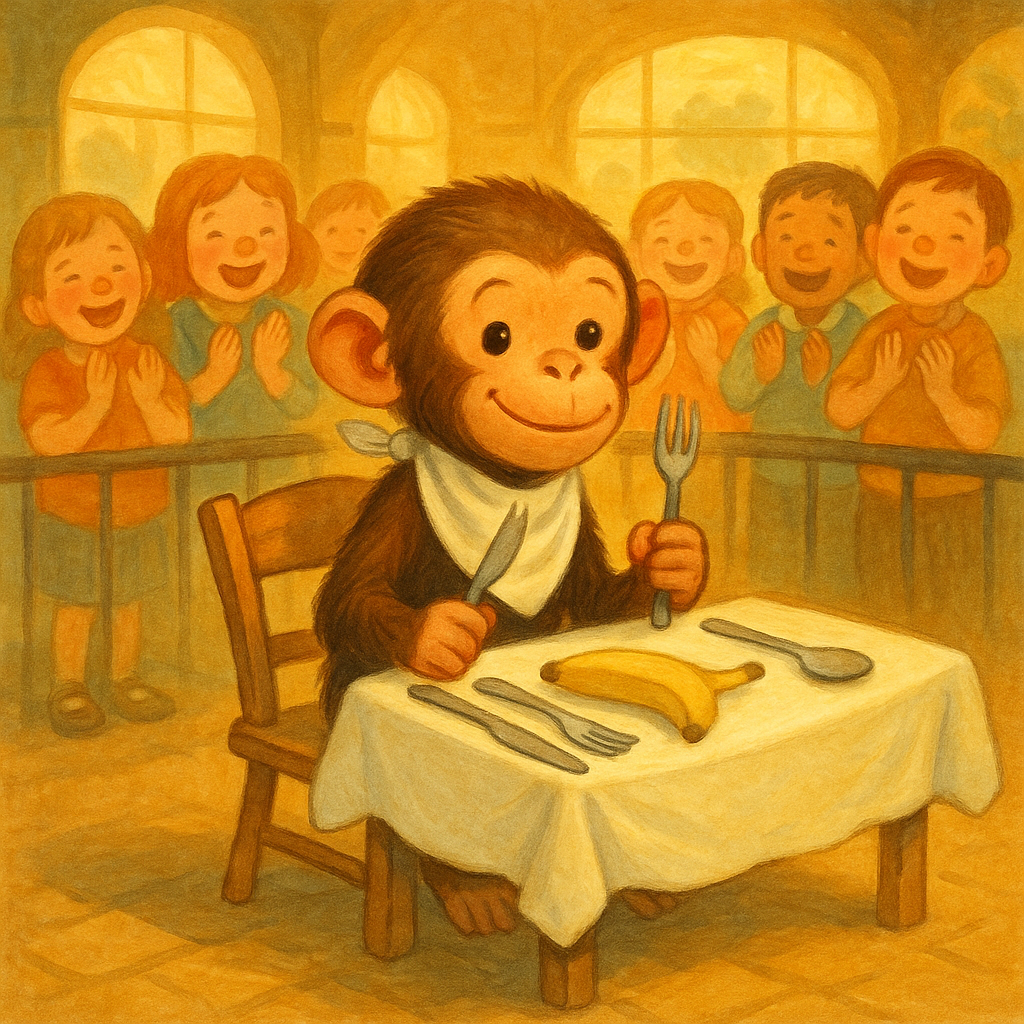
And Zuzeppa ate his dinner as though he had been doing it all his life. He used his fork. He cut with his knife. He peeled his banana for dessert, ate it tidily, and wiped his mouth with his napkin. Then he dipped his fingers in a finger bowl.
The children were laughing. The children were clapping. And Zuzeppa was the happiest monkey in Africa or anywhere else.
The keeper passed him a pipe. Zuzeppa held it gravely, took a small experimental puff, blew the smoke out, and seemed to decide it wasn’t really to his taste. He set it down.
Which made the children laugh even harder.
And this, the keeper said, was a true story.