Beautiful, Gorgeous, and Glorious were having a quiet conversation, and they were a little sad.
“We try so hard to live up to our names,” said Beautiful. “We really do. We don’t try to be mean or ugly or dull. We do our best to be everything our names suggest. And yet no one uses us anymore.”
“I understand,” said Wonderful. “But you shouldn’t feel discouraged.”
“Easy for you to say,” said Gorgeous. “You’re used constantly. Everything is wonderful this, wonderful that. You’re everywhere.”
“Exactly,” said Wonderful. “And that’s not entirely pleasant. I’m worked absolutely to death. I get borrowed for things that barely deserve me — a mediocre dinner, a slightly nice sunset, a perfectly ordinary Tuesday. I’m stretched so thin that sometimes I’m half with one thing and half with another at the same time, and neither is doing me justice.”
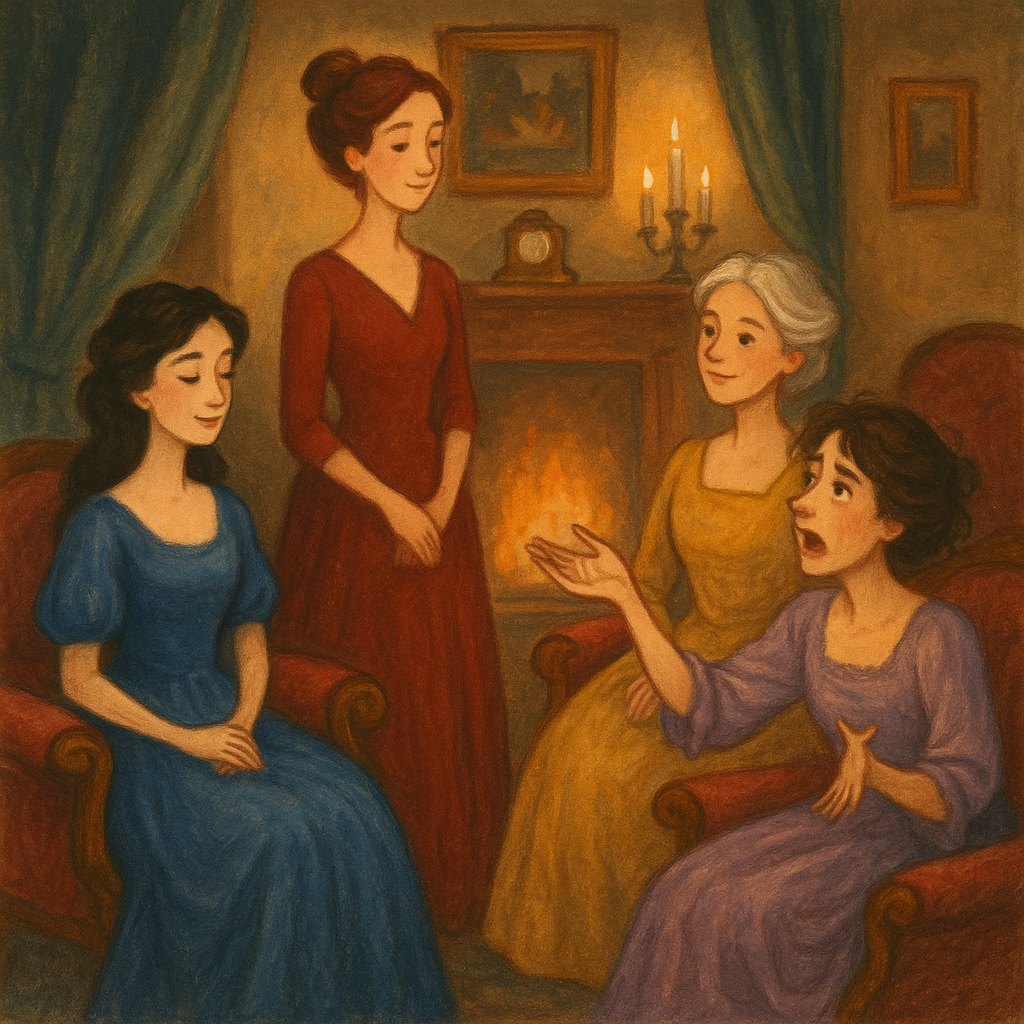
Beautiful, Gorgeous, and Glorious looked at each other.
“You keep being what you are,” said Wonderful firmly. “You are three magnificent words. Precise words. Words that mean something specific and true. I couldn’t get along without you — nobody could, if they’d only remember to use you.”
“Wonderful,” said Beautiful softly, “you really do cheer us up.”
And then all four of them laughed together at how perfectly the word had fit.