Deep in the woods, where the rocks are thick and people seldom wander, the whippoorwills make their home. They lay their eggs right on the ground — no careful nest for them — and perhaps that seems careless. But no one would call the mother whippoorwill cold-hearted. Let any danger come near her young, and she is there at once.
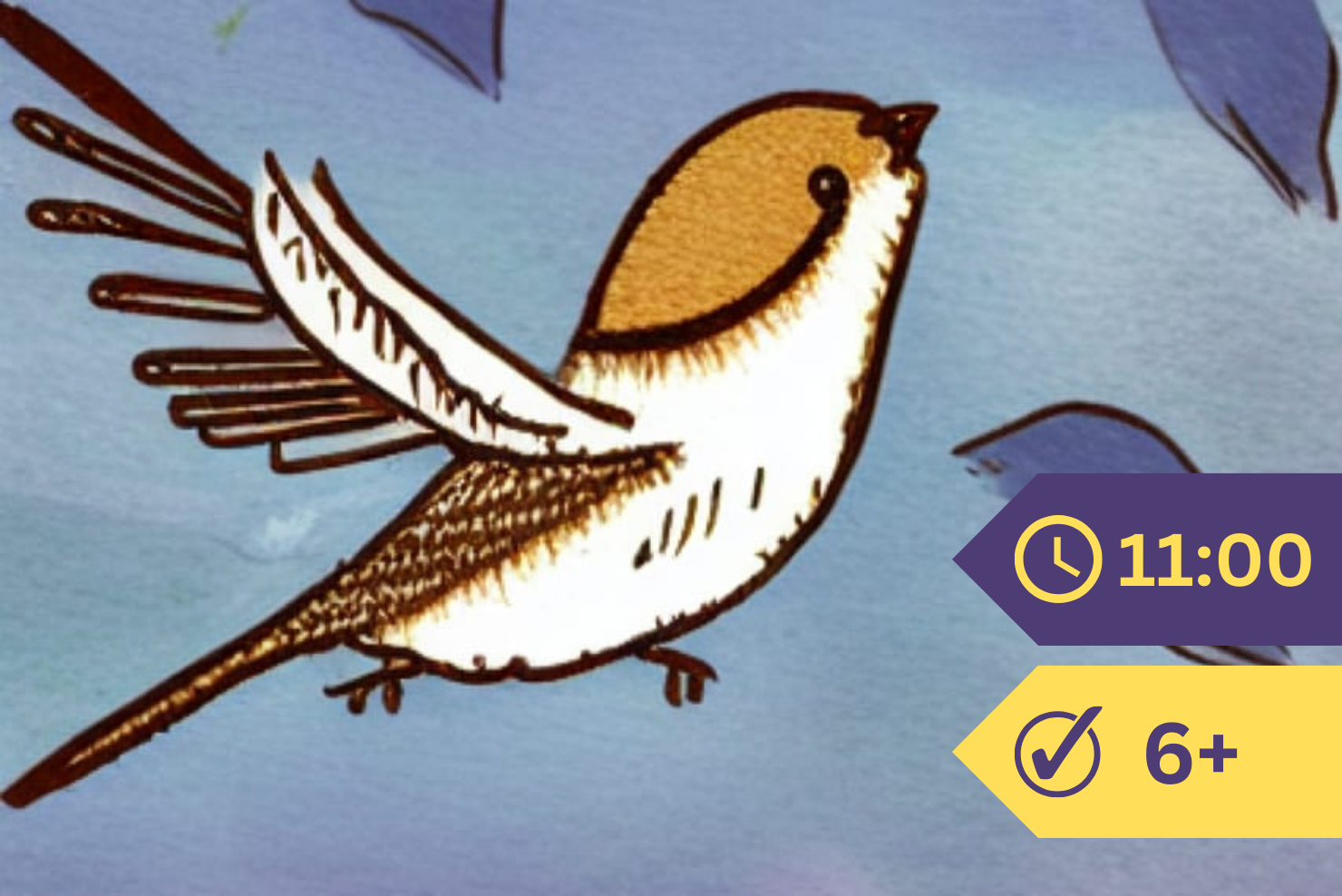
Mr. Whippoorwill is about the size of a robin, though he looks longer because of his great sweeping wings. His feathers are a warm reddish-brown, sometimes touched with grayish-white. He wears a fine white collar, and his wing-tips are trimmed with white as well. Around his wide beak grow stiff little bristles that help him catch insects on the wing. Mrs. Whippoorwill looks much the same, except that her collar and tail are tan rather than white.
The whippoorwills love the night. They sleep through the day tucked into the rocks and shadows, and when darkness falls, they wake and sing — a beautiful, repeating call that sounds both joyful and a little lonely. They sing only deep in the woods, far from people. That is why they choose their homes where few will come.
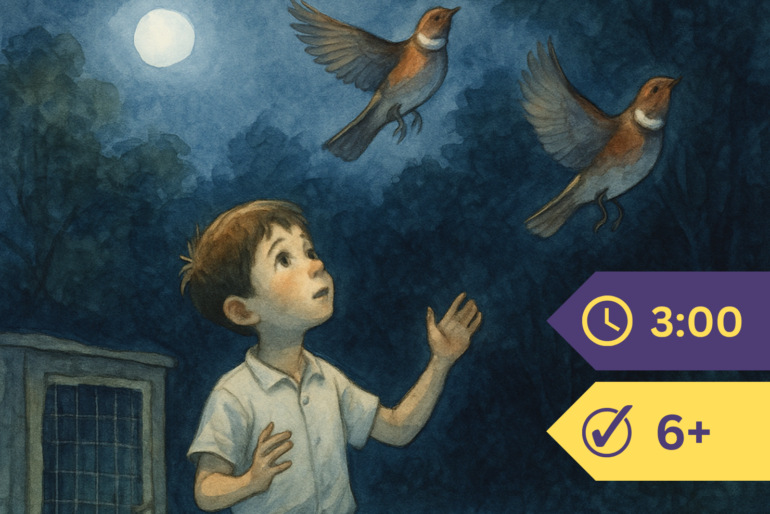
One night, a boy decided he wanted a whippoorwill for a pet. He loved their song more than almost anything. And so — after a long, patient wait — he caught Mr. Whippoorwill.
“I’ll be very good to you,” he promised. “I’ve built you a large wire enclosure in the yard, much bigger than any cage. You’ll have room to fly about. It won’t be cruel at all.”
But the boy hadn’t thought about what made the whippoorwill truly himself — the dark, the solitude, the deep woods.
Every night, the boy waited to hear his whippoorwill sing. Not a sound.
After a while, he decided the bird must be lonely without his mate. After a longer while, he went back to the woods and caught Mrs. Whippoorwill too. Surely now, he thought, they would sing.
Still not a sound. The two birds moved quietly about the enclosure, going through their days and nights in silence. They had left their song behind in the woods.
The whippoorwill will not sing in captivity. He is wretched there. He longs for darkness and solitude and the cool smell of rock and leaf. Without those things, his song has nowhere to live.
The boy didn’t understand it for a long time. But at last, he opened the enclosure and let them go.
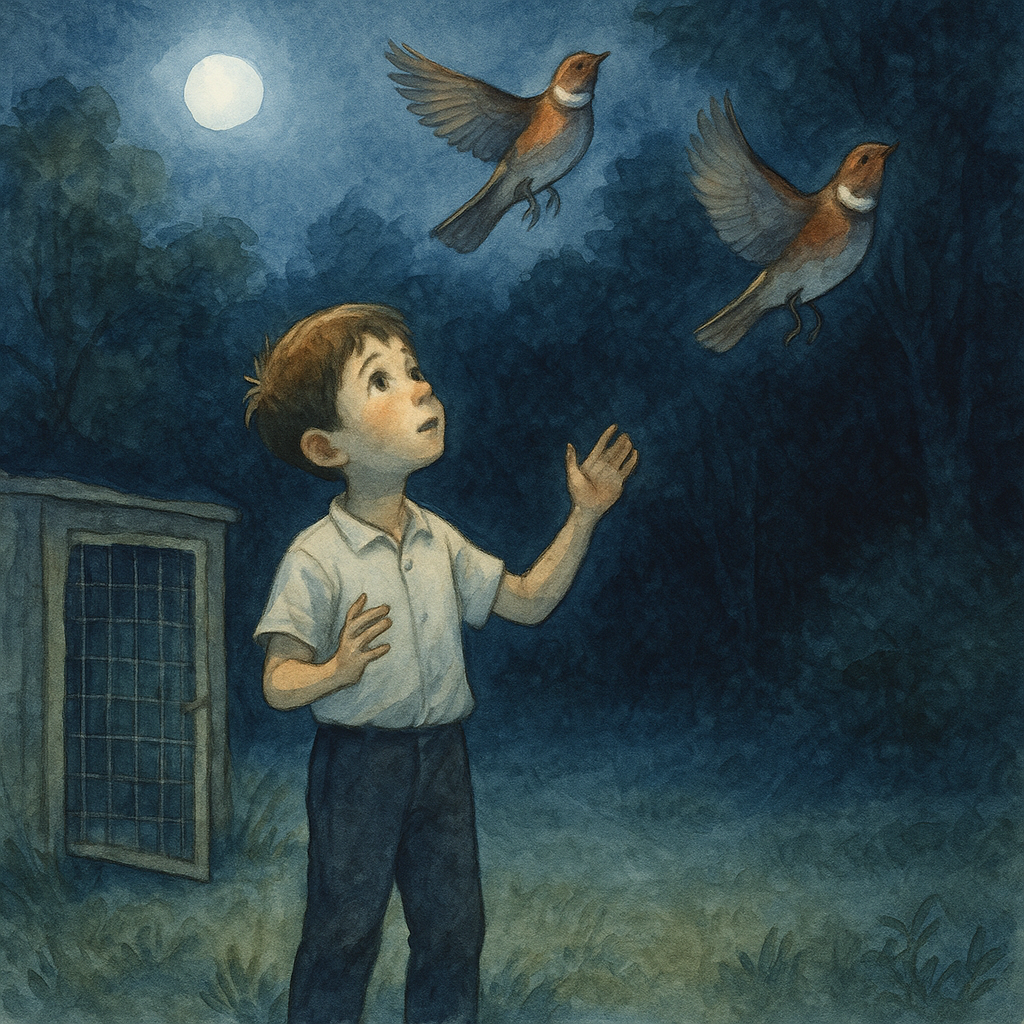
Oh, the joy of it — wings spreading toward the dark trees! The children they found waiting for them! The cool air, the quiet, the deep familiar woods. All day to sleep, all night to hunt and sing.
“I must find my note,” said Mr. Whippoorwill when he was back in the trees. “I left it here somewhere.”
“So did I,” said Mrs. Whippoorwill.
And there, deep in their own throats where it had been resting all along, they found their song again. The children joined in. The boy, listening from his yard, heard them for the first time.
“They’re singing now,” he said quietly. “They didn’t like to be caught.”
And the whippoorwills, calling back and forth through the dark, were very glad that he had finally understood.