I was made to be noticed.
A crown-shaped brooch set in superb pearls, each one perfectly matched — I was placed in the window of a fine jeweller’s shop, and people would stop in the street to point me out to each other. No one could afford to buy me. But I didn’t mind. Being admired is its own occupation.
The jeweller didn’t mind either. My presence brought people through the door, and once they were inside, they bought other things. I was useful simply by existing, which suited me very well.
Then one morning a magnificent carriage drew up outside — four horses, two coachmen, two footmen in full livery. Every head in the shop turned.
“The queen,” someone whispered. “It’s the queen herself!”
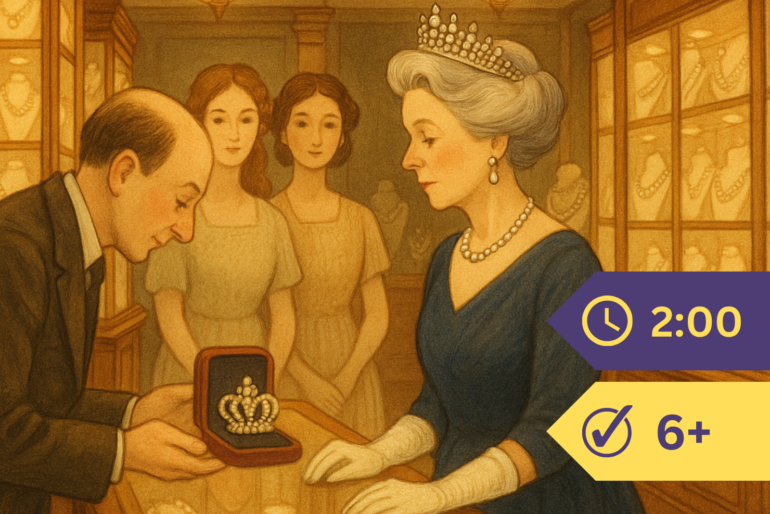
She stepped in, attended by her ladies, with the particular quiet manner of someone accustomed to being the most important person in any room. The jeweller trembled with the honour of it.
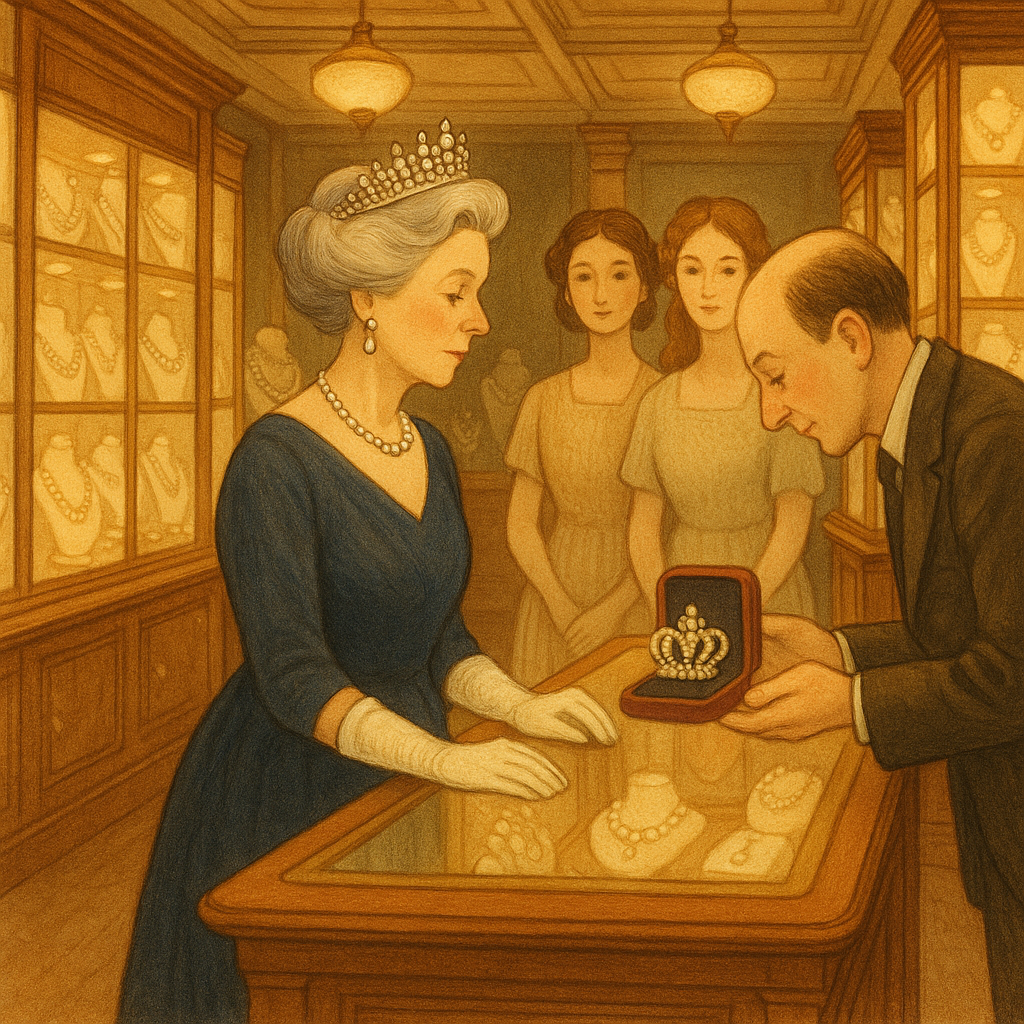
She had heard about me, she said. She had come to see if I was as fine as people claimed.
I thought: a crown need not bow to the queen. But I held my pearls at their best angle.
She bought me. I was fastened into a little blue velvet box and carried to the palace, and from that day forward my life was what I had always been suited for — court dinners, balls, receptions, the dazzle of a queen’s world, the roar of crowds in the street below.
But the proudest moment of all came much later.
The queen unclasped me from her own dress and gave me away. The young woman she gave me to had a father who had served bravely in the war. The queen pressed me into the young woman’s hands as a token of her appreciation — not for wealth, not for beauty, but for courage.
After all those years in the jeweller’s window, being given was better than being admired.