“Time to get to work,” said Mrs. Potato Bug.
“Past time,” said Mr. Potato Bug.
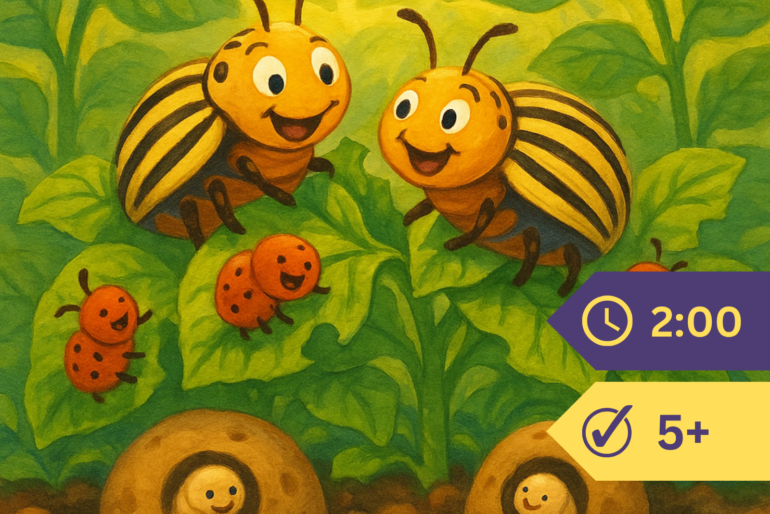
“Oh, we love work,” said the little potato bugs, who were brick-red with neat black dots and full of enthusiasm.
The grown potato bugs were yellow and black on top, blue-brown underneath, and carried a little yellow juice they were not shy about deploying on anyone rude enough to pick them up. As they explained it: they were entitled to treat the potatoes as they liked, but it was quite another thing for humans to handle them without an invitation.
They spread across the potato plants and set to work eating the leaves, which were delicious.
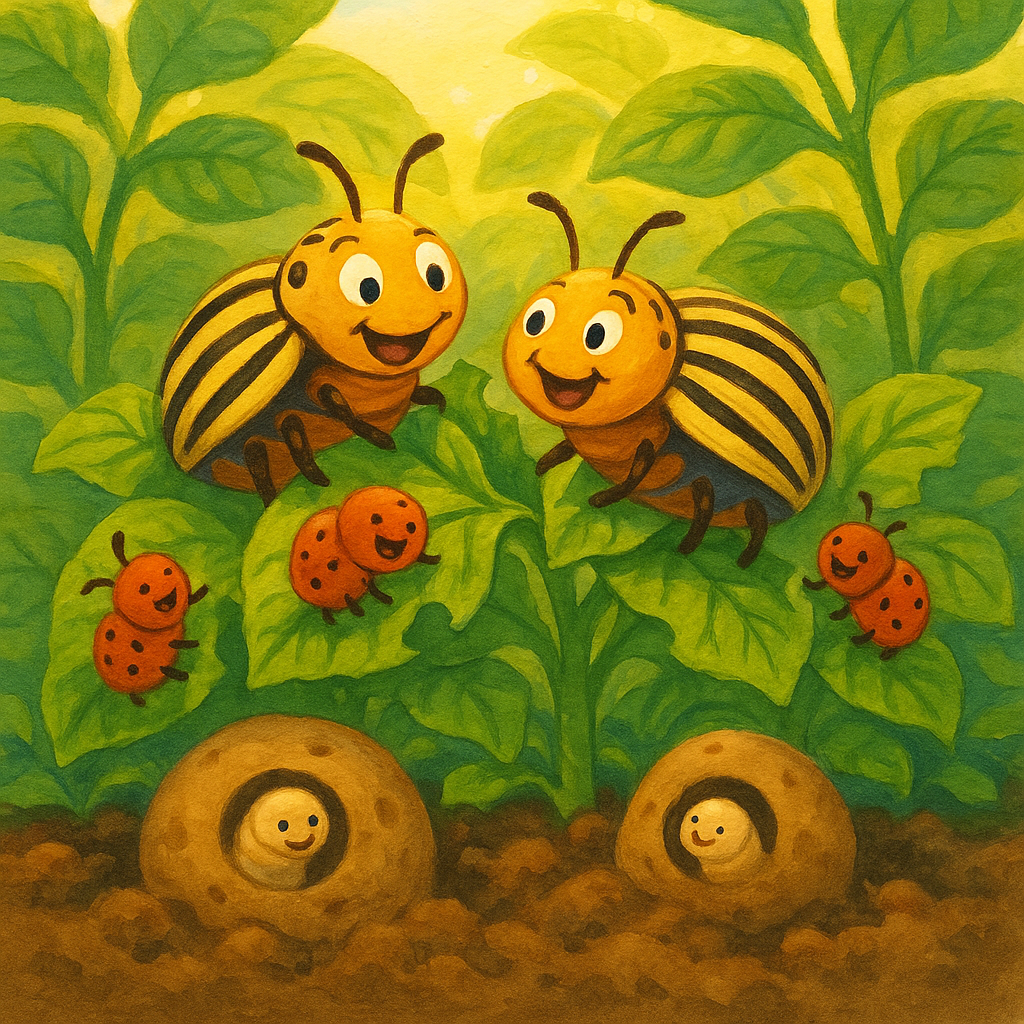
Presently they encountered some potato grubs, who were busy with the potatoes themselves — boring holes and eating from the inside.
“We’re on the leaves,” the potato bugs explained. “What are you on?”
“The potatoes directly,” said the grubs. “We tell each potato: ‘Dear potato, we love you. Allow us to express this love by eating you.'”
The potato bugs found this extremely funny.
“The farmers don’t see the humor,” the grubs admitted. “They feel they’re the ones entitled to express that kind of love.”
“Absurd,” said the potato bugs.
“Well,” said the grubs, “it’s not entirely absurd if you look at it from their side. But then, who expects a grub to put itself in the place of a farmer? No one. So why would we bother?”
“Exactly our position,” said the potato bugs. “The farmers don’t invite us. They try to drive us away. If they wanted friendly neighbors, they should have been friendlier neighbors.”
And so the potato bugs and the grubs continued their work, entirely unbothered by any sense of wrongdoing, which was naughty of them, but very characteristically insect-like.