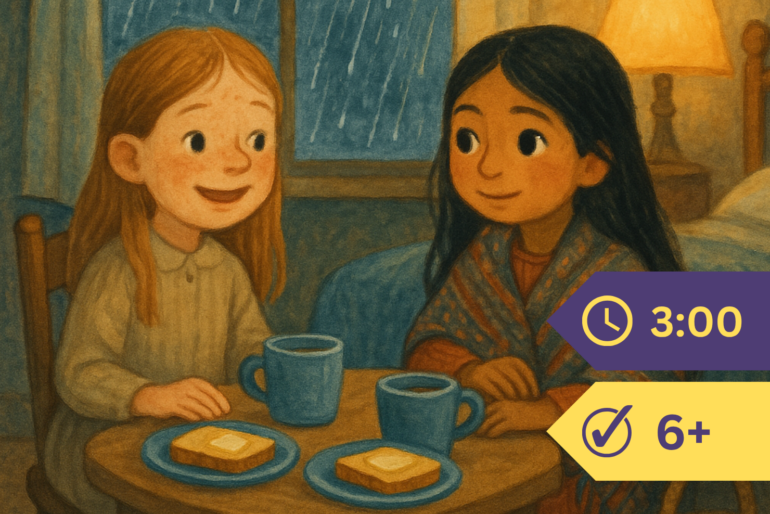
In a certain old city, Native American families came to market every Saturday morning — the women carrying large hand-woven baskets balanced on their heads, their arms full of beaded moccasins and small ornaments. They arrived on slow wagons drawn by patient oxen, and always had time to talk.
One day a girl named Olive answered the doorbell and found a young Native American girl standing on the step, about her own age.
“Would you like to buy a pretty basket?”
Olive was immediately delighted — and a little flustered, because she knew perfectly well she wasn’t beautiful. She had freckles and a wide mouth and very straight, thin hair, and she was tall and slightly awkward for her age. She had never been called beautiful before, and even knowing the girl was mistaken, she felt warm all over.
“You’re beautiful yourself,” said Olive — and she meant it. The girl had long black hair and large dark eyes and an expression that was quick and alive.
“Me? Beautiful?” The girl shook her head. “Oh, I don’t think so.”
They each found the other remarkable because each was so entirely different from herself.
Olive bought several baskets for her mother and a small beaded purse for herself. Then she asked if the girl would like to come in for some cocoa. The girl smiled and said she would.
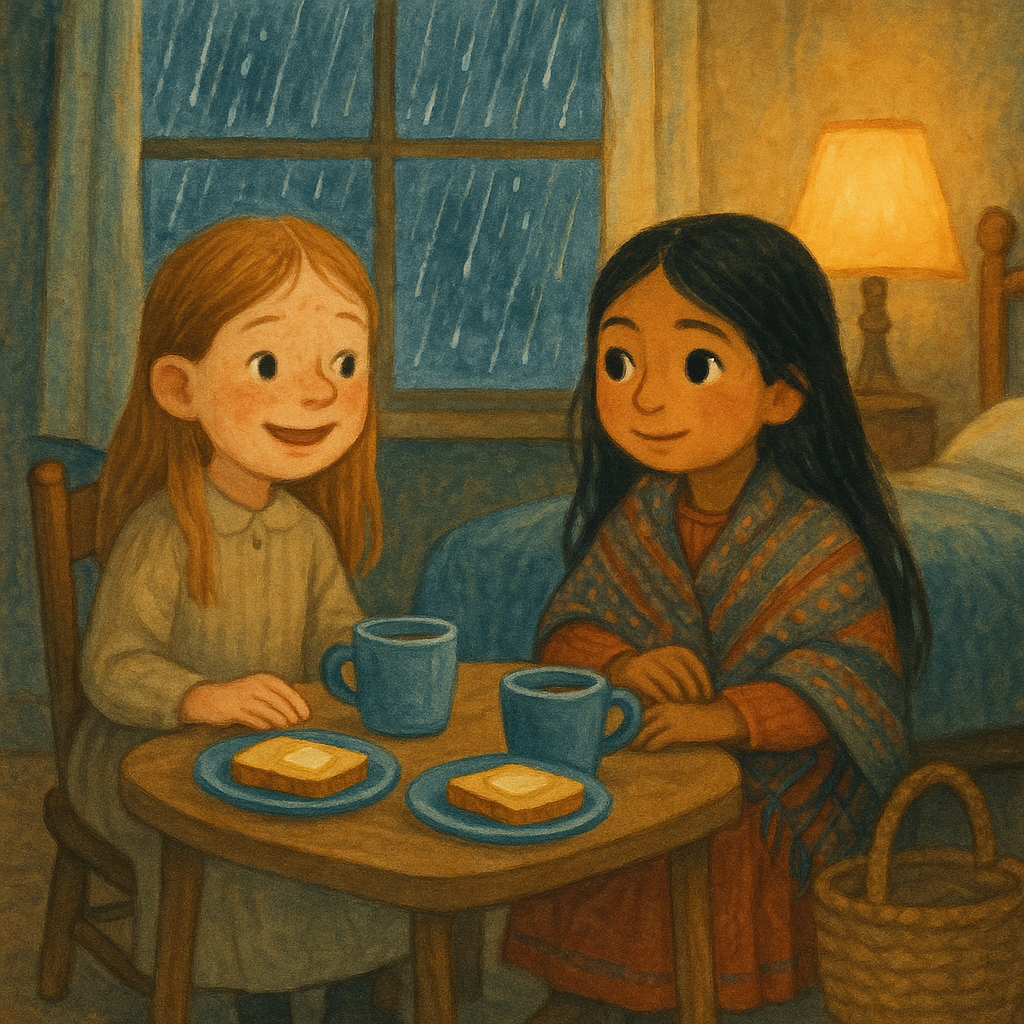
They sat in Olive’s room with blue cups and blue plates, eating bread and butter while the rain came down outside.
“Would you tell me a story?” Olive asked.
“Yes,” the girl said. “My brother — he is a very big man. Tall and strong.” She held out her arms to show his width, stood up to show how tall. “He built a canoe — a beautiful red one. He paddles it so quietly on the water it never makes a sound. We have a river near our house, and he keeps the boat tied to an old tree at the bank. He takes us all out in it.”
She paused, smiling.
“But do you know what he named it?”
Olive tried to guess. She tried many names — something grand, something heroic. She was wrong every time.
“He didn’t name it after a great warrior or a hero,” said the girl. “He named it after our baby brother. The little one our mother carries. He called the boat the Papoose — which is what we call a baby. His canoe that goes out into the big waves without tipping, that is as strong as he is — he named it after the smallest person in our family.”
Her eyes were bright as she put the basket back on her head and prepared to leave.
“Will your family come someday to see the big Papoose and the little Papoose?”
And Olive’s mother, who had been listening from the hall, called out: “We will.”
Both girls left each other smiling.