What is a fritillary?
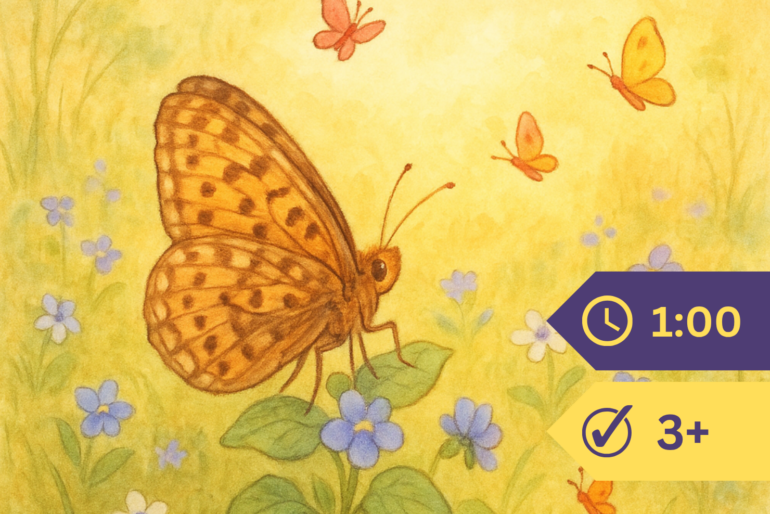
It sounds like it might be a flower, or a fruit, or a bird, or possibly a large rock. It is none of those things. A meadow fritillary is a butterfly — brown and speckled, not the showiest of creatures, but one with an interesting life.
Mother Meadow had become a butterfly in June. After four weeks, she laid her eggs. A week after that, there were caterpillars. Then chrysalides, and then, after another week of patient waiting, full-grown butterflies — and she was a mother. Wait a little longer and she would be a grandmother. And by summer’s end, perhaps even a great-grandmother.
The last generation of the season, born in September, would feed on violet leaves — the blue, white, and purple ones that grew in the low wet meadows near the swamps. If the cold came early, they would simply go to sleep, half-grown, and wait out the winter. Come spring, they would wake up ravenous and eat twice as much to make up for it.
“Our cousins,” Mother Meadow told her children, “have a row of silver spots along their wings, which is why they’re called the Silver-Bordered Fritillaries. We are plainer than that. Brown and speckled.”
“Is that a bad thing?” asked the children.
“Not in the least,” said Mother Meadow. “We are just as happy as our handsome cousins. And you, my small ones — you began your lives resting on violet leaves. Some of you on the stems, most of you right on the beautiful green surface. Plain butterflies we may be, but I gave you beds fit for royalty.”
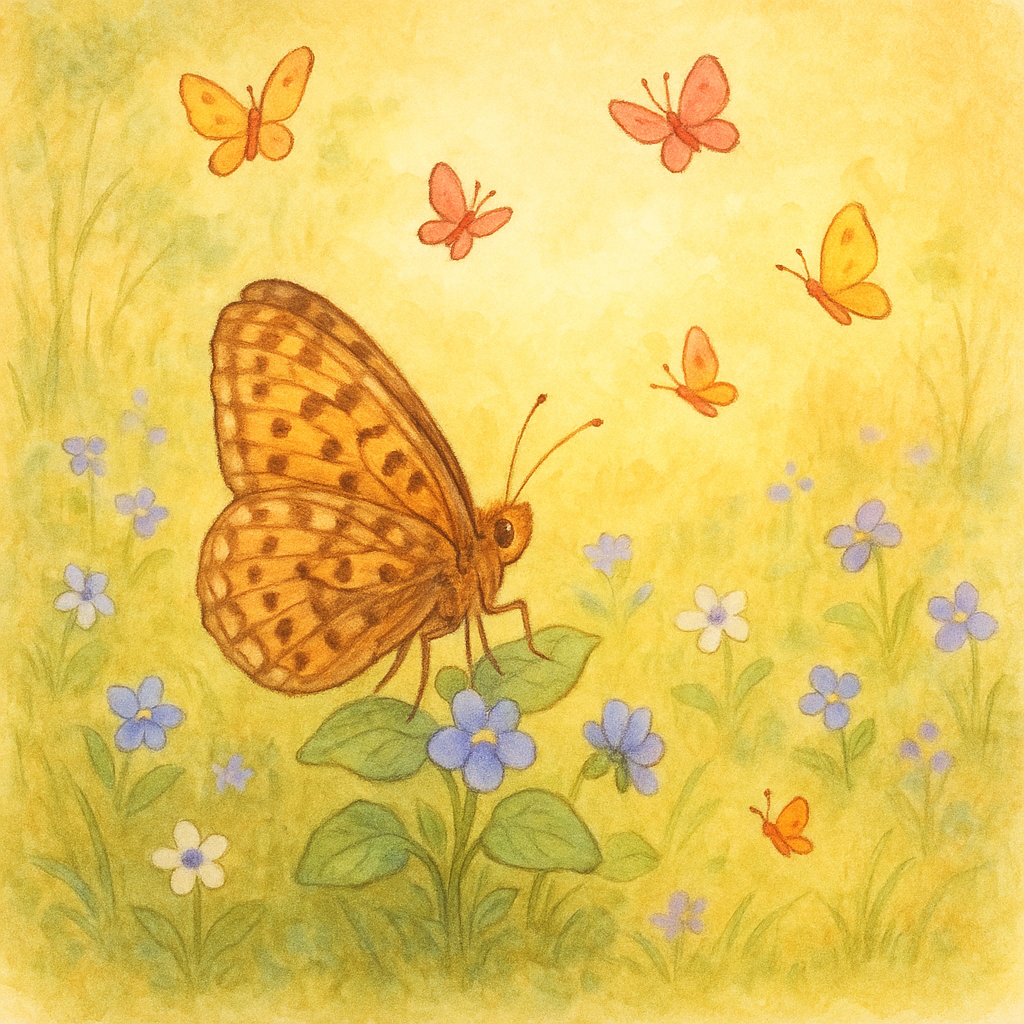
“We’re happy,” said the little butterflies, lifting off into the warm summer air.