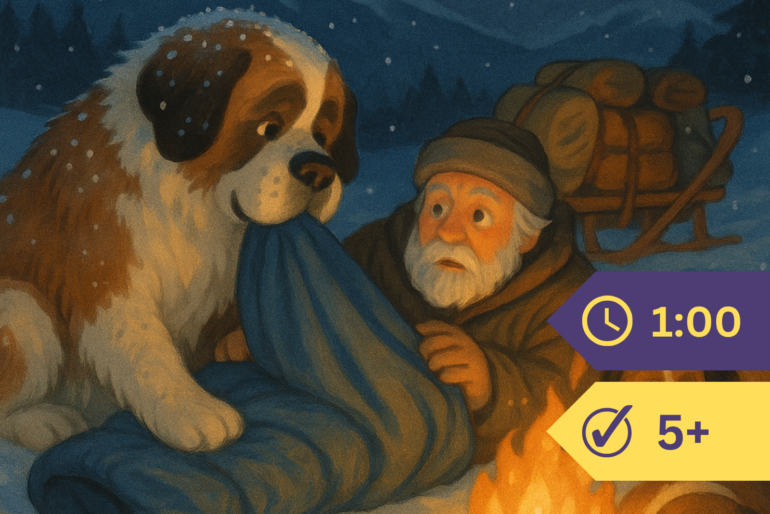
An old man who kept a team of St. Bernard dogs had made camp near a small mountain settlement one winter night. The dogs had carried their provisions on the sleds, and now they lay rolled in warm rugs around a good fire, and the old man slept peacefully in his sleeping bag.
He had not been asleep long when one of the big St. Bernards began tugging at the bag.
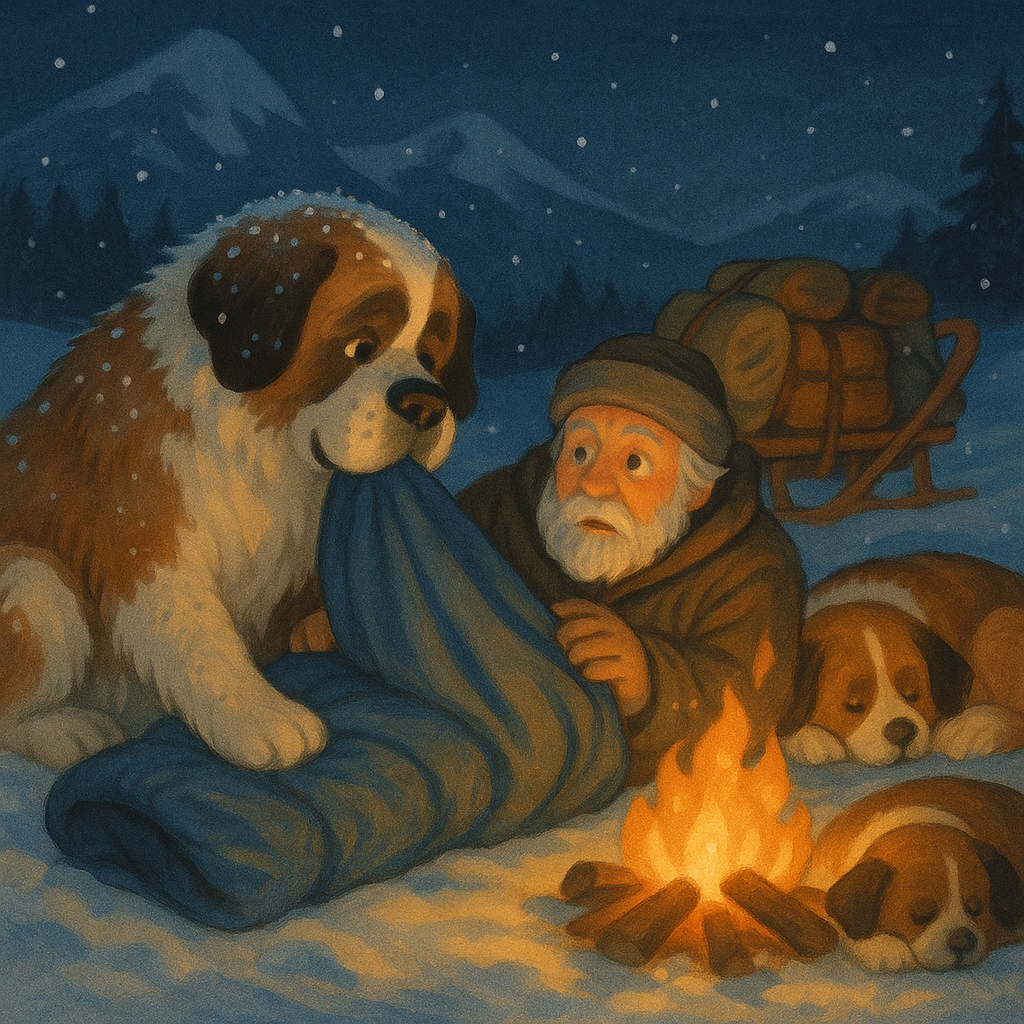
“What is it, my beauty?” the old man murmured. But the dog kept tugging, and would not stop.
The old man sat up, still half-dreaming. Then he heard it — a faint sound, far out in the dark, the wailing of someone in trouble. He dressed quickly, hitched several of the dogs to a sled, and pushed out into the blizzard.
They followed the sound. There, half-buried in the drifted snow, lay a man nearly frozen to death. Together, the old man and the dogs loaded him onto the sled and pulled him back to camp. Beside the fire, they rubbed the warmth back into him, and gradually he came around.
He had set out for the next settlement to find food, he said. The snow had blinded him, and he could go no farther. He was overcome with gratitude and kept trying to thank the old man.
But the old man shook his head.
“Thank the dog,” he said. “He heard you. He woke me. The rescue was his.”