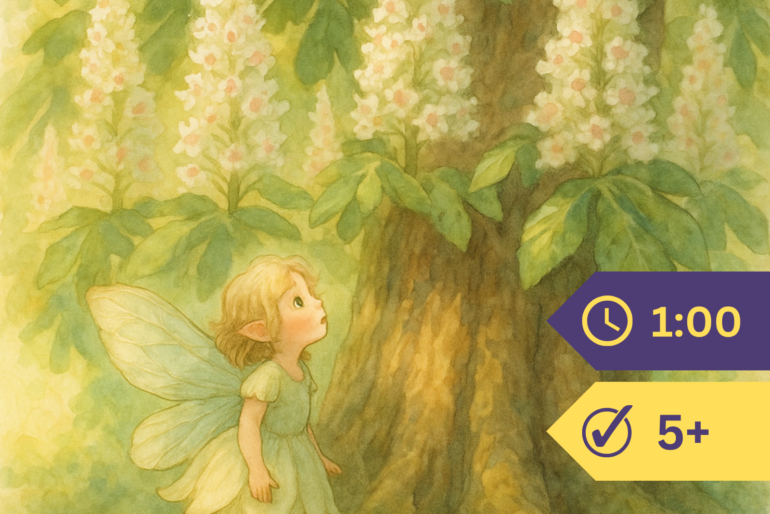
“I have a question,” said Fairy Ybab, looking up at the great tree with its towers of blossoms. “Why are you called a Horse-Chestnut? You don’t look like a horse. And surely horses don’t eat you?”
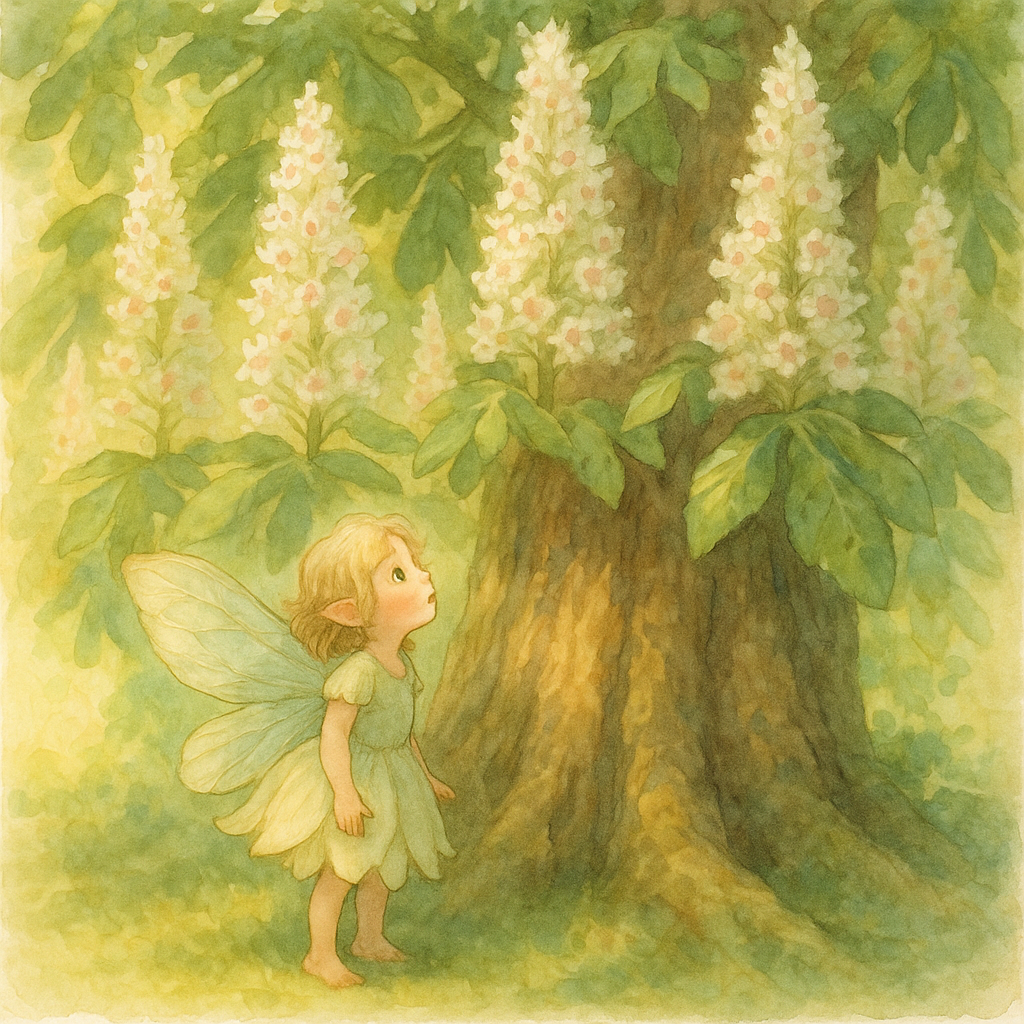
The Horse-Chestnut gave a low, whispering laugh.
“I’ll explain. Trees, you see, live without appointments. We don’t have to be somewhere at noon, or home for dinner at seven. We can’t go anywhere at all, in fact. And we’re entirely satisfied with this.
“You’ve never heard a tree pulling itself up by the roots and crying out in a leafy voice: ‘I’ll be terribly late for the birthday party.’
“Now. My name. I’m called a Horse-Chestnut because of the marks on my branches — where each leaf stem separates in autumn, it leaves behind a small scar that looks exactly like a horseshoe, complete with nail-holes. Look closely next autumn and you’ll see them.
“As for horses eating me: no. My nuts are far too bitter. Children love to play with them — they’re large and handsome things — but they’re not good for eating, not for horses, not for anyone.
“So there you have your answers. The horseshoe scars. The bitter nuts. And a tree with no appointments, going absolutely nowhere, perfectly content.”