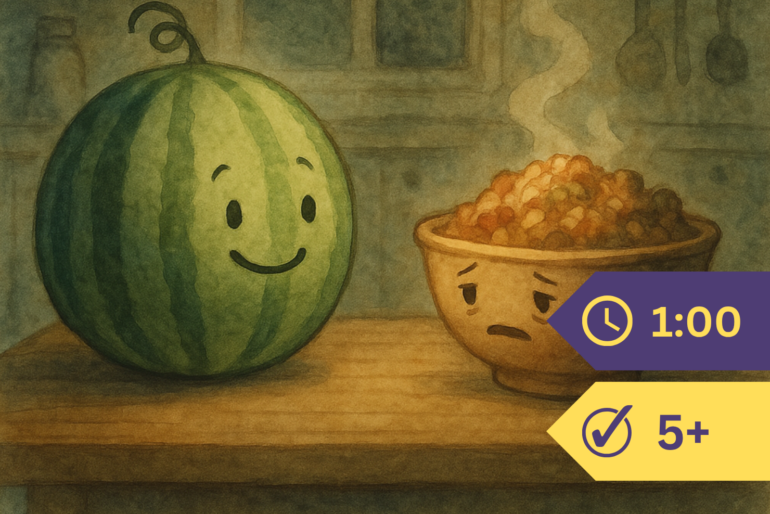
Late one evening, the hash and the watermelon were having a conversation.
“I must tell you what the lady of the house said today,” the hash began. “‘Well, we’ll have to have hash again, I suppose. Everyone will groan — but one can’t waste food. I’ll bring out the watermelon for dessert to make up for it.'”
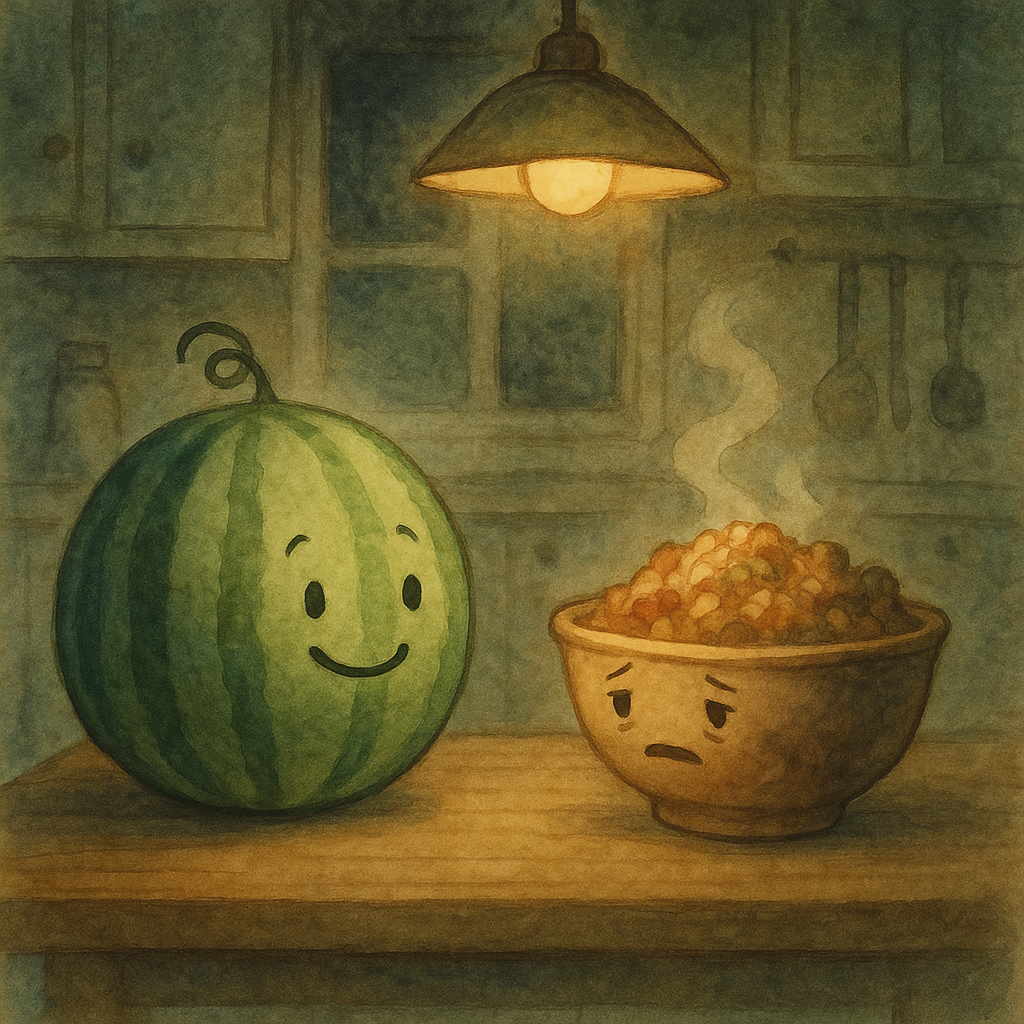
The watermelon was sympathetic. “Oh, dear. I should think you’d resent me for it.”
“Not in the least,” said the hash, cheerfully. “I haven’t a jealous disposition. I know hash has to be made — it always has been, throughout history, because things must not be wasted. But I do wonder sometimes if I’m quite as dreadful as people make me out. If cooks would take a little more trouble — proper seasoning, a few good additions — people might actually be pleased to see me. Can you imagine? ‘Oh, we’re having hash tonight — goodie, goodie!'”
“I believe they’ll come to appreciate you one day,” said the watermelon kindly.
“Ah, that’s just it,” sighed the hash. “I have true worth and no charm. I wish I had just a little charm, so people would look forward to me. In the meantime, I send out my earnest appeal to every cook in the land: please season us properly. Hash is tired of insults and would like to be liked, just for a change.”