“There is nothing,” said the rake, “quite so satisfying as making everything tidy. The leaves in autumn, raked into piles for the bonfire. The freshly cut grass, smoothed and laid flat. I am very good at this.”
“That is certainly useful,” said the trowel. “But consider what I do. I loosen the soil around the flowers — carefully, just enough — so they can breathe without losing their footing. Plants want firm ground, but they want it soft, and I understand the difference.”
“You make excellent points,” said the hoe. “But I would like to speak about the string-beans. Without me, I don’t believe there would be string-beans at all. I keep the rows turned and the soil interested. I make the beans feel the ground is paying attention to them. That is why they grow.”
“When anything needs transplanting, that’s where I’m essential,” said the trowel. “I can bring up a root with enough of its own soil still attached that the plant barely notices the move. It’s like packing a little piece of home to take along — a familiar handful of earth that says, don’t worry, something of the old place came with you.“
“I,” said the lawn-mower, “am the lawn’s barber.”
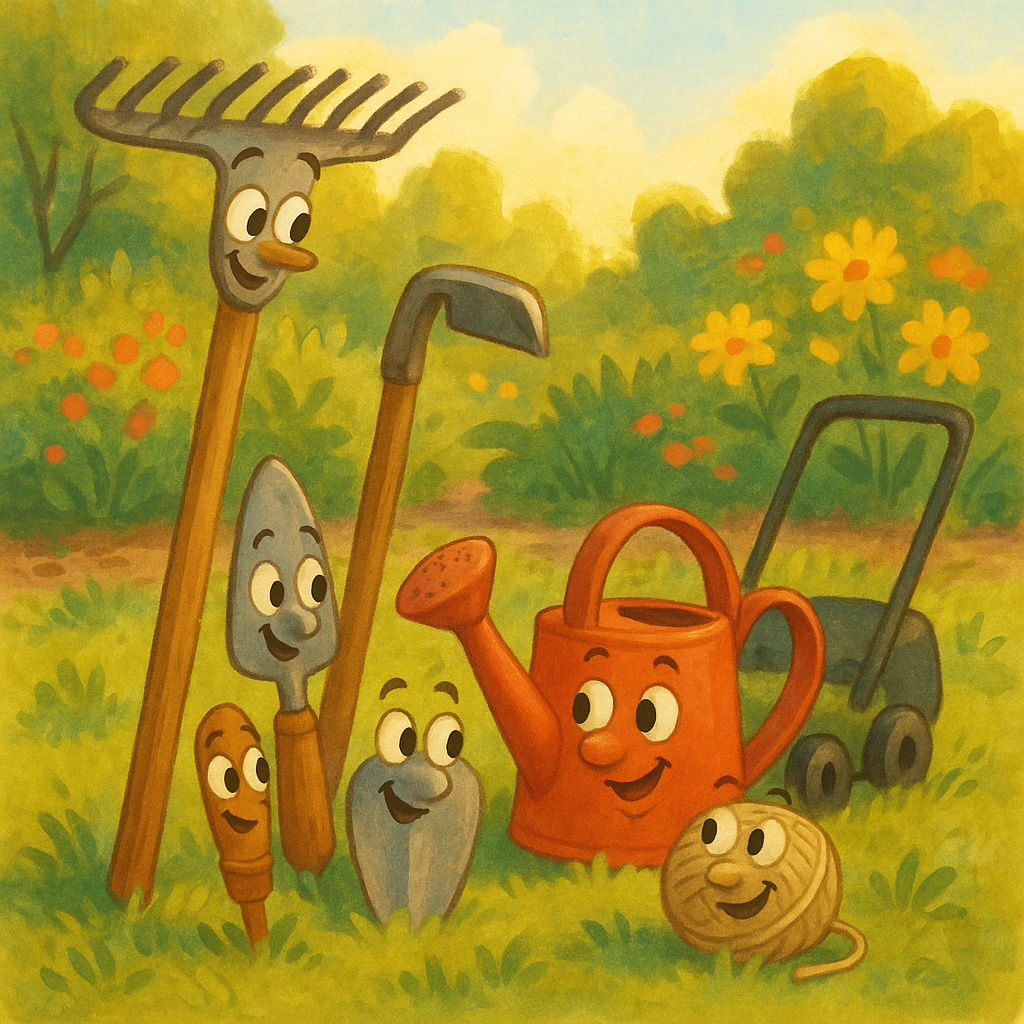
There was a moment of silence, and then all the tools moved about in their funny, clattering way that was really laughter.
“Not bad,” said the rake.
“I do my part too,” said the garden fork modestly.
“We can do a great deal,” said the balls of string. “We hold things upright when they want to lean.”
“So do we,” said the sticks the climbing plants wound themselves around.
“And I,” said the watering can, “am the one who ties everything together. Without water, none of the rest of it matters.”
“True,” the trowel admitted.
The rake looked around at all of them. “We are all useful,” it said. “Every single one of us. And I’ll tell you what I’ve noticed: the arguing about who is most important wastes time. When everyone does their part and leaves off the boasting, the work gets done twice as fast.”
No one disagreed.