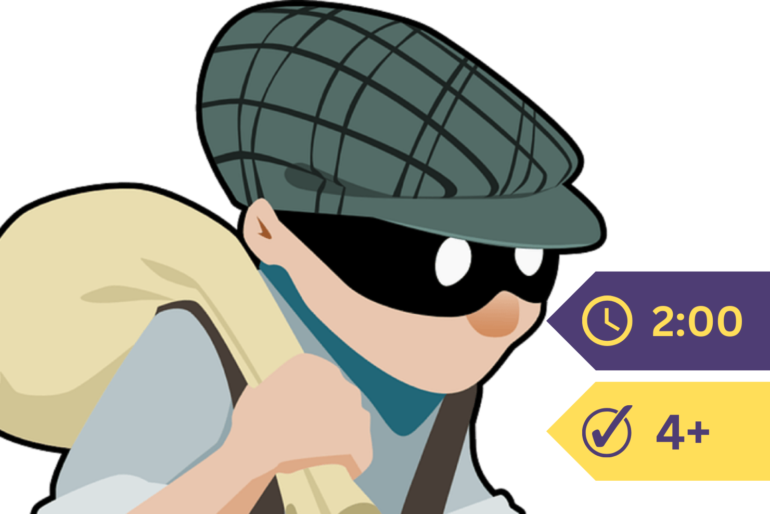
A Day Thief had no money in his pocket, but he had a very hungry stomach. He didn’t know what to do, so he left the city. After walking for a while, he saw a crow sitting on a branch, cawing: “Dig! Dig!”
“I would rather go hungry than do hard work with a hunched back,” answered the Day Thief.
Then a magpie flew over and gave him some good advice, saying: “Beg! Beg!”
“Keep your beak shut,” shouted the Day Thief. “I won’t beg for bread. I’m far too proud for that.”
And so he continued on his way. Finally, he came across a sparrow. Sparrows always know what to do in difficult situations. She was sitting on a branch and chirped: “Steal! Steal! Steal!”
“Well, that’s something,” said the Day Thief. “The crow and magpie didn’t even suggest that, and they’re not stupid. But stealing is the easiest profession, and maybe they didn’t tell me about it out of pure envy. You know what, little sparrow, I’m going to follow your advice.”
And so he set out to steal. But… he was caught and put in prison. When he had to dig in a field with the other prisoners, the crow was sitting on a tree again, cawing: “Dig! Dig! Dig!”
To this, the Day Thief replied: “You’re right. If only I had followed your advice earlier…”