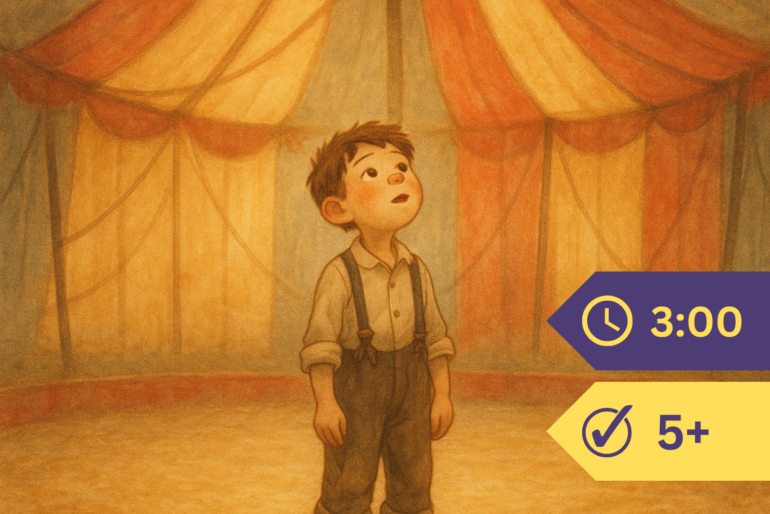
There was a boy named Jay Rial who loved the circus more than anything else in the world.
He loved the train whistle that announced it was coming to town. He loved the old-fashioned kind that used to travel by road, the wagons creaking through town before dawn. He loved the circus band, the clowns, the animals, the smell of peanuts and sawdust, and the beautiful riders on their beautiful horses. Every time he went, he wished he had bigger eyes so he could take in more, and he wished the performers never had to sleep.
He used to follow the circus parade all the way through town, and he didn’t mind waiting for it when it was late — because being late at the parade grounds meant you could sometimes watch them unpack, and maybe help a little, and once Jay Rial had been allowed to stand right in the middle of the sawdust ring while they were putting up the tent. That had been one of the best days of his life.
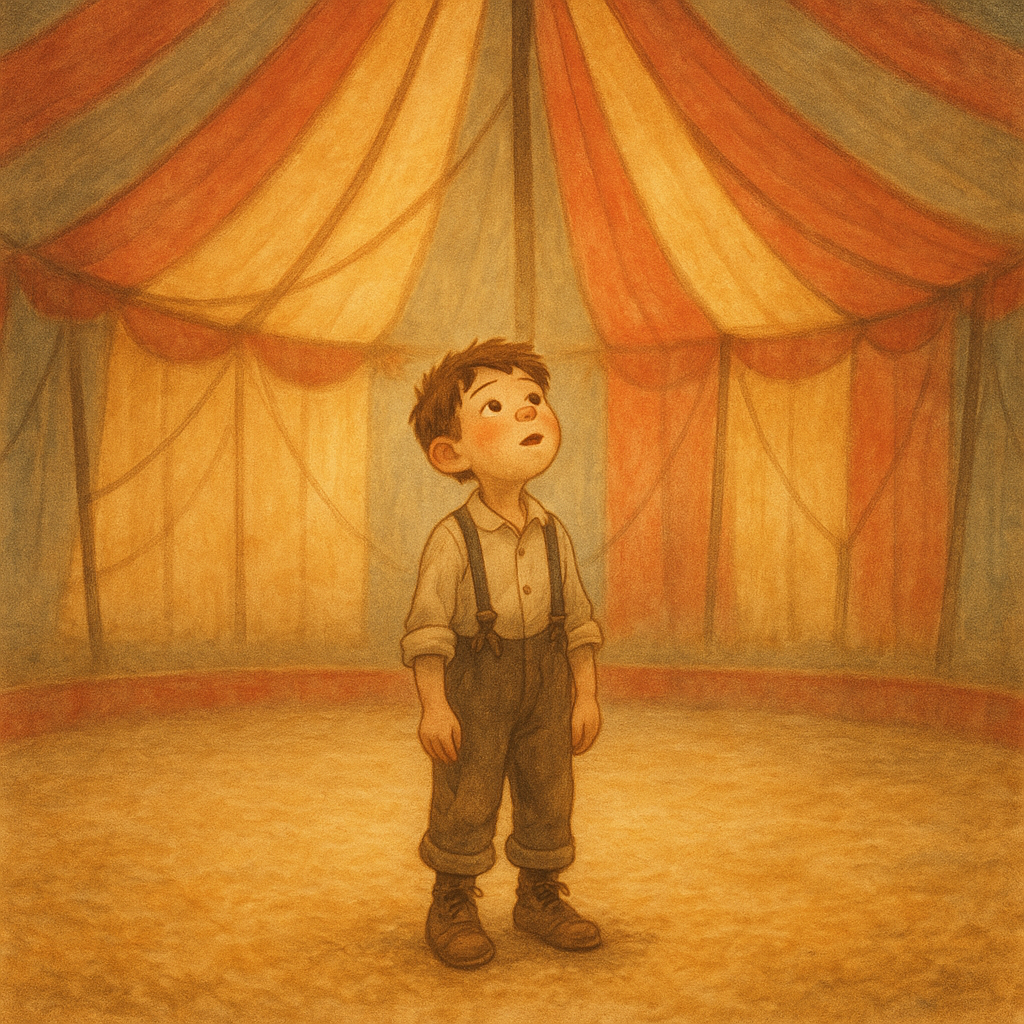
There was only one thing about circus day that ever made him sad.
Some children couldn’t go.
Jay Rial had always been lucky. He could earn his ticket doing chores around circus time. But he knew boys and girls whose families couldn’t manage it — who watched the parade go by and didn’t follow, because there was no money for a ticket.
“If I ever grow up,” said little Jay Rial, “I’m going to take as many children to the circus as I can.”
He called it his circus dream. Sometimes he would actually dream about it at night — hundreds of children with tear-streaked faces, because they’d been sure they were going to miss it, and then him coming along and all of them saying Me, too? and him saying Yes. All of you.
It was a beautiful dream.
Here is what is easy to do with a dream like that: forget it. When the money finally comes and the years have passed, it’s easy to say, I have more than I used to, but I find I need it all. There are boys who say they’ll make sure poor children get ice cream once in a while, and then they grow up and forget that there are whole hospitals full of children who almost never hear the ice cream cart.
Jay Rial was different. He remembered.
He went into the circus business — the part where you tell newspapers in every town that the circus is coming, so everyone can look forward to it. And every year, when the circus came to the biggest city on the tour, Jay Rial arranged for something special: one entire afternoon when no one needed a ticket. Every child in a hospital or an orphanage, every child who was ill and couldn’t get about, every child who otherwise couldn’t come — they were all invited, free.
And when the lists came in from the hospitals and homes, there were so many names the tent couldn’t hold them all.
Jay Rial’s answer was to hold a second circus afternoon.
He stood and watched the thousands of children shrieking and laughing in the sawdust-smelling air, and he smiled the smile of a man whose dream had come true.
Jay Rial was one of those people who don’t just dream about doing good. He was one of those people who do it.