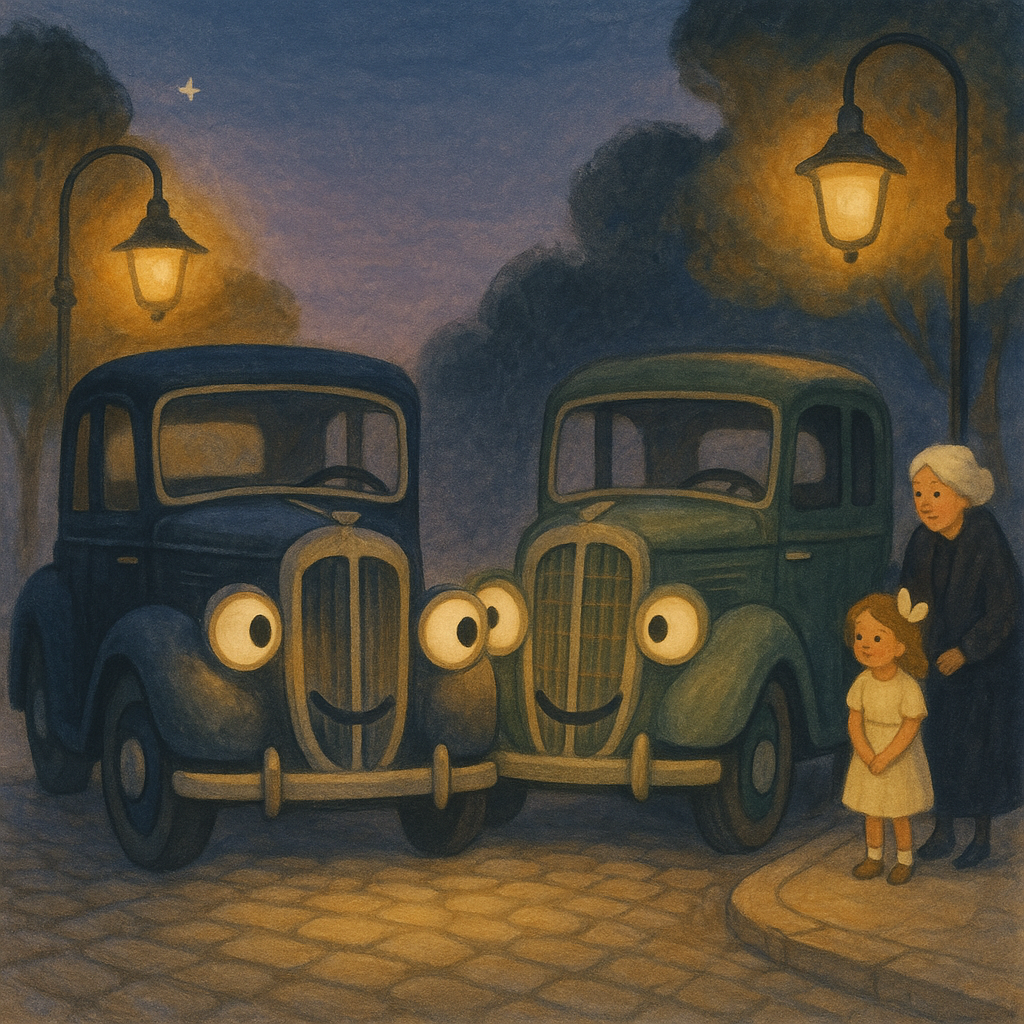
“Honk-honk, it’s a pity,” said one automobile to the other. They were parked while their owners were inside, and they had been listening.
“I know I seem rude. I scare people. Children run when they see me coming. I do feel bad about it.”
“What are you thinking about?” asked the second automobile.
“I was parked here earlier and I overheard a little girl talking to an elderly lady. The girl said she’d been ill — her heart was still recovering — and she couldn’t manage to run across the street, but automobiles kept forcing her to hurry.”
“And the old lady?”
“Said she was the same way. Ill, supposed to take it slowly, but always having to rush to get out of our way. She said it didn’t seem fair — that we were in no hurry, not going to fires or accidents, just moving along, and yet we made people with weak hearts run.”
The second automobile was quiet a moment.
“Sometimes I wish I had a different owner,” it said.
“Maybe we’ll be sold,” said the first, “and kinder people will buy us. People who think about those who are walking.”
“There’s the first star of the evening,” said the second automobile.
So the modern automobiles made their wishes — in the old, old way.