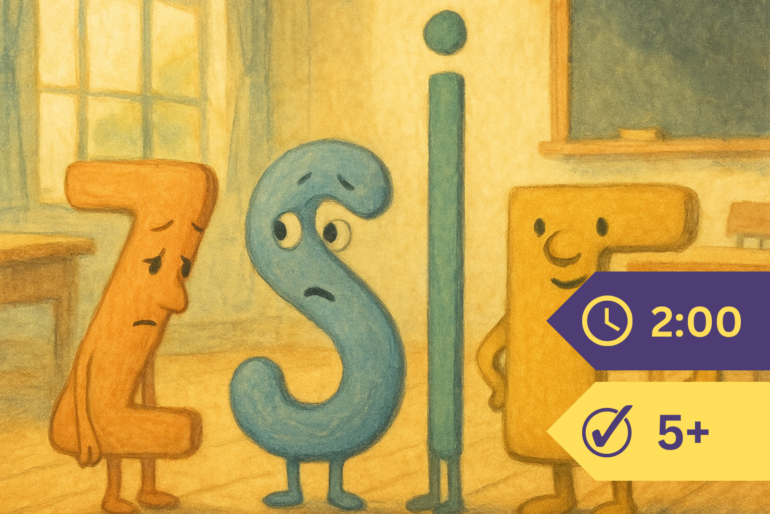
“My story is a very sad one,” said the letter Z.
“Alphabet letters don’t cry,” said S. “People cry over us, but we don’t cry ourselves. Tell us.”
“I’ll tell you,” said Z. “But first, note: I am neither angry nor cross.”
“You did use S twice in that sentence,” S pointed out, “and ‘angry’ and ‘cross’ mean the same thing.”
“Fair enough,” said Z. “What I mean is: I have a good disposition, considering. The trouble is that I do so little work these days, I’ve almost forgotten what I’m for.”
The other letters murmured sympathetically.
“And here is the cause: the letter S. No offence meant.”
S wriggled. “None intended, I assure you.”
“I know you didn’t,” said Z. “You can’t help it — neither teachers nor writers ask your opinion. But think about what’s happened. There are dozens of words that used to need me, words that ended in I-Z-E. And now they write I-S-E. Every one of them. And there is nothing I can do about it.”
“A sad story,” said the other letters.
S twisted anxiously. “You’re quite sure you’re not angry?”
“Quite sure,” said Z. “It’s not your fault. But you can see how it is. I sit here day after day, and almost nobody calls for me.”
A short silence. Then S spoke up, together with I and E.
“Come and join us,” they said. “Right now. We need you, Z. Without you, we’re nothing at all.”
Z went to where the others were standing, and all four arranged themselves: S — I — Z — E.
SIZE.
And they played their word with great enjoyment, making themselves very large and then very small and everything in between — because that, after all, was exactly what they meant.
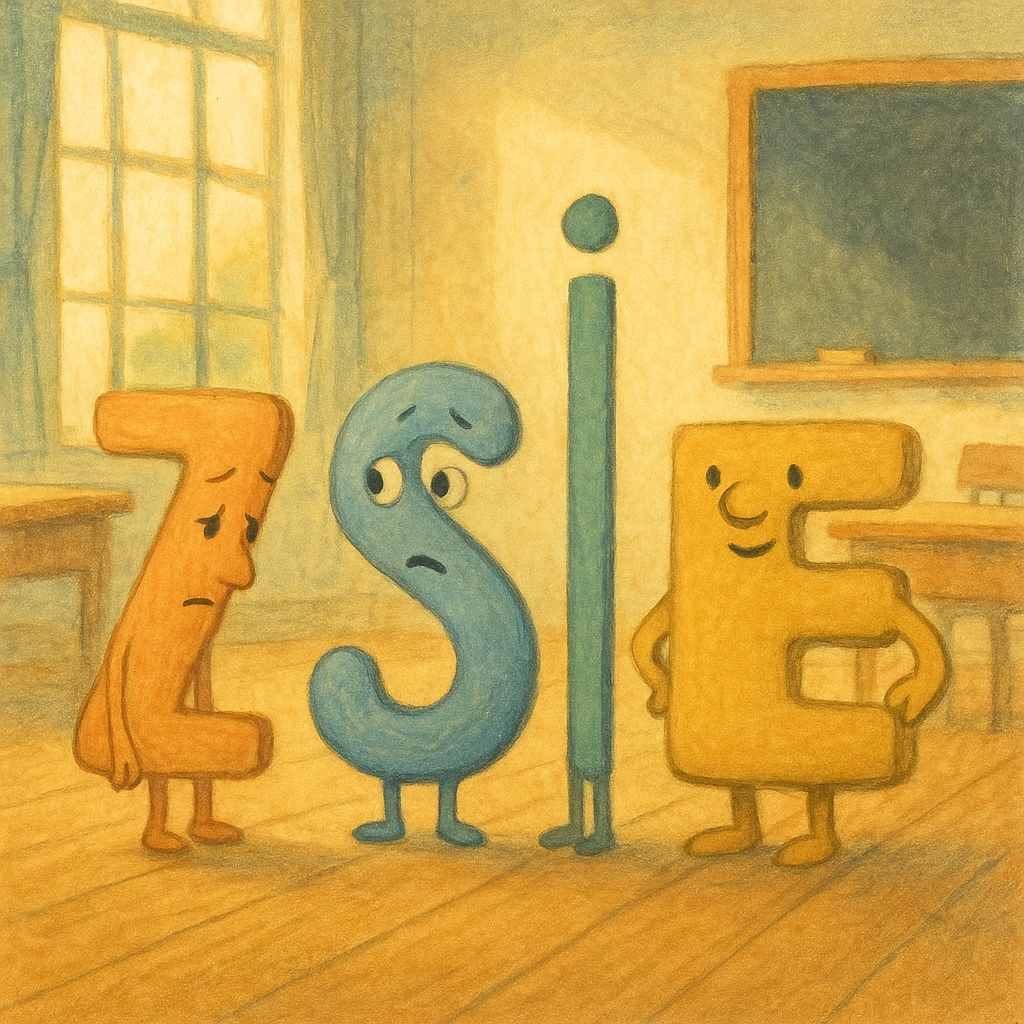
“Thank you,” said Z quietly. “You’re very kind.”
“Thank you for not being angry,” said S. “You’re a good sport.”
Z made its way back into the classroom with a lighter heart, hopeful that it would not be entirely forgotten.