Ladies, as Mrs. Hippopotamus well knew, were often very concerned about their appearance. Their figures, their shoes, their hats. But she, the magnificent Mrs. Hippopotamus, was above all of that.
She did not mind that her legs were short and her body enormous. She was not troubled by her mouth, which was like a cavern, or by her skin, which was a curious dark colour with various marks and hollows, or by the oily secretion that covered her hide — and quite right she wasn’t, because that oil was exactly what protected her from the fevers that lurked in the African rivers she moved through.
Her teeth were large and irregular, nothing like the neat, even teeth ladies admired. But her teeth worked like scissors, which she considered far more practical. She found her food in the water and did not need to go to market.
There was, however, one thing she understood completely — the feeling known to every loving mother in the world, of whatever kind.
“When you see a great old hippopotamus,” she said, “don’t only think of what you see on the outside. Think of this: back behind that enormous jaw and those unfashionable features, deep in the heart of a mother hippopotamus, there is love. There is devotion. There is the beautiful joy of giving that love to one’s own baby.
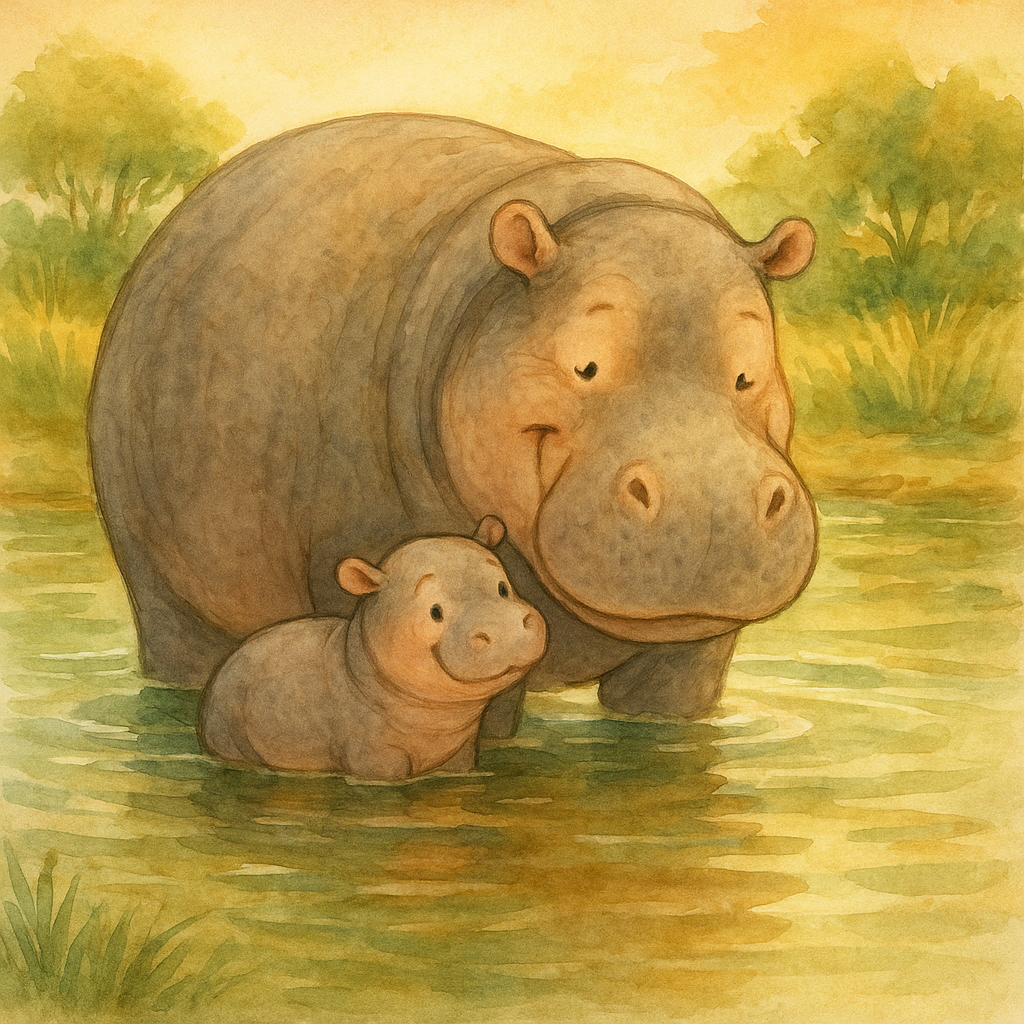
“A baby hippopotamus is a baby to be loved by its mother.”