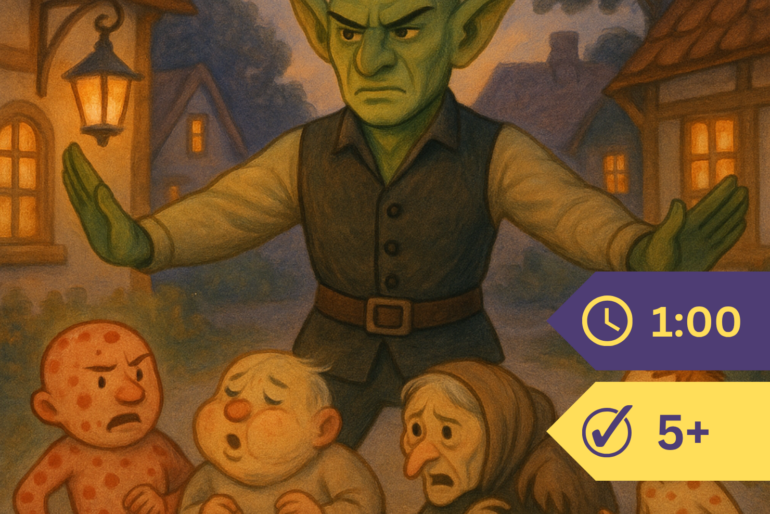
“Go away,” said Peter Goblin. “All of you — now. I won’t have you near the children. Off you go.”
Mr. Measles, Mr. Mumps, Mrs. Croup, and Master Chicken-Pox shuffled reluctantly backward.
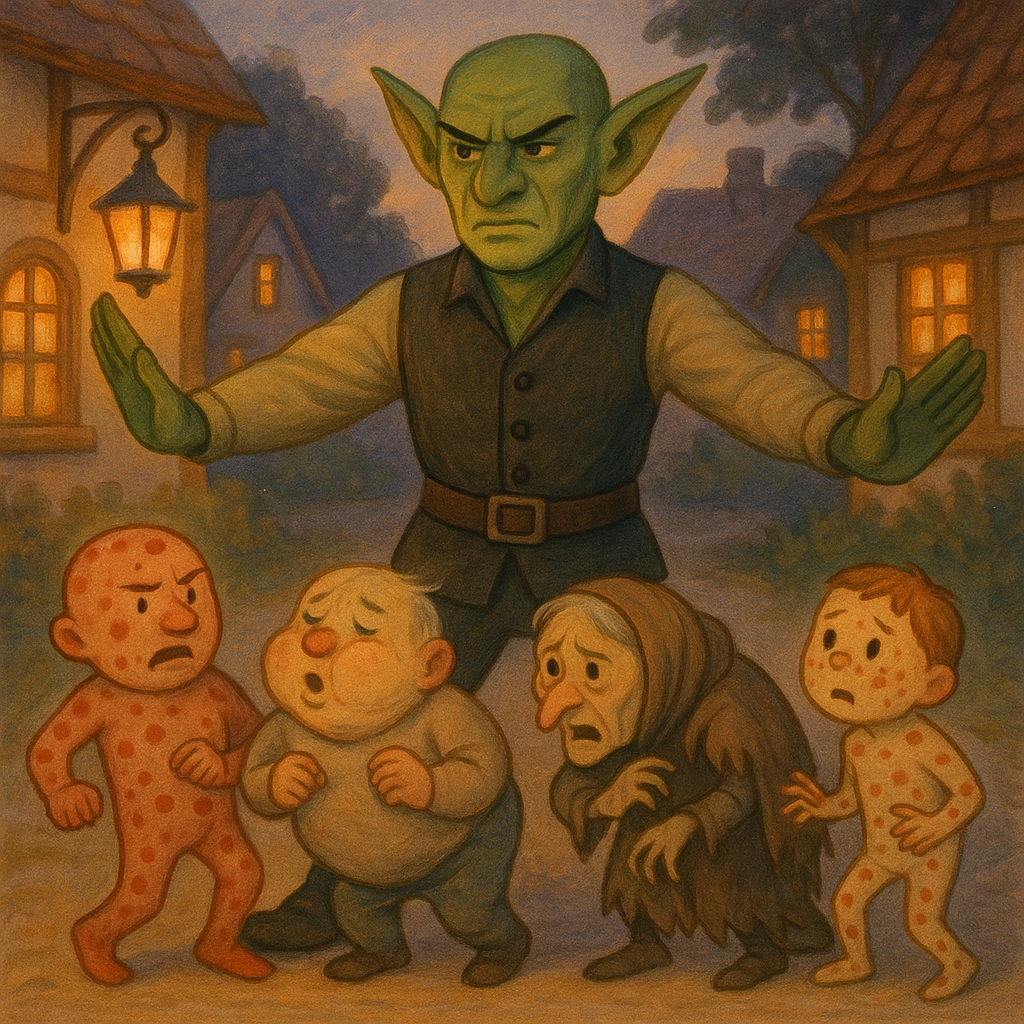
“Can we at least talk to you?” asked Mr. Measles.
“Talk, then. But from a distance.”
“We don’t understand you,” said Mr. Measles. “Why do you work so hard to keep us away?”
“My goblins and I try to keep children strong enough to escape you. We can’t always keep you out, but we do our best. And when you do get through, the doctors drive you away again.”
“We hate doctors,” said Mr. Measles.
“I don’t hate them,” said Mrs. Croup. “They give us a great deal of trouble, and I love giving trouble.”
“But here is the thing that puzzles us,” continued Mr. Measles, getting to the real point. “People say don’t catch the measles. Or be careful not to catch the mumps. Now — to catch something means to chase it, to go after it. If they don’t like us, why do they talk about catching us? Surely, if they truly don’t want us, they should say don’t let Mr. Mumps catch you.“
Peter Goblin paused. “That’s… actually a fair point. It is a rather absurd expression.”
“We’ve always thought so,” said Mr. Measles, gratified.
“Nevertheless,” said Peter Goblin, “you are to stay away from the children. Go and discuss the linguistics of it somewhere far from here, for as long as you like.”
The illnesses went, grumbling. And Peter Goblin’s goblins kept watch.