One afternoon a hurdy-gurdy came down Harriet’s street, pushed by an old man with a monkey on top. The monkey wore a red jacket with brass buttons and a red cap, and his two little pockets jingled with pennies.
When the old man began to play, the monkey danced. He took off his cap politely, and Harriet—sitting on the porch—went into her purse and found every penny she had, seven of them, and gave them all. The monkey sorted them carefully: four into one pocket, three into the other. Then he took his cap off again, looking for more.
Harriet showed him her empty purse and shook her head.
The monkey considered this. Then he tilted his head to one side, pulled out a small handkerchief, and pressed it to his eyes in a perfect imitation of weeping.
But when the old man struck up another tune, the monkey was dancing again, happy as ever.
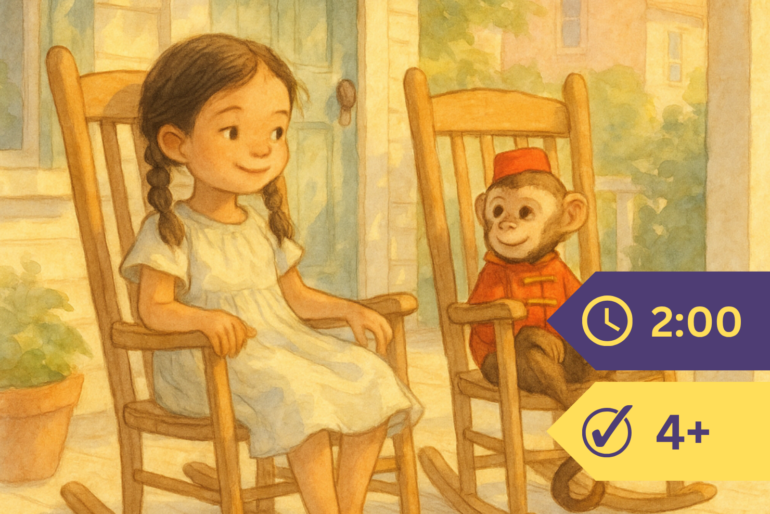
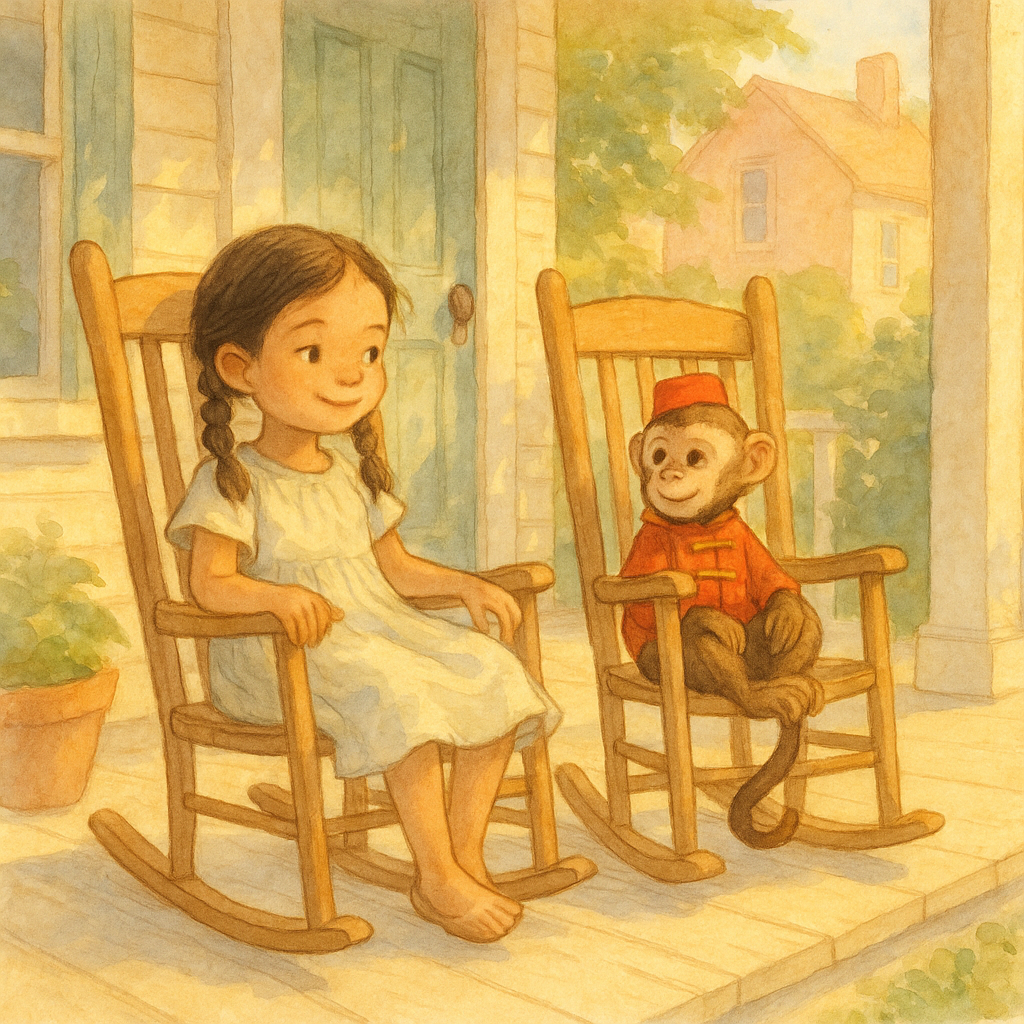
After a while the music stopped and the monkey—tired now—looked around and noticed something interesting: a rocking chair on the porch, the exact match of Harriet’s. He gave a jump, landed in it, wrapped his tail around himself, and began to rock back and forth with great contentment.
So there they sat—Harriet and the monkey, rocking in identical chairs, regarding each other with mutual satisfaction.
When Harriet’s mother came home and found her daughter had a guest, the monkey immediately jumped down, made a low bow, and launched into his tricks again. He wept bitterly when she too ran out of pennies.
“How would you like to keep a fine monkey like that?” the old man asked.
“Oh, mother, could I?” said Harriet.
Her mother looked at the monkey. The monkey looked at her mother. He laid himself down and pretended to be fast asleep.
“I think,” said Harriet’s mother, “we’ll keep him.”
Harriet bounded with joy. The monkey bounded in exact imitation—because he had taken a great liking to Harriet—and he bowed politely to his former owner as he was handed over, as a gentleman should.