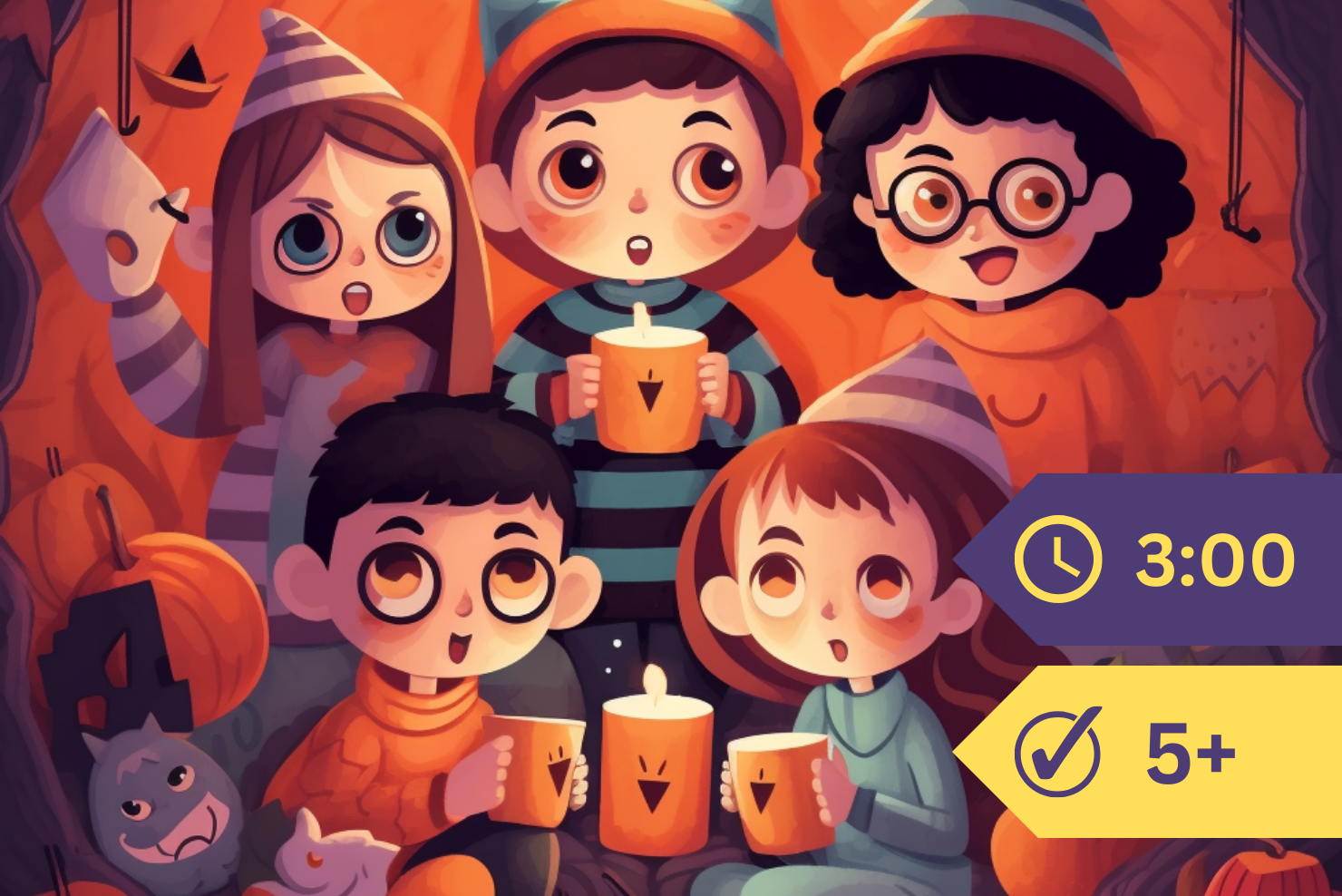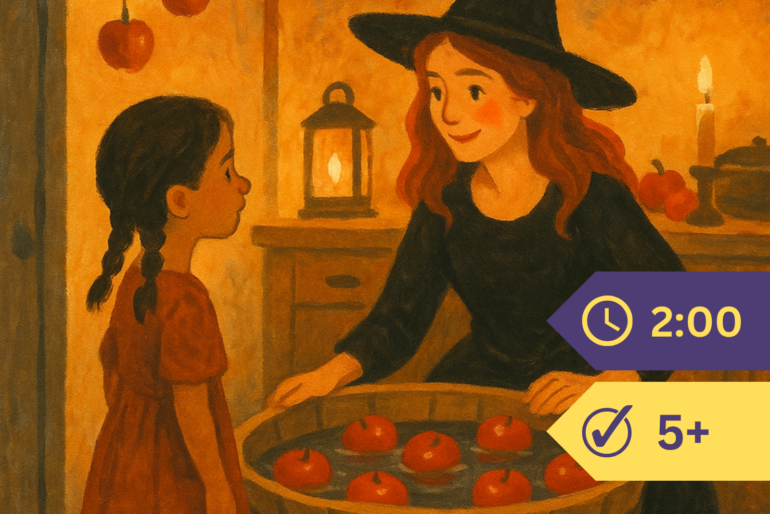
Everything was ready for Janet’s Halloween party. Apples on strings hung in the doorway, ready to swing away from anyone who tried to bite them. In the kitchen, a dish of flour held a coin buried deep, to be found with teeth. The apple-bobbing tub was full. Janet’s mother would be the fortune-telling witch, seated beside a caldron of red cloth with a flashlight hidden at the bottom.
It would be a wonderful party. Janet knew it would be. And yet something nagged at her.
She knew why they bobbed for apples and wore costumes. But she didn’t actually know what Hallowe’en meant — the name itself, that strange old word. She was embarrassed not to know, so she hadn’t asked.
Her mother caught her worried face that afternoon. “What’s the matter, darling? This isn’t the time to look sad.”
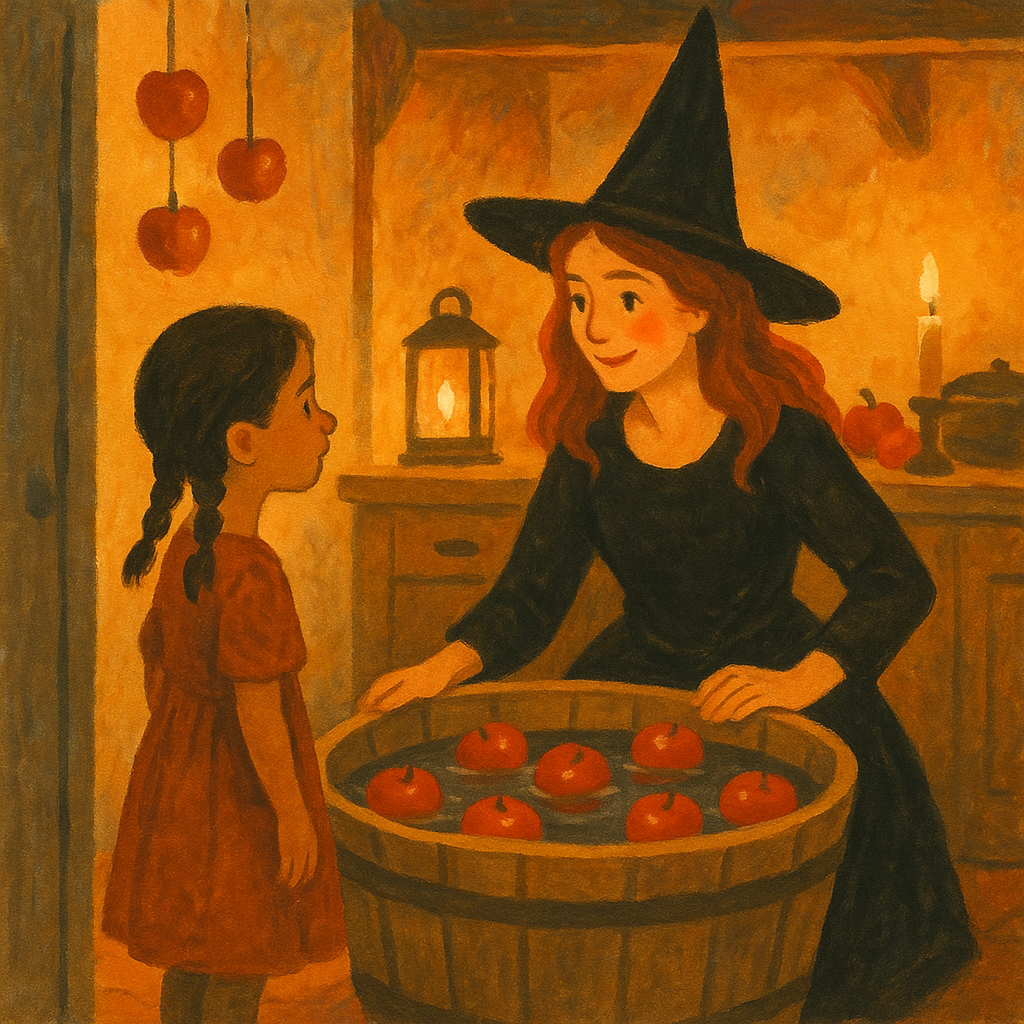
Something in the gentle way she asked made Janet say the foolish thing.
“What does Hallowe’en actually mean?“
Her mother smiled. “October thirty-first is the eve of All Saints’ Day. Hallow means to devote something to holy purposes, and e’en is an old word for evening. So Hallowe’en is the evening before the holy day.
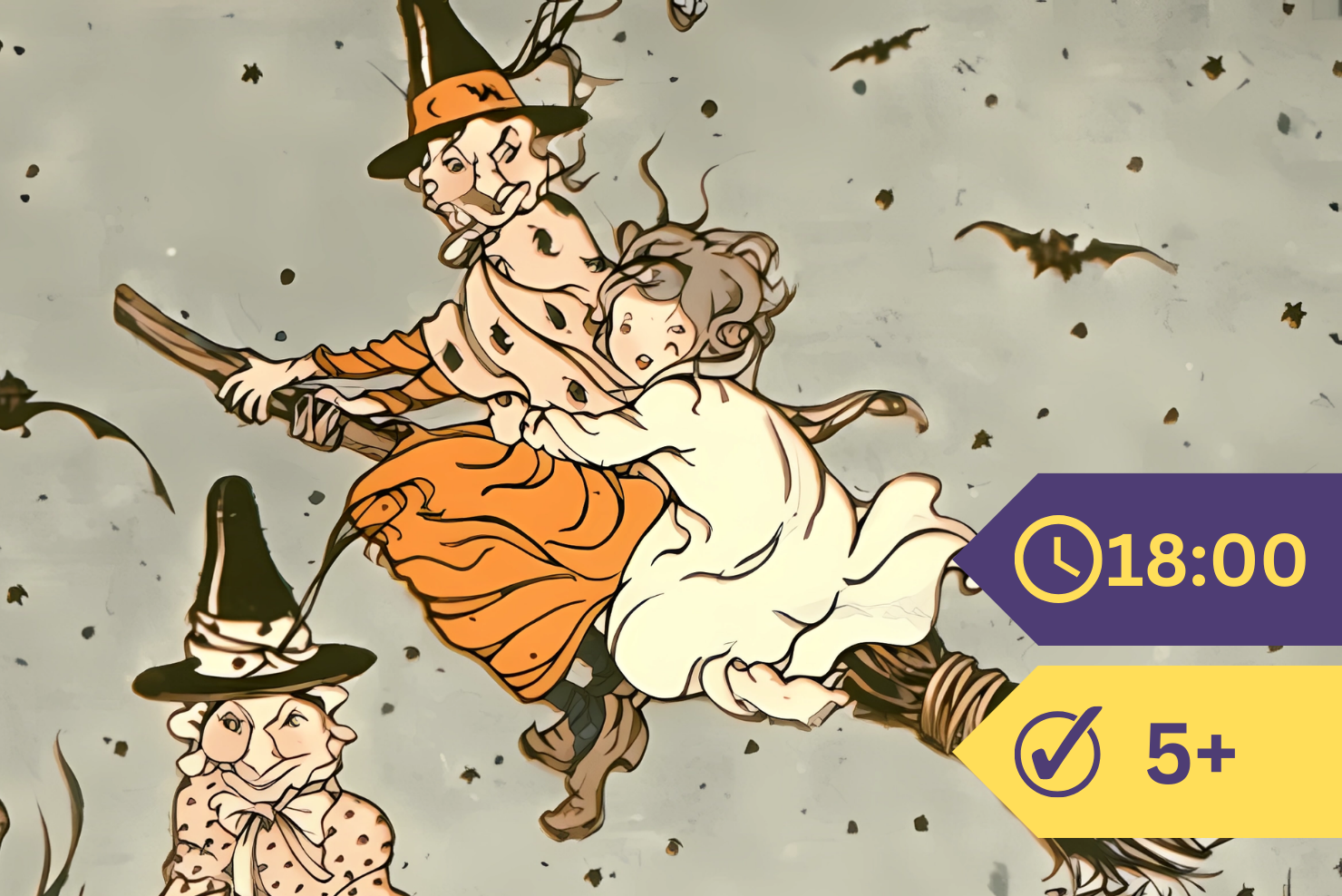
“But for hundreds of years it’s been an evening of fun — children’s fun, in countries all over the world. We celebrate it one way, other places do it differently, but everyone does something on this night. In the old days, people who believed in witches were certain they came out on Hallowe’en. That’s where the make-believe witches come from.”
Janet didn’t think she’d ever enjoyed a party quite as much as she enjoyed that one. Knowing the name made it feel like something real — something that connected her, through the apples and the costumes and the candles, to children doing the same strange, wonderful thing all over the world.