“For two weeks now,” said the Sun, “a little boy has been following me around.”
“Whatever do you mean?” asked the Sun Rays.
“He’s been very ill. A terrible cold that wouldn’t let go. He’s been so miserable he hasn’t wanted to do anything at all — and you know a boy is really sick when he doesn’t want to do anything.”
The Sun Rays nodded. They had seen a great many small boys scampering and playing, full of energy even in the cold, and they understood what it meant when one of them went still.
“His doctor comes every day,” the Sun continued. “Sometimes twice. Once he came three times in one day. And every time — every single time — the doctor tells the boy to sit in the sunlight. So the boy follows me. In the morning I shine through the east window, and there he is. In the afternoon when I move to the west side of the house, I look in, and there he is again. Two weeks of this. I confess I feel quite honored.”
“And so do we,” said the Sun Rays.
“Listen,” said the Sun quietly.
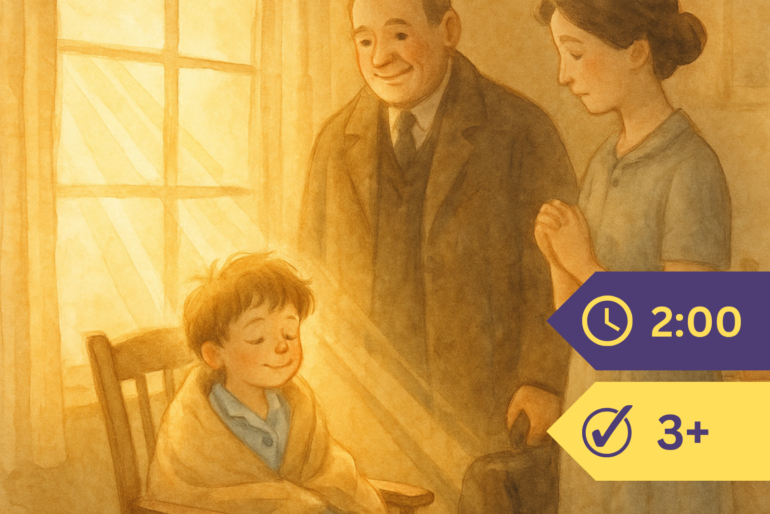
They listened. Through the window they could see the boy, and beside him his mother, and beside her a large man with a quiet voice and a black bag.
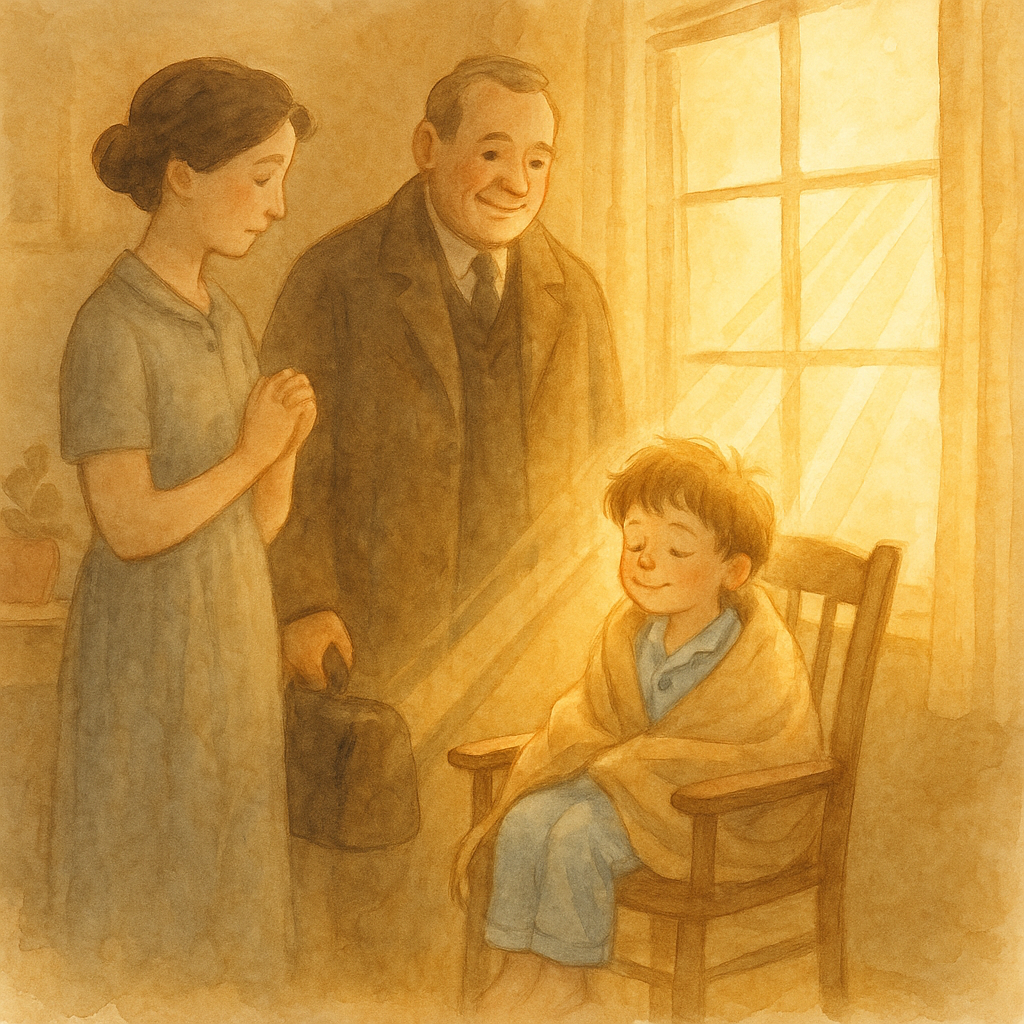
“Well, my boy,” said the doctor, “how are we today?”
“Much better,” said the boy. “I almost feel like going outside.”
“Another few days,” said the doctor, smiling.
The mother pressed her hands together. “You’ve saved him,” she said. “He was so dreadfully sick.”
The doctor shook his head.
“I didn’t save him. The Sun did. The Sun fights illness better than medicine or doctors can. We’re useful for telling you what the trouble is and pointing you toward what will help. But we can’t do what the Sun does — carry the cure with us everywhere we go, freely, for anyone who will sit still long enough to receive it.”
“Dear father,” said the Sun Rays, “you really are Dr. Sun.”
“And you,” said the Sun, “are my little assistant nurses.”