Peter had been very ill, ill for so long that his mother and father had finally decided he needed a change of air entirely. So his mother had taken him far from home — north, to a quieter place — and now Peter spent his days on a small sleeping porch, watching the hours pass.
“If he could only get interested in something,” the doctor said, “he would get well twice as fast.”
His mother knew he liked to read, but what Peter was really lonely for was his friends.
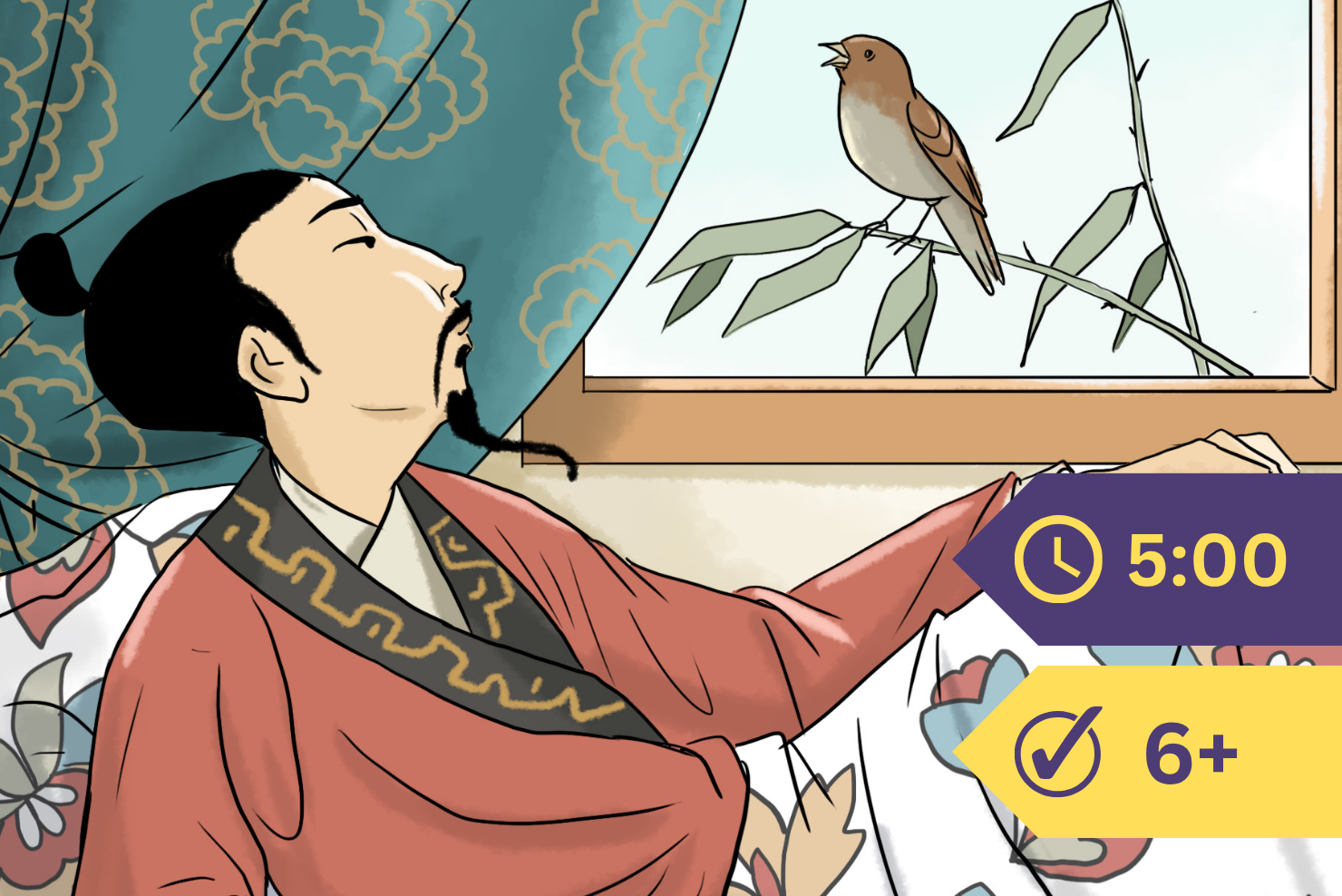
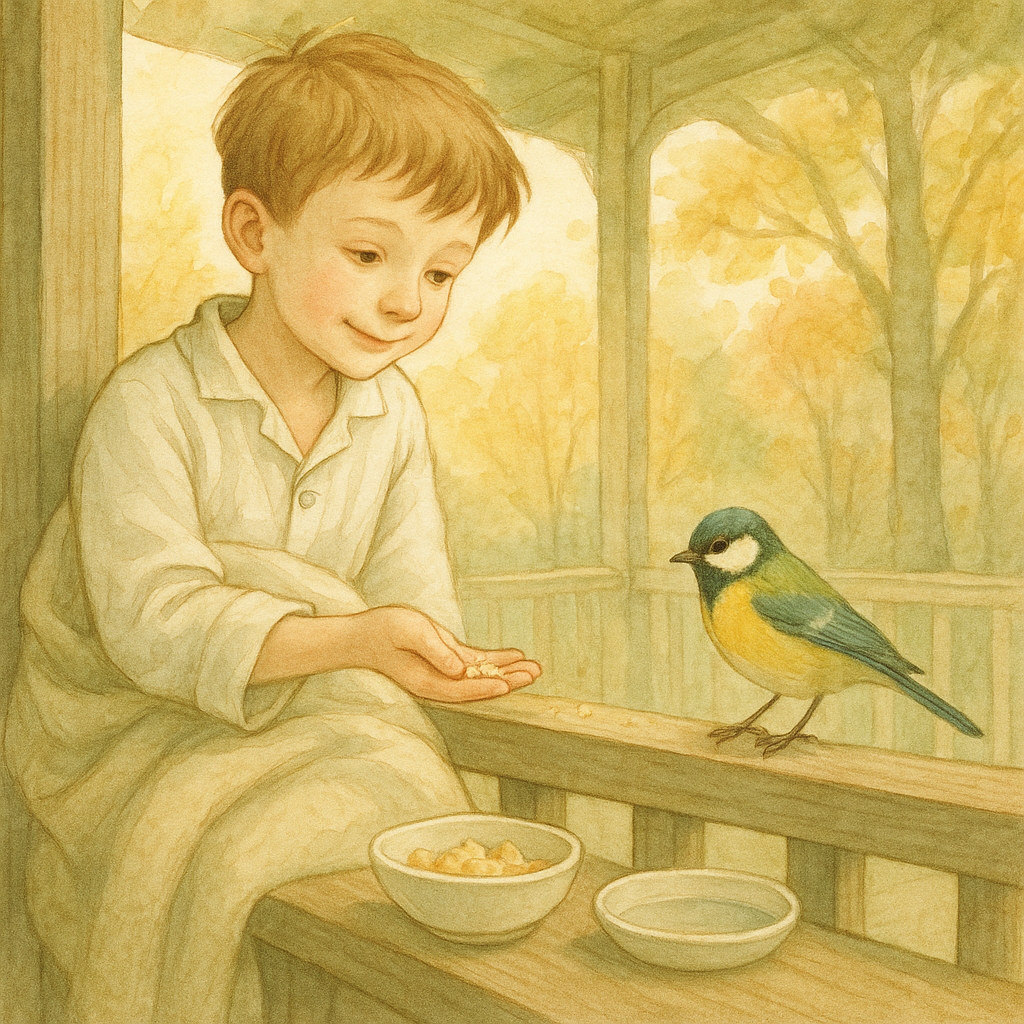
One morning, a small bird landed on the ledge of the porch.
It sang.
“What a beautiful voice,” Peter said softly, when the song was finished.
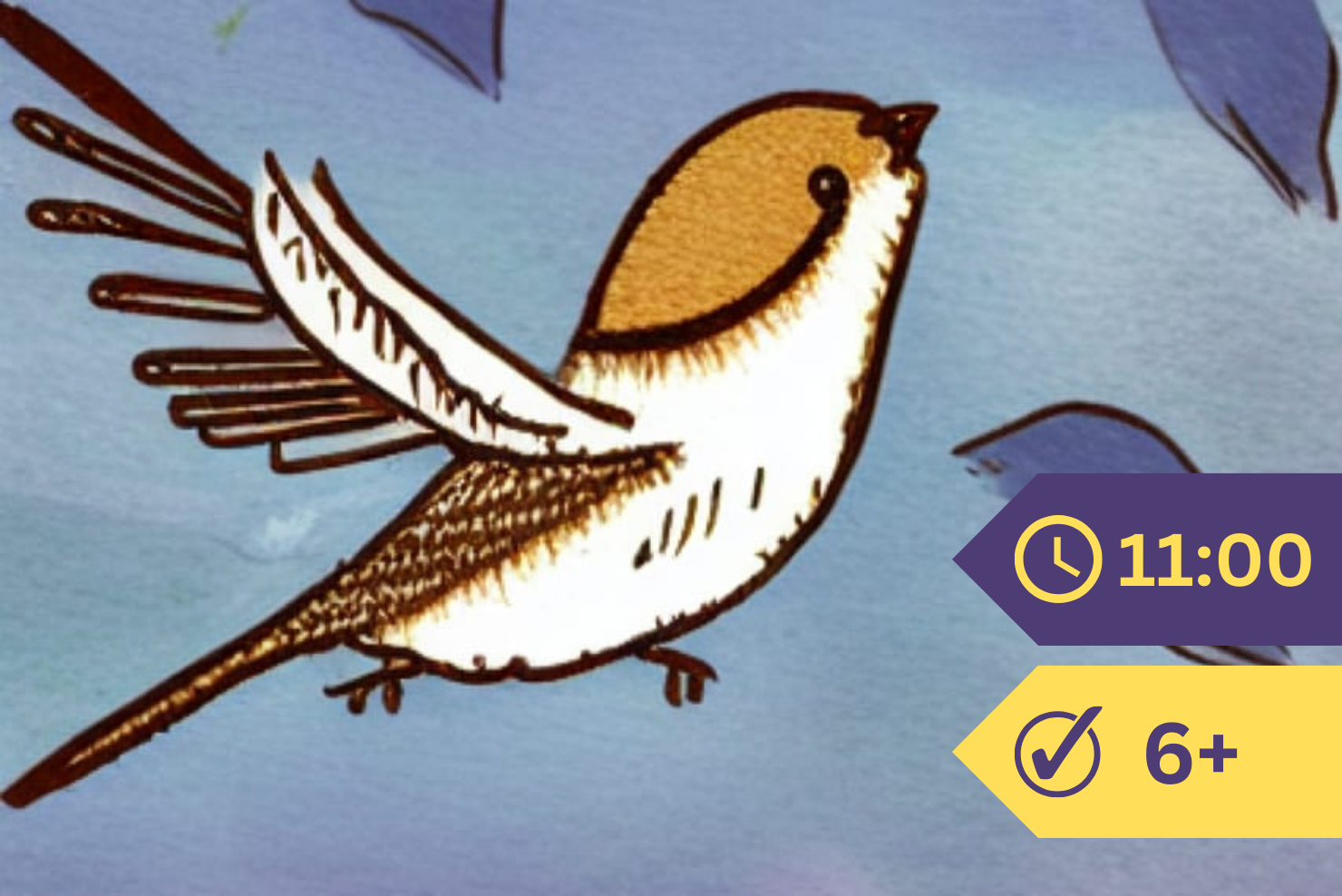
The bird ruffled its feathers and sang again, as if to say it was very glad indeed to be appreciated.
“Mother,” Peter called, “may I have some crumbs for this bird? He’s come to visit me.”
His mother brought out a bowl of bread crumbs and a dish of fresh water, and the bird helped itself with great dignity before flying off, still singing.
That morning passed quickly — the first morning in a long while that had felt that way. The doctor, visiting that afternoon, said Peter seemed better.
The next day, seven birds came. The day after that, a whole flock — birds of many colors and many beautiful voices. Peter spent every morning on his porch, waiting for them, learning to recognize their different songs, crumbling bread into the dish his mother left for him.
He grew steadily stronger.
Autumn came on, and the birds began to leave, one by one, heading south for the winter. His first little visitor was the last to go. Peter was on his feet by then, walking around the porch, and when the time came he waved his blue silk handkerchief.
“Good-by, little bird,” he called. “You’ve made me well.”
That afternoon, the doctor told his mother Peter was well enough to go home.
Peter always called them his Doctor Birds after that.