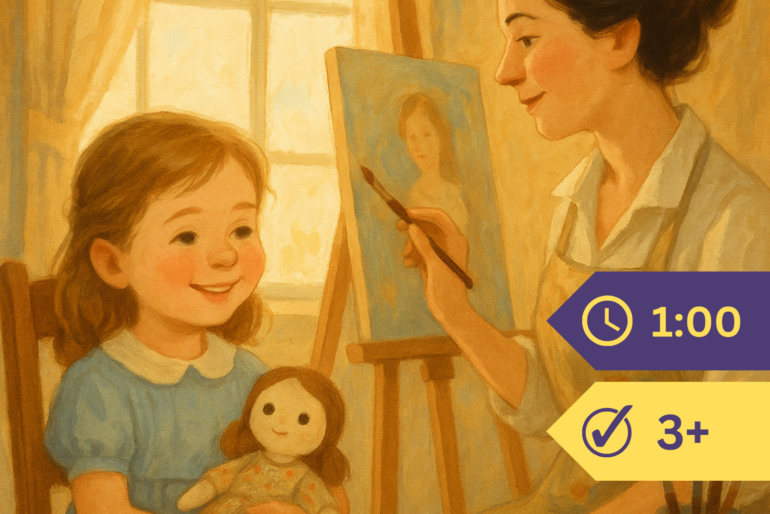
A little girl named Melly was having her portrait painted. She was a very good sitter—she kept perfectly still—but she looked a little sad, glancing toward the window and the friends she was missing outside.
One day the artist said to her: “You’re so patient and so good. Is there anything you’d like me to paint for you?”
Melly’s face lit up at once. “Oh yes—I’d like my dollie painted!”
So the next sitting, Melly brought Allie Baa.
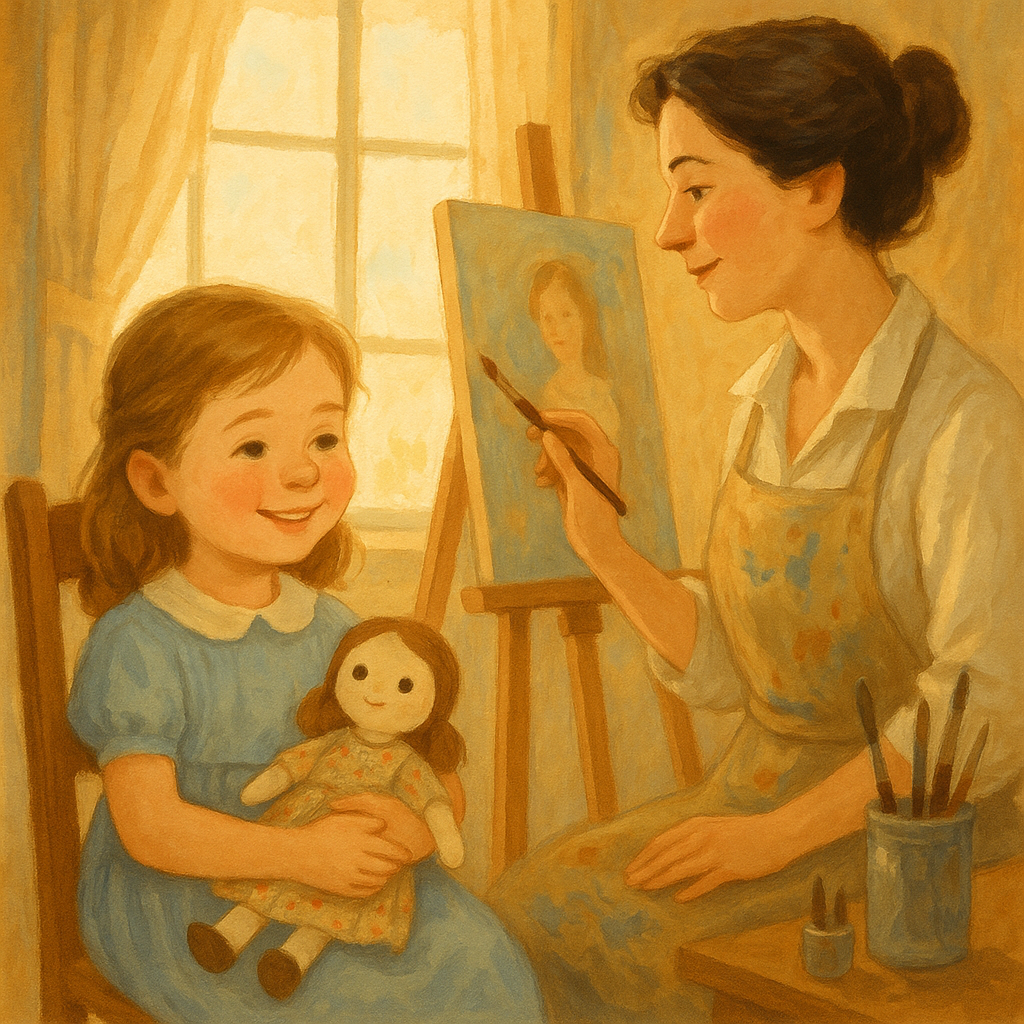
The artist looked at Melly holding her doll—really looked—and had a thought: I will change the painting. I’ll have her hold Allie Baa just as she is now.
What a difference it made. Melly was no longer a little girl sitting stiffly in a chair, being good because she thought she ought to. She looked like herself—relaxed and happy and entirely at home, with her doll in her arms. She looked like a child.
The artist was delighted. She did a small portrait of Allie Baa separately as well, and when she showed it to Melly, Melly held it up to the doll—but Allie, of course, just looked at it the way she looked at everything.
“You don’t care whether you have a portrait or not, do you?” Melly said fondly. “But it’s a great comfort to your mother.”
When Melly’s own mother came to see the finished painting, she stopped in the doorway.
“Whatever made you think of having her hold Allie Baa? That’s just like my daughter—exactly the way we always see her.”
And the artist was happy, for she had pleased both the real mother and the make-believe one.