There was once a lady who had loved fairy stories as a child — all the tales of small kindnesses, of creatures helping creatures — and who had decided, when she grew up, that she would do something kind herself.
So she had the roof of her house turned into a bird sanctuary. She planted trees and moss, made little pools of water, and enclosed the whole thing in glass so the sun shone warmly through it all year round. At the edges she fitted tiny doors, just large enough for birds to pass through — too small for any cat.
And below, reachable through tunnels built into the Sun Parlor floor, was a cellar she had filled with apples, breadcrumbs, fresh water, and other bird delicacies. The birds called it — in bird language — the Goody-shop.
At first, she tempted the birds in with crumbs scattered near the entrance. It took time; birds are cautious. But they learn when someone is kind to them, and before long they were coming and going as they pleased.
She welcomed any bird that wanted shelter. But she especially hoped to help sick or fallen birds.
One spring day she found a baby robin lying on the ground, its family having arrived before the warm weather quite settled. She picked it up gently and carried it to the Sun Parlor.
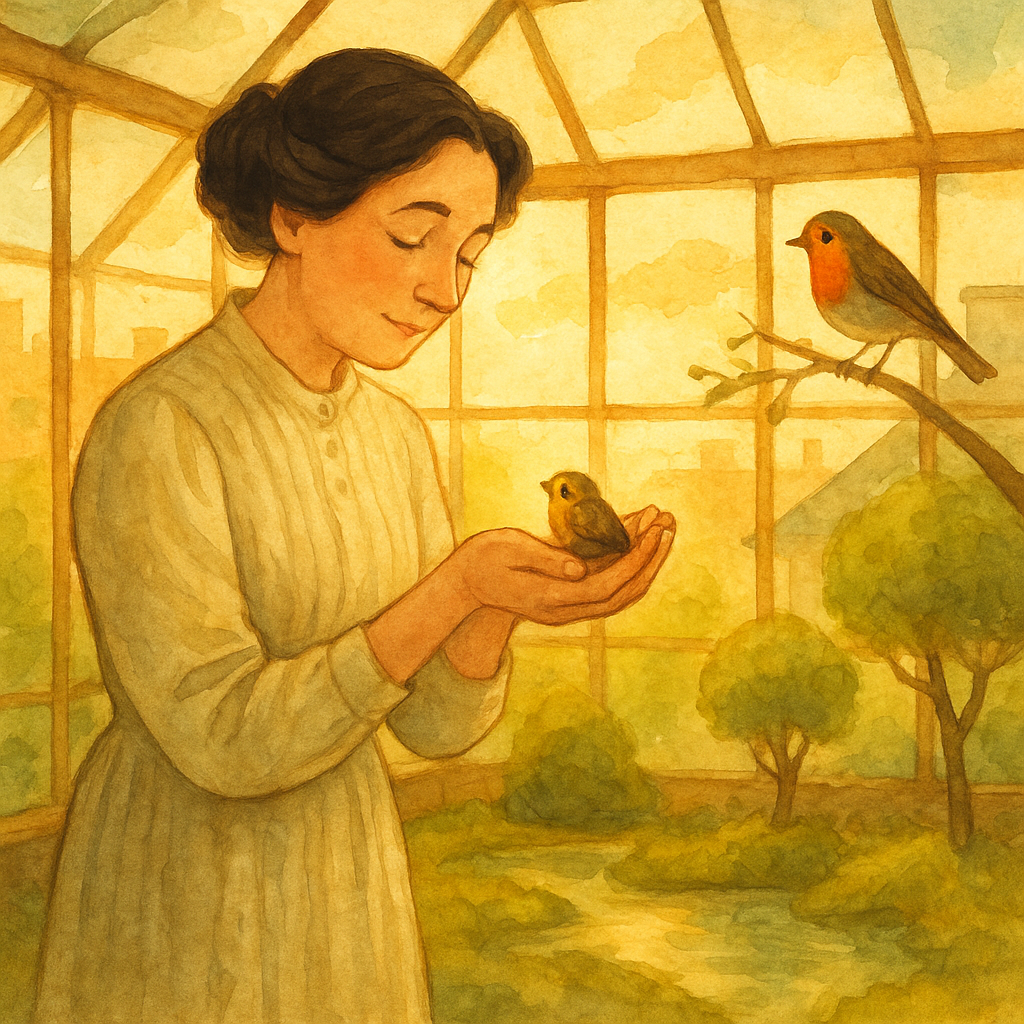
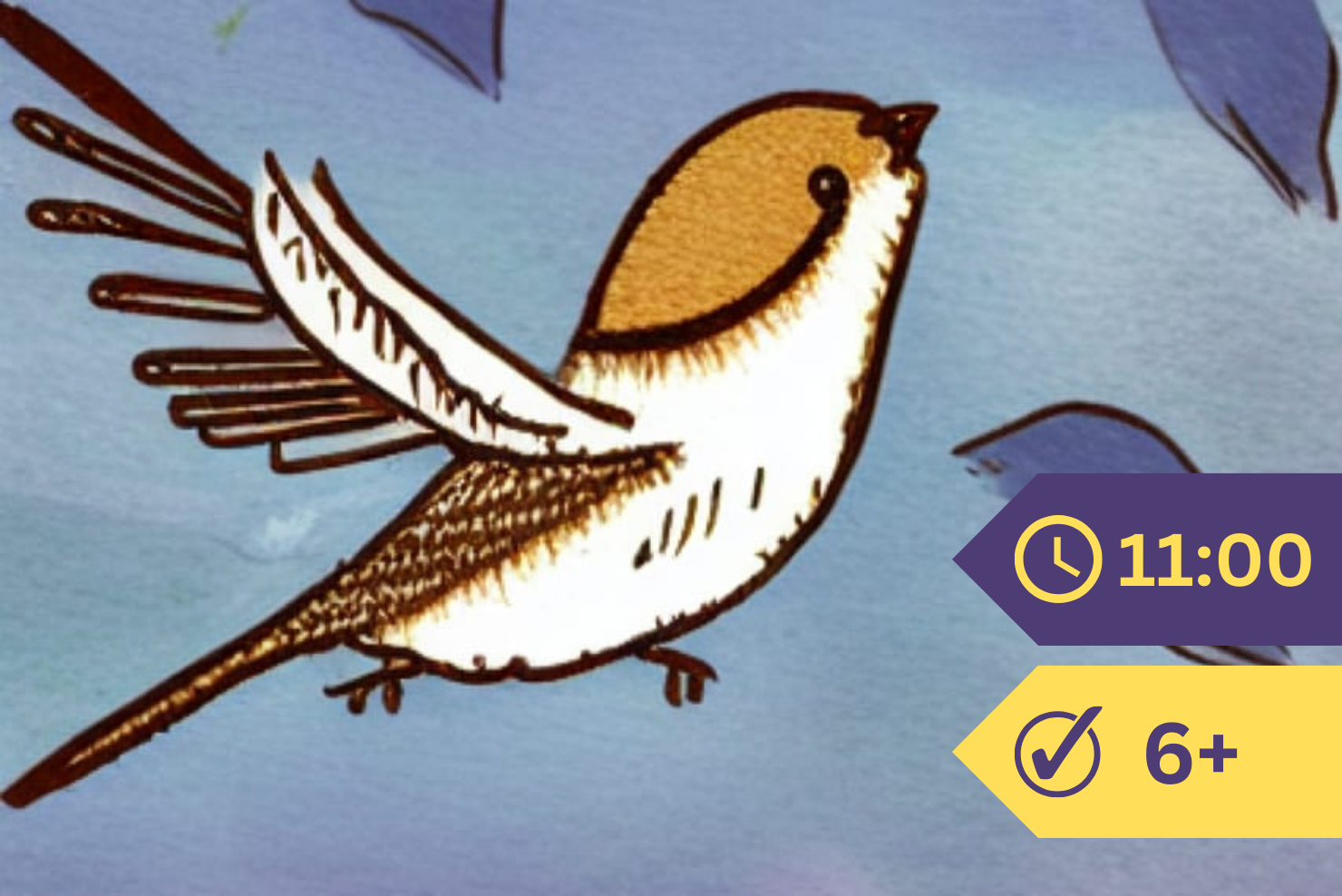
The mother robin saw this from a branch above, and her heart broke a little — her baby being carried away, and she unable to do anything. But she watched where the lady went, and she saw her baby placed in the shelter of the glass room, warm and safe.
Every day after that, she sang from the nearby trees — the most beautiful songs she knew — for the woman who was watching over her baby until it was strong enough to fly.