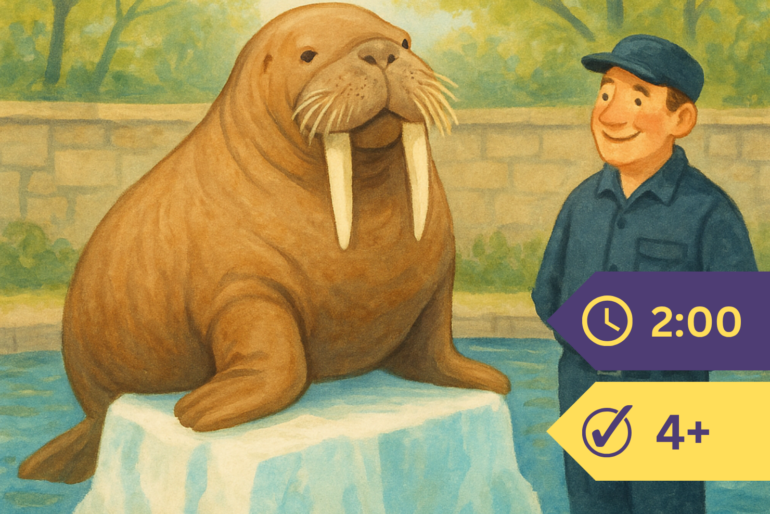
In the Zoo that winter, the walrus had become the unofficial iceman.
It had started because he loved ice. Whenever his pond froze over on bitter nights, the walrus would chop the surface to pieces with his tusks — he always had his ice pick with him, as it were — and then dive joyfully into the freezing water below. He loved nothing more than a cold bath in a properly cold pond.
The Keeper noticed, and had an idea. He arranged for the Zoo’s regular iceman to collect the broken pieces as fast as the walrus could chop them, carrying them off to the Zoo icehouse for summer use.
When the walrus understood what was happening — that he was doing real, useful work, that the ice he broke was going somewhere — he was delighted. He admired the Keeper enormously, and the thought of contributing to the ice supply filled him with businesslike satisfaction. He chopped more enthusiastically than ever.
The Keeper praised him lavishly, and the walrus glowed.
But spring came, as it always does. The ice melted. There was nothing left to chop. The walrus sat by his pond looking sad, and the Keeper felt genuinely sorry.
He was worrying about it one afternoon when something — perhaps a whisper, perhaps just the right idea arriving at the right moment — suggested a solution.
Every day after that, the Keeper brought one good-sized piece of ice from the icehouse and had it placed in the walrus’s pond. He told the walrus it was his reward for the winter’s work.
At first the walrus tried to chop it up, out of habit. But the Keeper kept coming to tell him, no, this one was his. This one was for resting on, and diving from.
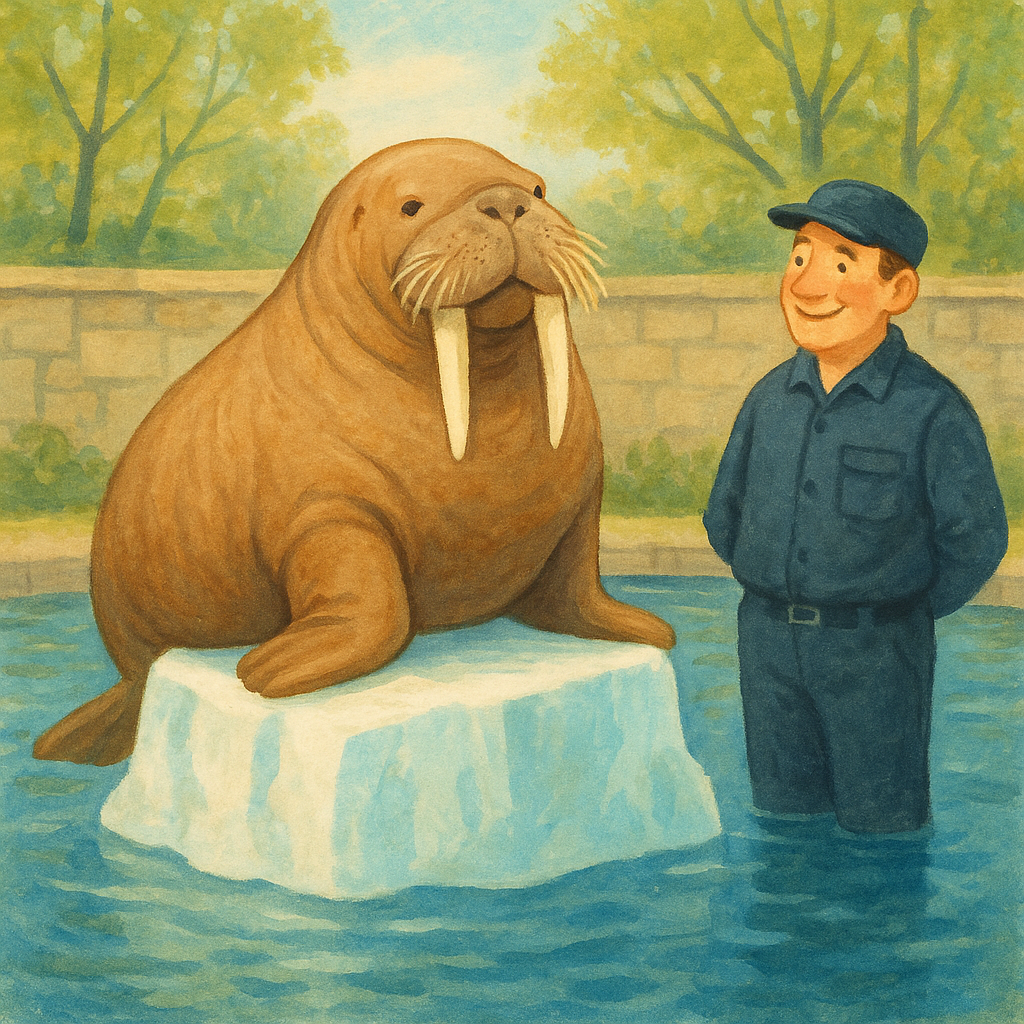
After a few days, the walrus understood. And every morning when the ice came, he would climb up on it first — it made a lovely cool chair — and settle himself comfortably before sliding down into the water with a satisfied splash.
The Fairy Queen, who had been the one to whisper the idea to the Keeper in the first place, was very pleased indeed.