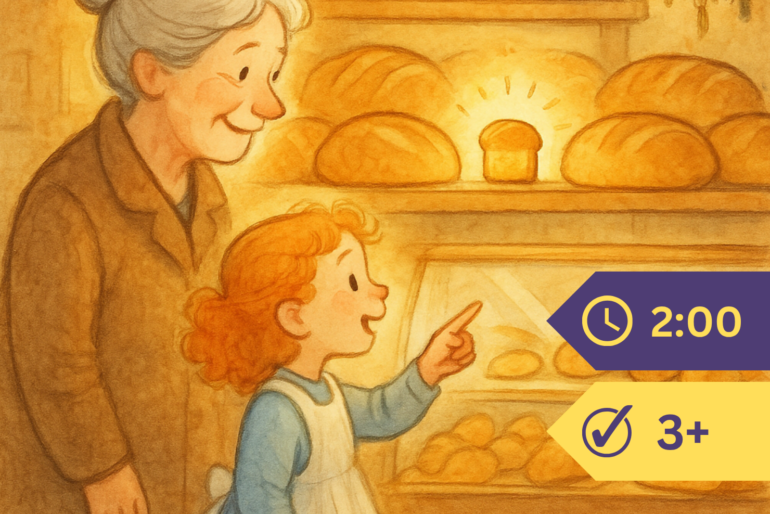
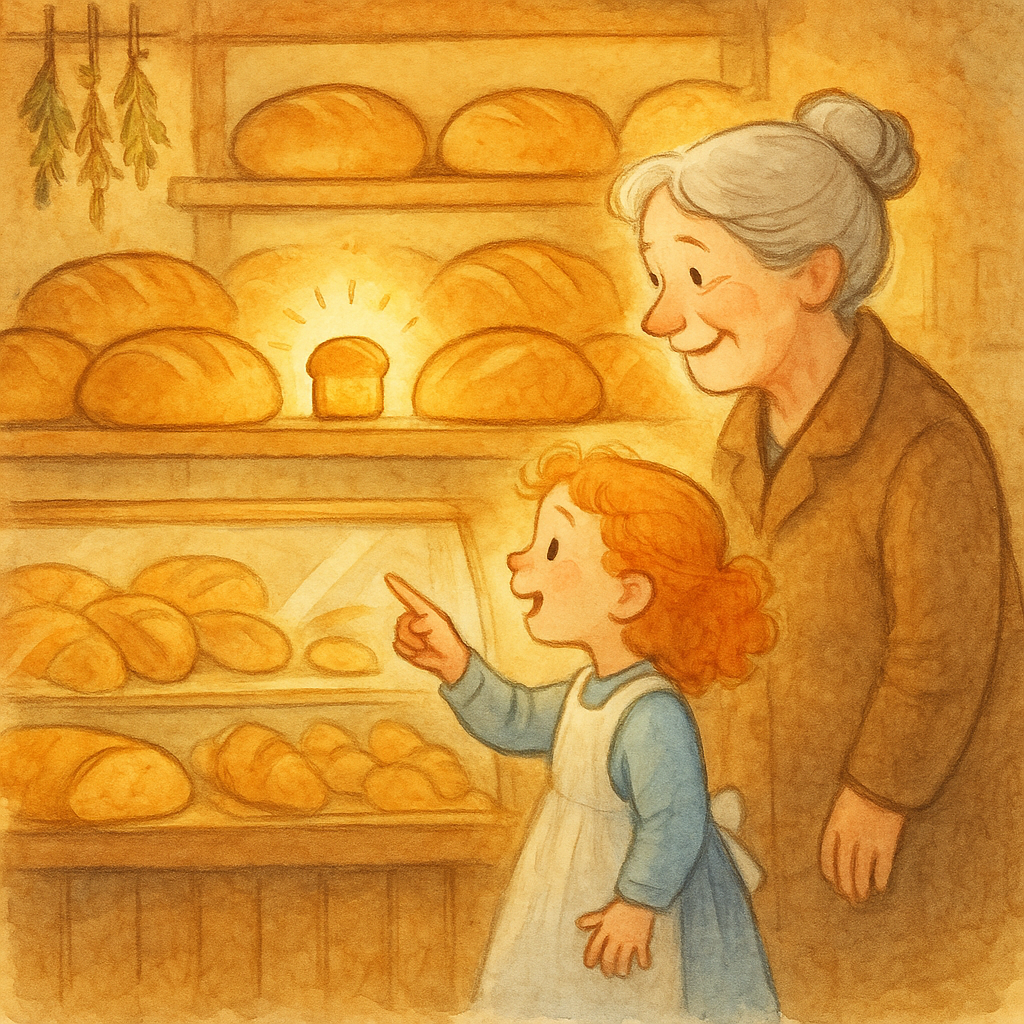
One day a very small loaf of bread appeared in a baker’s shop.
It sat on the shelf among its larger relatives, and it was noticeable immediately — because of its size, and because it was rather pleased about its size, in the quiet way that small things sometimes are.
“You won’t last as long as we do,” said one of the larger loaves, looking down.
“Who cares about lasting?” said the small loaf.
“We didn’t mean to be unkind,” said the larger loaves, relenting a little. “It’s only — we’ve always been the same size. We follow the same mold, loaf after loaf. But you’ve been made differently. You’re small and neat and there’s something interesting about you.”
“Hush,” said the small loaf suddenly. “I’m being bought.”
A little girl named Lucy had come into the shop with her grandmother, and she had spotted the small loaf immediately. “Oh, look at the tiny loaf of bread!” she said, and it was bought and carried home — all the way home, because the small loaf couldn’t very well walk there itself, as Lucy was the first to acknowledge.
As soon as they arrived, a fat little end-crust was cut off and Lucy ate it with great satisfaction.
“My dear little baby loaf,” she said happily.
And the small loaf, had it been able to express itself, would have said that being small and noticed and loved was quite a fine way to exist.