The circus had been in the city for days, performing for thousands of children and grown-ups. And then one of the clowns had an idea.
“You know,” he said, “we have a free morning coming—no parade, no show, no rehearsal. What if some of us went to one of the hospital yards and put on a performance for the children who can’t come to us?”
And so they did.
Every child was in a balcony bed or a wheeled chair when through the big hospital gates came a real circus parade. The band struck up a fine tune. The clowns marched around making jokes and tumbling and getting up again. A woman walked the tightrope with a parasol over her head, perfectly balanced. Ponies cantered around the yard. The trapeze artists swung by their knees, by their feet. Even the elephants came, and the children fed them peanuts.
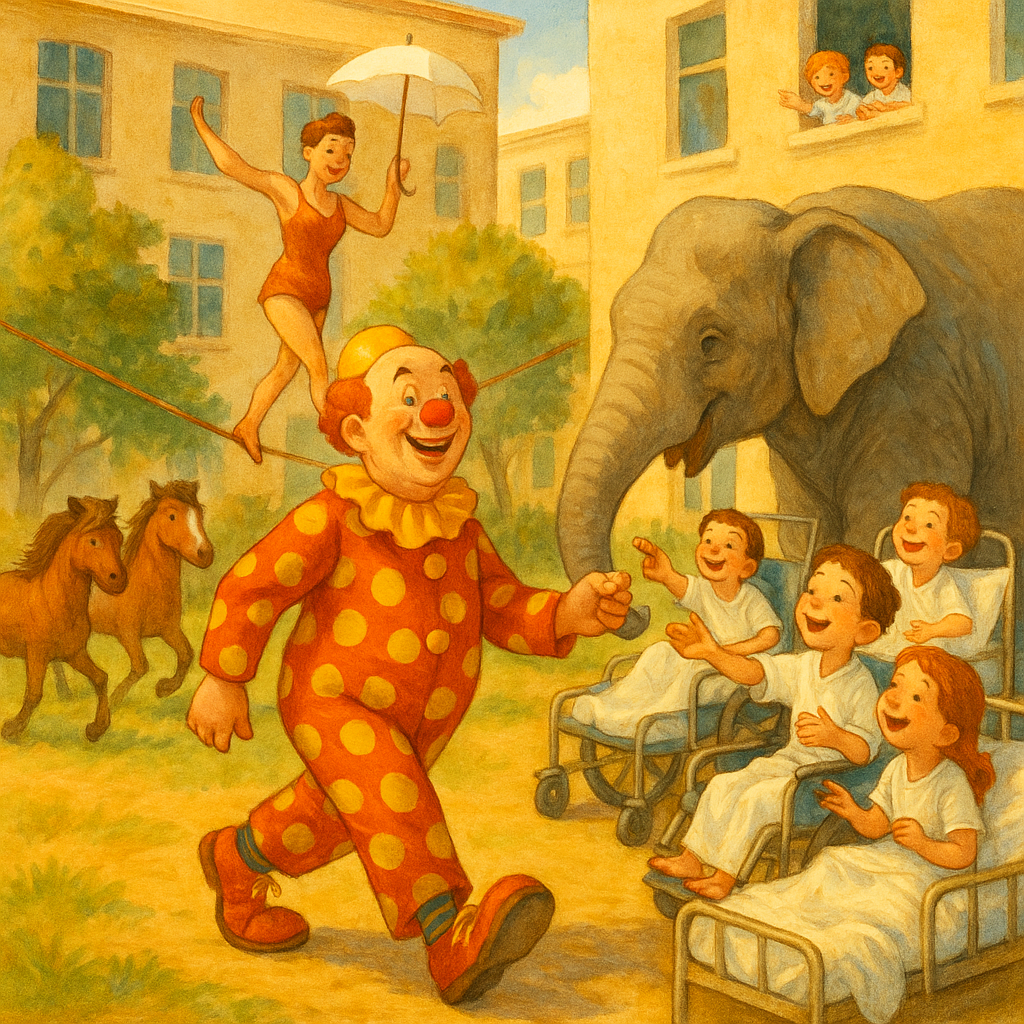
The children laughed and clapped and called out. The performers worked harder than they had all week.
But of everyone there that morning—the children, the animals, every last performer—the happiest person in the yard was the merry old clown who had thought it all up.