The animals at the Zoo were having an argument.
It had started when the Black-Footed Penguin announced that it was the most remarkable creature present, and it had escalated from there. The Donkey stopped mid-delivery to dispute a comparison. The Hyena laughed until it nearly came apart. The Sea Lion insisted that jumping for its food was far more impressive than anyone else’s eating arrangements. The Wood-Rat mentioned its tail. The Flying Squirrels pointed out that they could fly. A passing Sparrow noted that it could also fly, and also pick up food, and didn’t feel the need to be dramatic about either.
Everyone had something to say. The Seal disputed with the Alligator. The Zebra declared its coat the finest in the yard. The Rocky Mountain Sheep called the Zebra queer.
Meanwhile, at the back of the Zoo house, the monkeys were having a quieter conversation.
“Tomorrow,” said one, “let the children decide. Whoever gets the most attention wins.”
The other animals agreed, each privately certain of victory.
The next day, the children arrived, and kept arriving, all morning and afternoon. Each animal had made a special effort. And the children did stop at every enclosure — they peered and pointed and said, “Oh, look at this one, look what it does” — before moving on.
They always moved on, until they reached the monkeys.
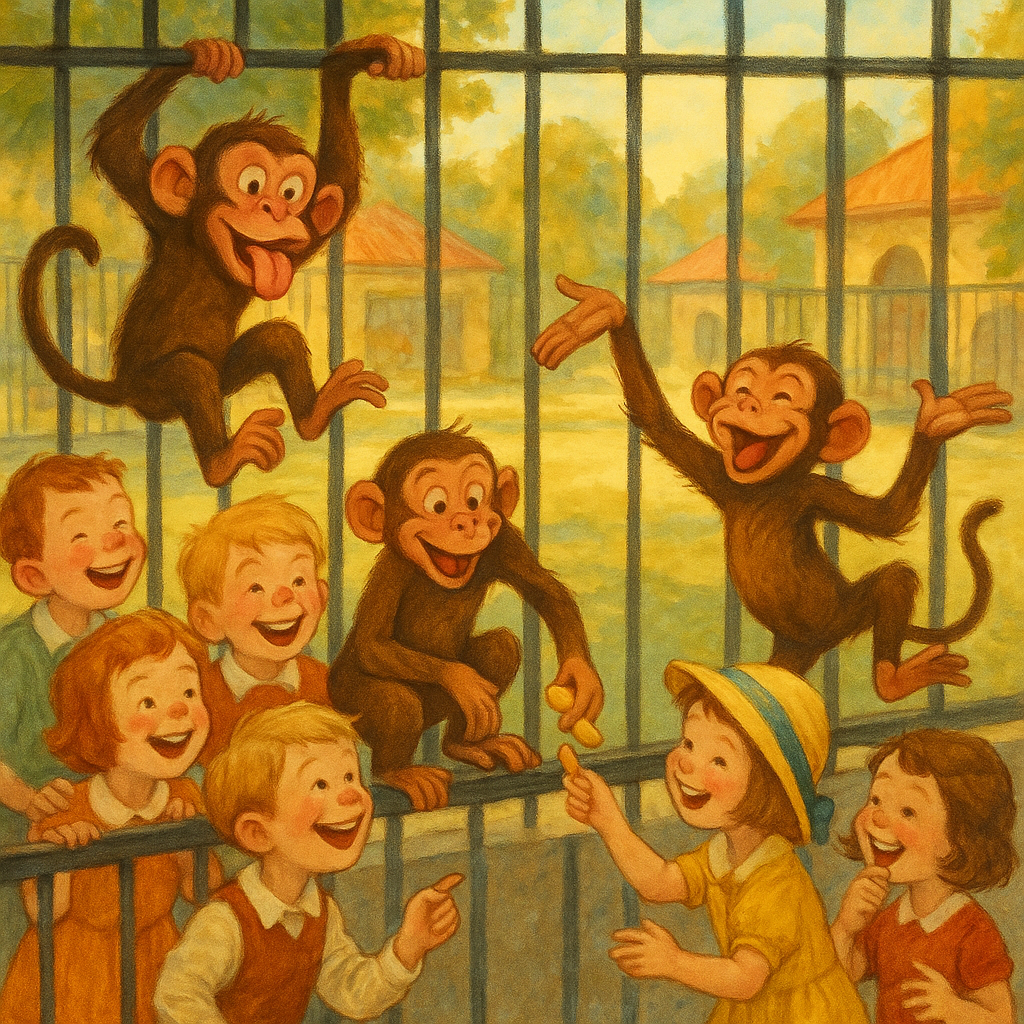
There, they stopped.
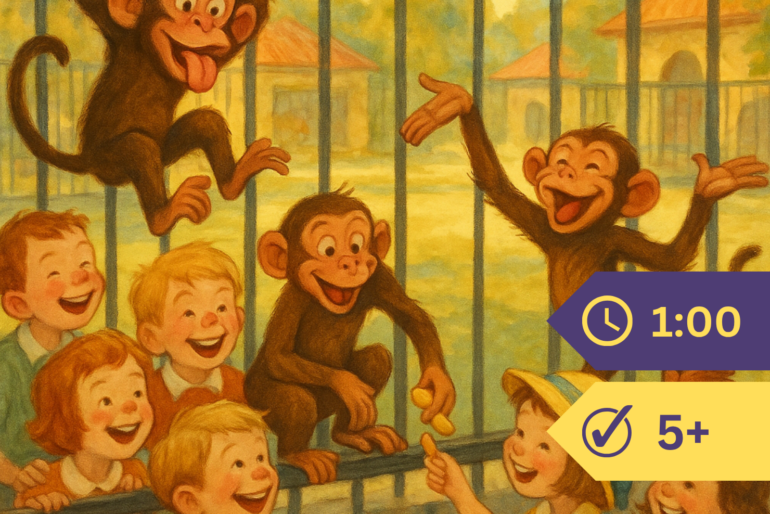
The monkeys made faces. They did tricks. They accepted peanuts with elaborate ceremony. They performed, and argued, and clowned. Children pressed against the bars and laughed and didn’t want to leave.
At the end of the day, every animal had to admit it: the monkeys had won, and it hadn’t been close.