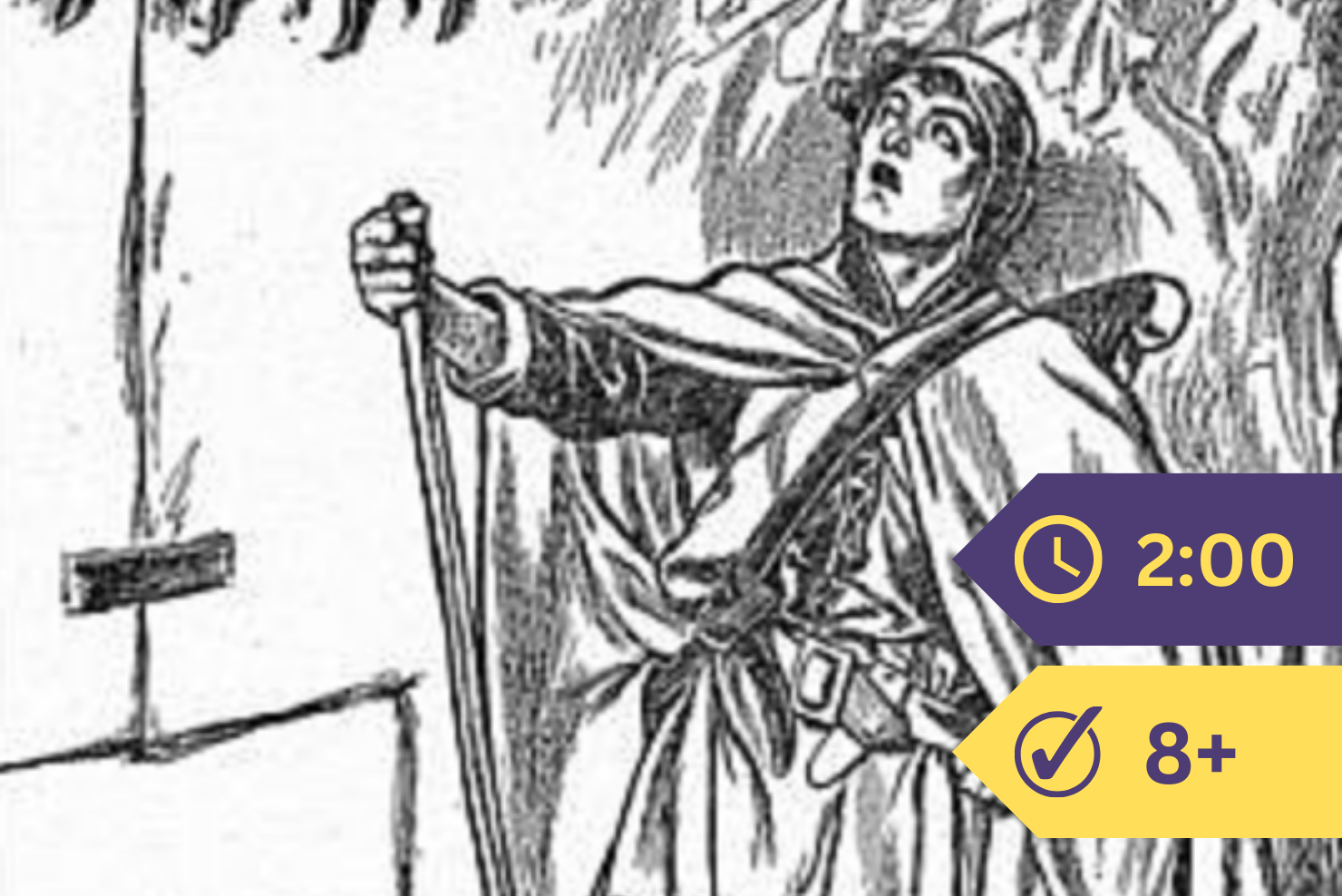
The man and the Satyr

Summary


"The Man and the Satyr" is a short Aesop fable about an unlikely friendship put to the test by a single strange habit. When a man blows on his cold hands to warm them and then blows on his hot food to cool it, the Satyr grows deeply suspicious — how can the same breath serve two opposite purposes? The central tension builds around trust and consistency, as the Satyr must decide whether a person who blows both hot and cold can ever truly be relied upon.


Read Online

A Man and a Satyr once drank together in token of a bond of alliance being formed between them. One very cold wintry day, as they talked, the Man put his fingers to his mouth and blew on them. When the Satyr asked the reason for this, he told him that he did it to warm his hands because they were so cold. Later on in the day they sat down to eat, and the food prepared was quite scalding. The Man raised one of the dishes a little towards his mouth and blew in it. When the Satyr again inquired the reason, he said that he did it to cool the meat, which was too hot. “I can no longer consider you as a friend,” said the Satyr, “a fellow who with the same breath blows hot and cold.”



Credits

Aesop was an ancient Greek storyteller, believed to have lived around 620–564 BCE, whose fables have been retold across centuries in countless languages. "The Man and the Satyr" draws on Greek mythology by featuring a satyr — a half-human, half-goat creature — as a surprisingly reasonable moral judge. The fable gave rise to the still-common English idiom "blowing hot and cold," used to describe someone who is inconsistent or two-faced.