The Clock and the Watch

Summary


"The Clock and the Watch" gives voice to an anxious pocket watch confiding in a clock about its frustrating master — a man who wastes his mornings, then panics when he notices the time slipping away. The watch describes the indignity of being set ten minutes fast, only to be caught in the lie whenever anyone compares the hour. Told with quiet wit, the story builds to a simple but pointed conclusion about personal responsibility and the one habit no watch can fix for you.

Listen to audio


Read Online

The watch had something to say, and the clock was listening.
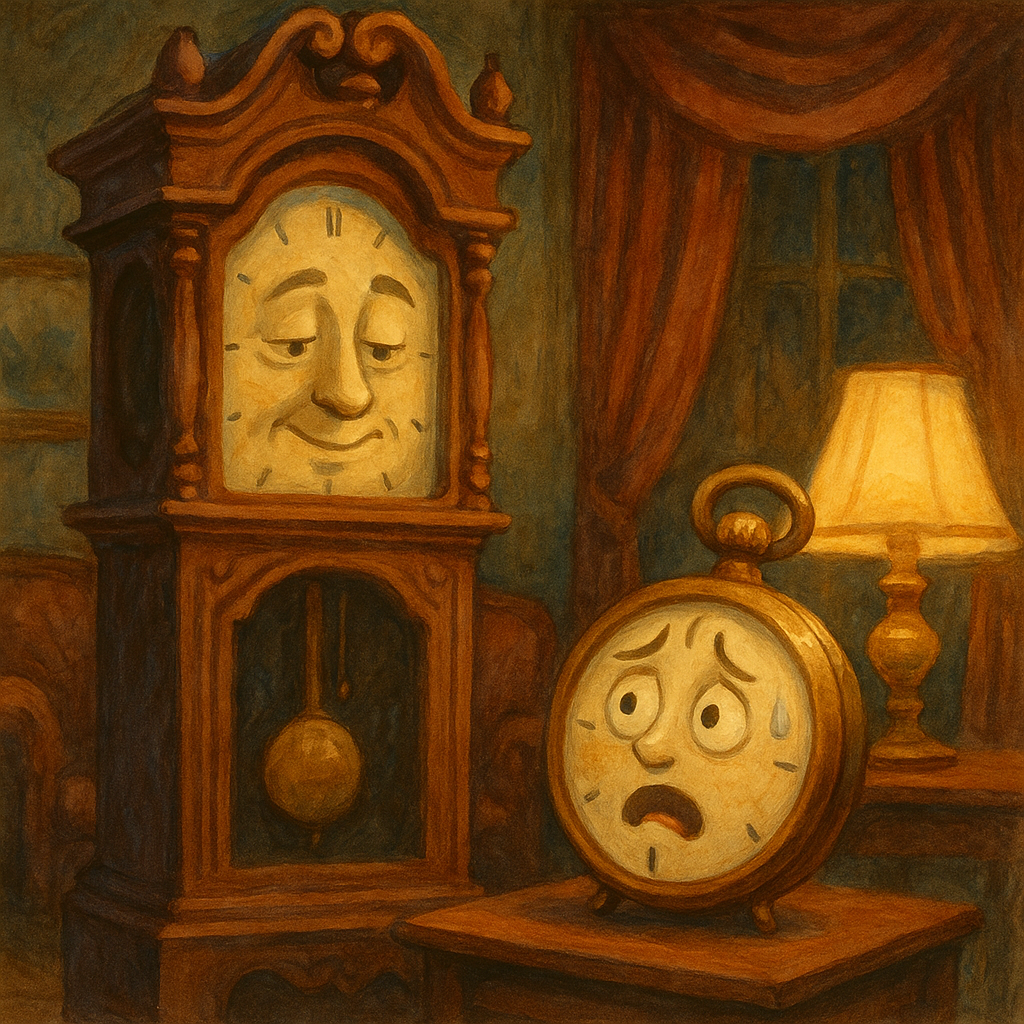
An anxious pocket watch speaks to a wise grandfather clock in a cozy room, in The Clock and the Watch.

“Here is my trouble,” the watch began. “My master wastes his mornings in a fog of fussing and forgetting. Then, when he finally notices the time, he panics — and somehow expects me to give him back all the minutes he threw away. He rushes about madly, trying to catch up with himself, and I rush along with him. But it’s no use: lost time doesn’t come back, not for watches, not for anyone.

“The worst of it came when he decided to set me ahead — ten minutes fast, so he’d always seem early. But the moment anyone checked the hour, they’d look at me and say, ‘Your watch is fast.’ And they were right. We watches have to agree with each other, you see. We can’t each tell a different story and call it the truth.

“So I go back to racing after his wasted moments, feeling anxious and quite useless. And the only cure I can see — for him, not for me — is this: he should stop expecting miracles from a watch, and start everything on time.”


Add Ririro as a Preferred Source on Google


Credits

Mary Graham Bonner was an American author active in the early twentieth century, best known for her whimsical collections of short stories and verses for children. This brief tale is a fine example of her gift for personification, using everyday objects to deliver small, sharp lessons in an entirely natural voice.