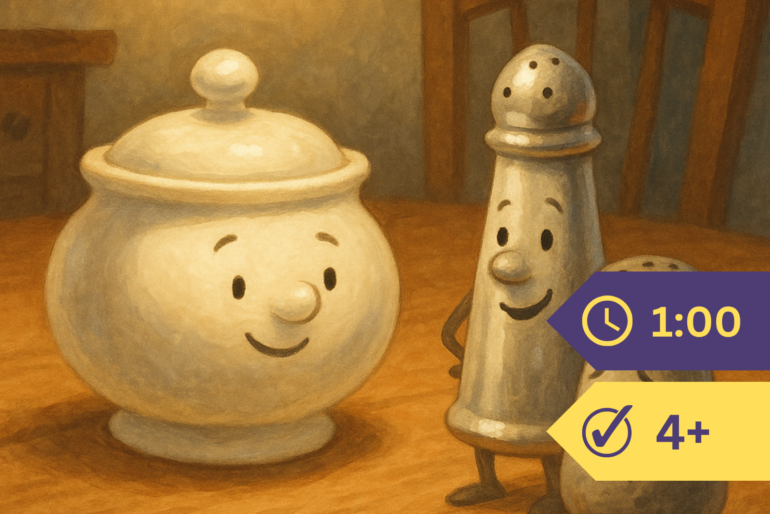
“Things aren’t to be admired,” said the Sugar Bowl, “if they won’t go out of their way to do good. At least I can admire the Salt Cellar and the Pepper Shaker for how they season the world.”
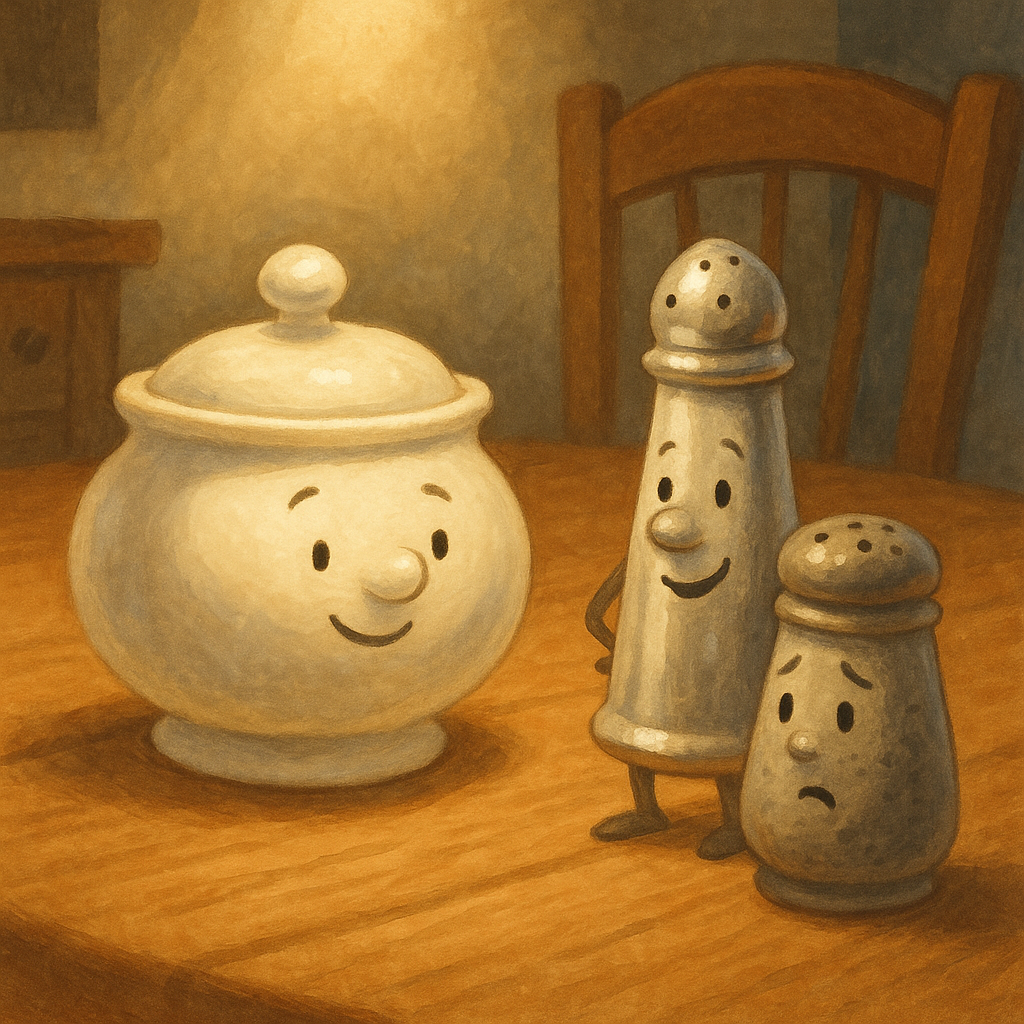
“I’m glad to hear you say so,” said the Salt Cellar. “I’d been worried about you lately — afraid you were becoming too sweet, too agreeable. Not enough character.”
The Pepper Shaker, for his part, didn’t dare come close enough to say much, as he was likely to cause sneezing if overused. He hated that. He liked to add flavor to things — not to be made into a weapon.
“He had a terrible experience once,” Salt said, on Pepper’s behalf. “Some mean children thought it would be funny to put sneezing powder in flowers and give them to friends to smell. They used a great deal of Pepper for this, and he hated every moment of it. It wasn’t funny — it was cruel. The people who sneezed were genuinely miserable: noses hurt, throats hurt, one girl couldn’t sleep for several nights, and her voice took days to come back.”
“So I think we should all stay in our proper places,” Salt concluded. “Too much sugar and things go cloying. Too much of us and the poor pepper and salt are made into something mean, which they never meant to be.”