There is a wild flower that grows in shady, damp places, standing upright in a striped hood of greenish-yellow, white, and deep orange, with a small figure inside the hood as though at a pulpit. And this is what the flower says:
“Good morning, friends! I am Jack-in-the-Pulpit, as you can plainly see. Come closer — don’t be afraid. I am a great one for giving advice, and I have a good deal to tell you.”
The gnats came closer. The flies came closer. They were interested in what the flower had to say.
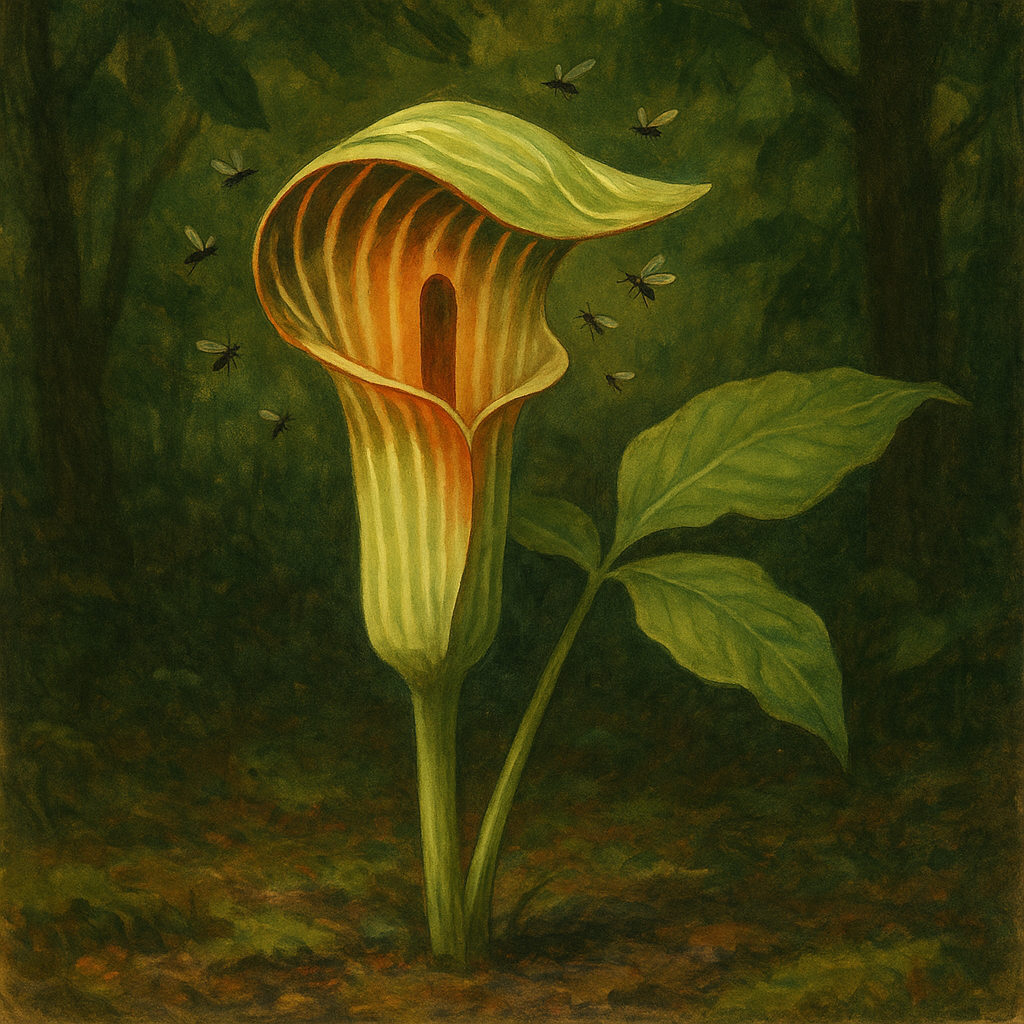
“In spring,” said Jack, “I bear bright red berries. Years ago, the people who knew this forest well would boil those berries for food. But at this time of year, I am simply at my best. Come, look at my pulpit. Isn’t it handsome?”
He told them about his cousin the calla lily, who wore a beautiful white gown and was very stately. He explained that he himself was more natural, more fond of talking things over, more interested in the small creatures around him. He spoke at length and very enjoyably on many topics.
What he did not mention was this: he was thinking, quietly, to himself — I am not as fine as I make myself out to be. I know that perfectly well. I preach to these little creatures about all manner of things, and then I let them walk right into my pulpit, and once they’re inside, I very seldom let them out again.
But then, he was only a flower. We can’t blame him too much.