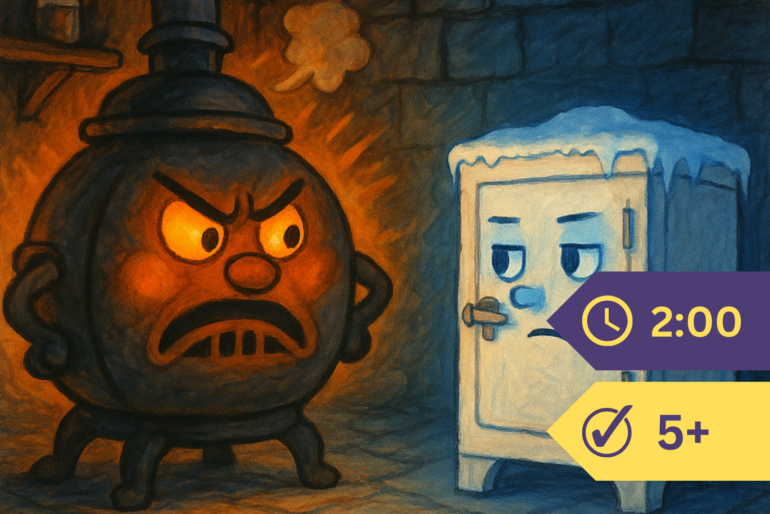
In the cellar of a house lived a furnace and an ice box, some distance apart but sharing the same space. All summer, the furnace sat idle. All winter, the ice box got less ice. Each had something the other lacked.
“I feel sorry for you,” the furnace told the ice box one cold day. “Always so cold — even in winter, when you’d think you might get a little warmth. The saddest thing of all.”
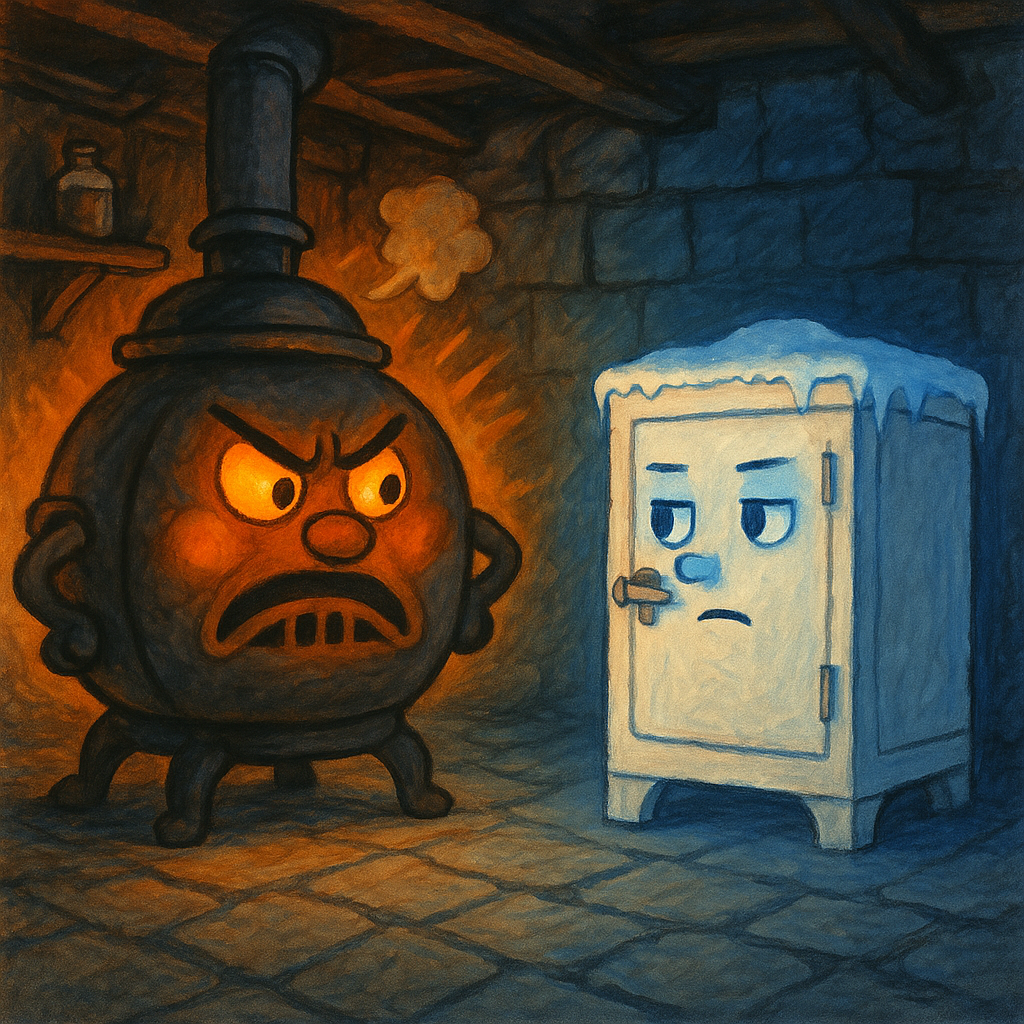
“You shouldn’t boast too much,” said the ice box. “I’ve heard this family having terrible trouble with you. Cold days when you won’t burn at all. I’ve known you to go out entirely. You made them shiver. You made them fuss.”
“And why shouldn’t they fuss?” said the furnace. “I am the furnace — great and warm and powerful. I keep the whole house warm.”
“You keep it warm when you’re behaving. You don’t keep it warm when you go slow or won’t burn at all,” said the ice box. “Which is your way of making sure no one takes you for granted.”
“That shows I won’t be forgotten.”
“It shows you can be very mean,” said the ice box calmly. “Truly important things don’t need to be fussed over. They do their work, and everyone knows it.”
“Don’t give me lessons,” huffed the furnace. “What warmth have you ever given anyone?”
“None. That’s not what I’m for. I keep things cool and fresh and well-preserved. I do my job. You should do yours.”
The furnace had no answer. But it was furious now, and it burned with everything it had — and the family upstairs marveled at the sudden, wonderful warmth on that bitter winter day, never knowing it had come from nothing more than wounded pride.